A standard house cleaning starts at $350, deep cleaning at $490, move in and move out cleaning at $630, and post-construction cleaning at $665, while recurring maintenance visits start at $187 per visit. Those are published starting prices from one Central Florida provider's rate card, and the work below shows how each one becomes a real number for a real home.
Start with the wage behind the work. Professional household cleaners in major U.S. cities earned approximately $23 per hour in 2025, according to Dataintelo's private household services market analysis. Compare that with what a homeowner hands over for a three-hour visit and the gap tells you most of what you need to know: the price covers labor plus payroll taxes, insurance, supplies, equipment, travel, scheduling, and the hours a house genuinely takes.
A flat-rate quote hides two numbers most homeowners never work out. The first is the implied hourly rate you're paying. The second is the yearly total the plan commits you to. Convert a quote into both and hiring stops being a gut call and becomes arithmetic.
House Cleaning Costs by Service Type
Five service types carry nearly all of the price range, and each one answers a different question about the condition of your home.
| Service | Typical use | Starting price | What it covers |
|---|---|---|---|
| Standard Cleaning | Routine upkeep in a home cleaned regularly | $350 one-time | Floors, bathrooms, kitchen and visible surfaces |
| Deep Cleaning | Home not professionally cleaned in 1 to 2 months | $490 one-time | Living spaces, kitchen, bathrooms and bedrooms with buildup removed |
| Move In/Out Cleaning | Handover to new owners or tenants | $630 one-time | Custom scope set for readiness |
| Post-Construction Cleaning | Home after renovation work | $665 one-time | Dust and debris removal for inspection or move-in |
| Recurring maintenance | Ongoing upkeep after a starter clean | $187 per visit (weekly) | Scope set at booking, same routine each visit |
Read "starting" as a floor, not an average. Each figure is the lowest price in its category, charged for the smallest home that fits the category. A three-bedroom, two-bath house with pet hair and a few add-ons lands above the floor. A compact, well-kept one-bedroom sits on it. Square footage, bedroom and bathroom count, and add-ons chosen at booking move the number, and the full deep cleaning cost breakdown shows how those inputs scale a heavier reset.
What a standard cleaning actually includes
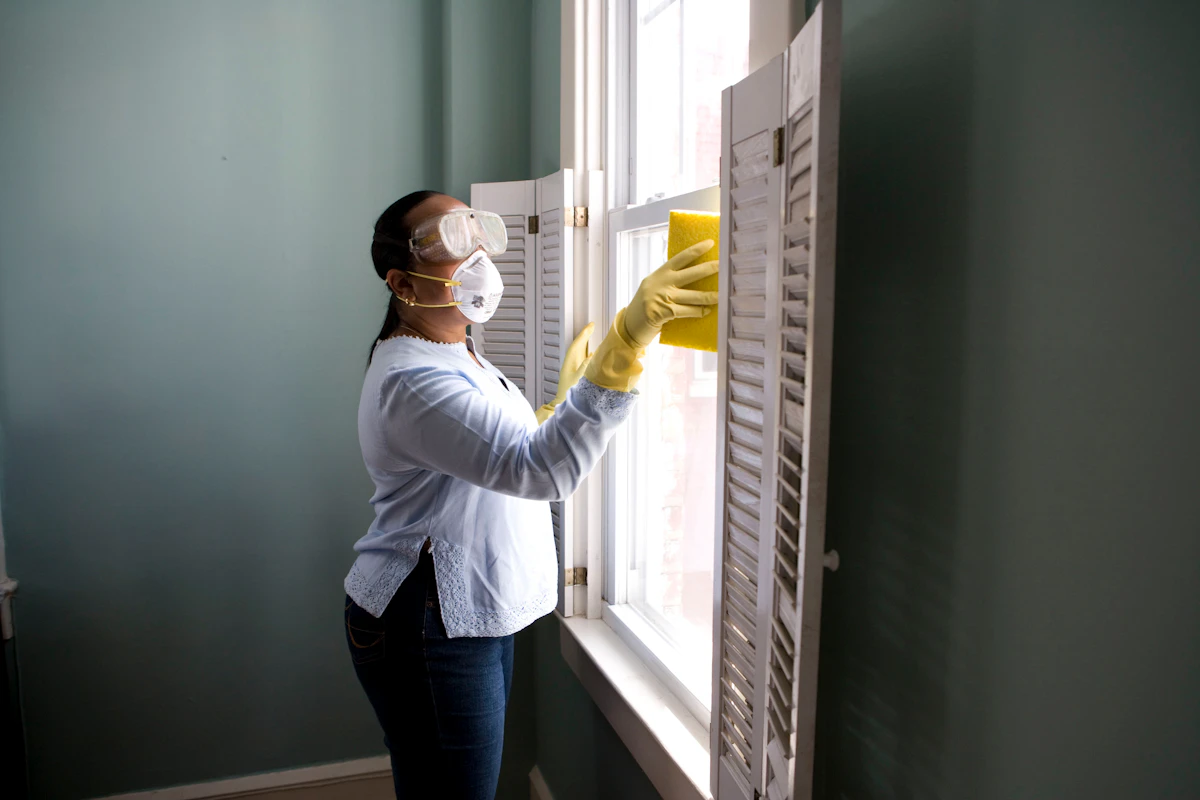
The base tier is where confusion starts, because people expect a stripped-down service and then feel shortchanged. In practice a standard visit covers dusting baseboards and ceiling fans, vacuuming carpets, mopping hard floors, cleaning mirrors and glass surfaces, sanitizing countertops and sink basins, and wiping the exterior of appliances. That is a full pass through the living areas, kitchen and bathrooms, not a surface swipe.
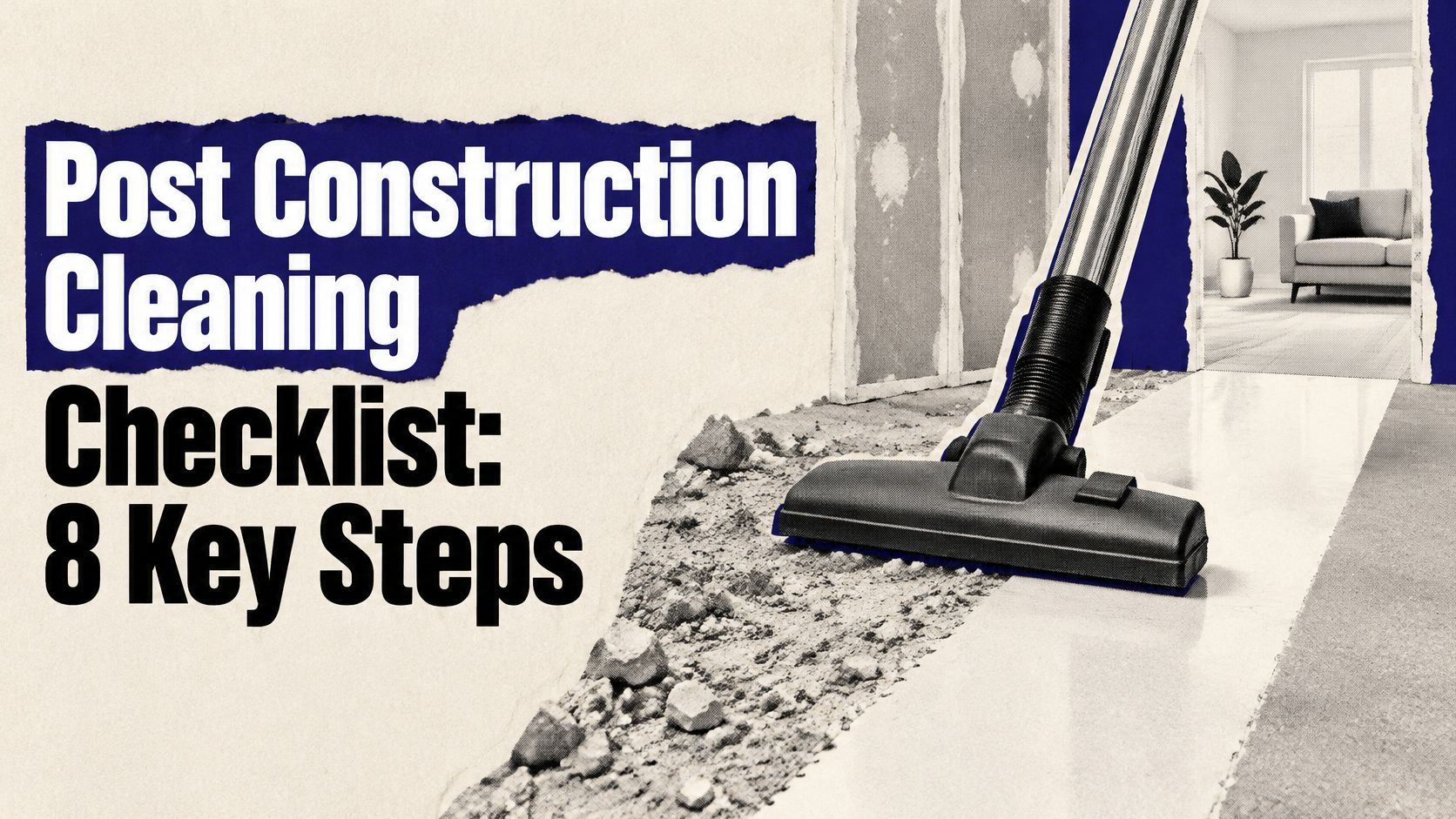
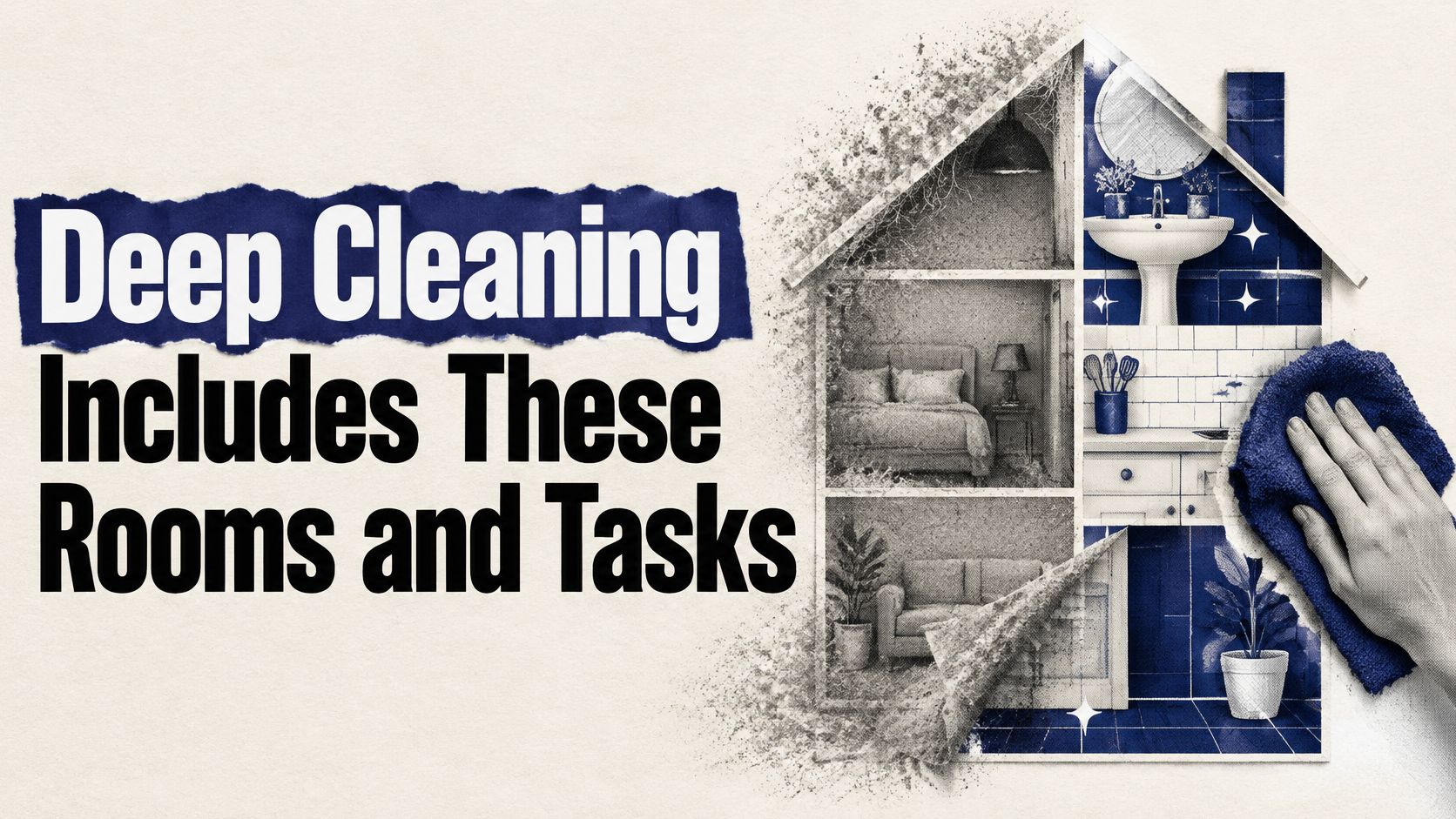
Deep Cleaning is the most popular option for a reason. It starts at $490 and suits a home that hasn't had professional attention in one to two months, because the work shifts from maintenance to removal. Post-Construction Cleaning starts at $665 in Orlando and Central Florida, and it exists to clear fine dust from vents, sills and crevices before an inspection or a move-in.
The national figure worth knowing
One published number helps you sanity-check a quote, as long as you read it correctly. U.S. households spent an average of $187.92 on housekeeping services in 2025, including households that spent nothing, according to RapidEye Research's analysis of the Bureau of Labor Statistics Consumer Expenditure Survey. Households that spent zero pull that average down hard, so it describes something closer to a single recurring visit than a year of service.
As a rule of thumb, choose Standard for routine upkeep in a home that's already maintained, Deep for a home with visible buildup, and the move-related services for handovers and post-renovation cleanup.
What Moves the Price of a Clean
There's no national per-home cleaning price to look up. The Bureau of Labor Statistics glossary of consumer expenditure terms folds housekeeping services, which include cleaning, cooking and dusting, into a broader category of household spending, so every defensible estimate has to be built from the work itself.
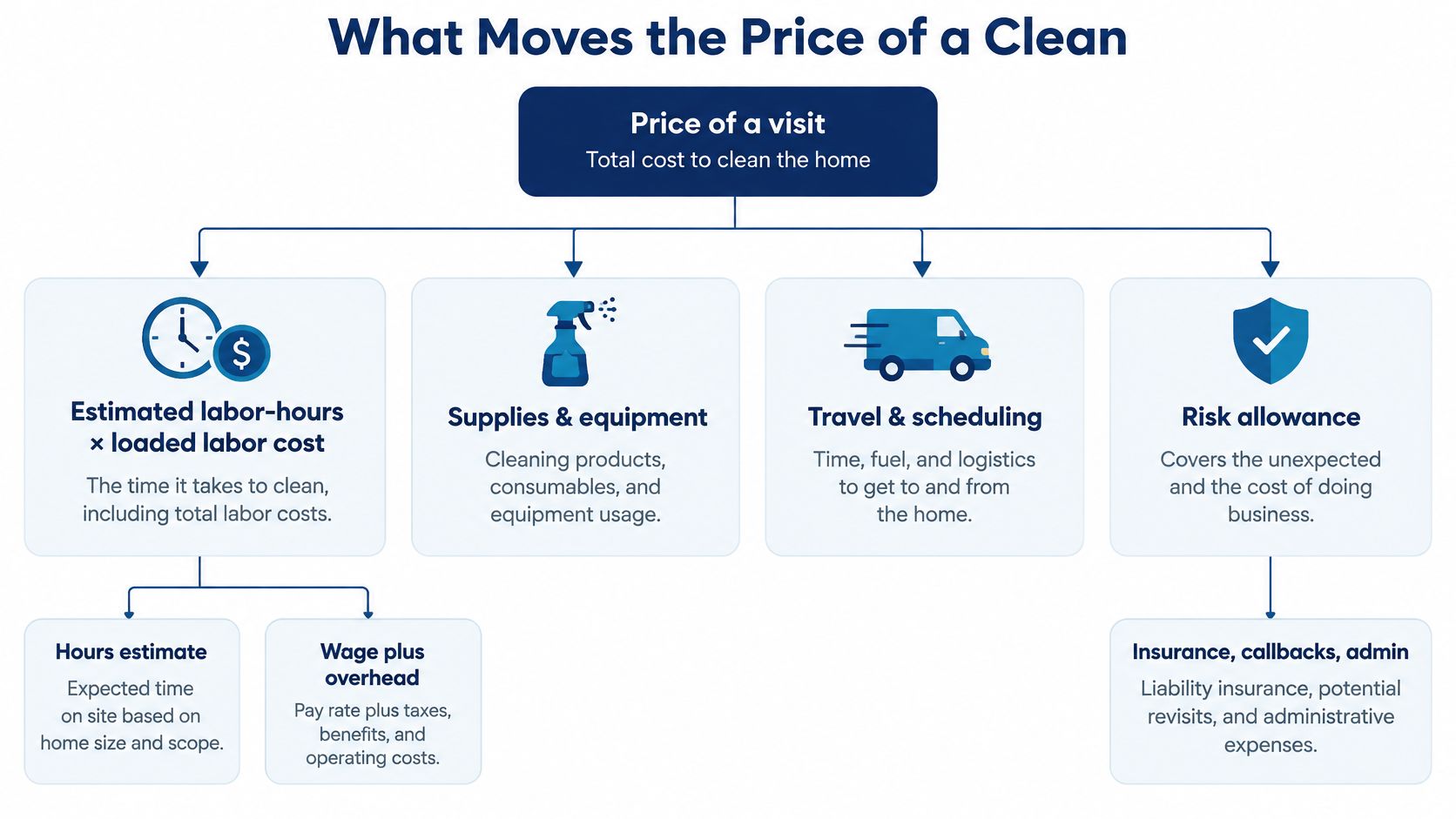
The model behind a quote is short enough to memorize: estimated labor-hours × loaded labor cost, plus consumables and equipment, plus travel and scheduling, plus an allowance for risk and quality. Everything else is a variable that changes the hours or the loading.
The inputs that change the hours
Square footage is a proxy, and a rough one. These are the factors that move the clock:
- Bathrooms. Each one adds fixture scrubbing, glass, grout and floor work. A third bathroom adds more time than an extra bedroom does.
- Floor mix. Carpet needs vacuuming in passes; tile and hardwood need sweeping plus mopping. A home that's mostly hard floor and a home that's mostly carpet rarely price the same.
- Clutter. Cleaners work around objects unless the scope says otherwise, and moving stacks of mail, toys or laundry eats minutes in every room.
- Pets. Pet hair binds to fabric and skirting boards, so it takes repeated passes rather than one.
- Surface condition. Built-up grease on a range hood or darkened grout costs more time than a lightly soiled version of the same kitchen.
- Add-ons. Oven interiors, refrigerator deep cleans, interior windows and baseboard detailing are quoted before the visit, because each one adds a defined block of labor.
Homes with heavy buildup, extensive pet hair, or undisclosed biohazards may need extra labor and an adjusted flat rate, which is authorized with the customer before anyone starts.
Two homes, same square footage, different hours
Take two houses at 1,800 square feet. The first has three bathrooms, wall-to-wall carpet, two dogs and a kitchen that hasn't been degreased in a year. The second has two bathrooms, tile and hardwood throughout, no pets and a wiped-down kitchen. The square footage is identical. The first house can take half again as long, and possibly more, because every one of those differences adds minutes that repeat room after room.
That's also why the exact flat rate for Deep Cleaning and Move In/Out Cleaning depends on square footage, bedroom and bathroom count, and optional add-ons selected before booking rather than on a square-foot formula alone.
The practical test: ask which rooms and surfaces are inside the price, which add-ons are included or extra, and what would trigger a change on the day. A provider who can answer all three before you book has priced your home; one who can't has priced a guess.
Flat-Rate Quotes and Red Flags
Two models can price the same job and behave nothing alike in practice.
| Criterion | Flat-rate quote | Hourly quote |
|---|---|---|
| Price certainty | Total known before booking | Total depends on hours worked |
| What sets the price | Home size, bedrooms, bathrooms and add-ons | Hourly rate multiplied by time on site |
| Who carries time overruns | Provider, within the stated scope | Customer, unless an hour cap is set |
| Best fit | Defined scope for a one-time or recurring visit | Small jobs where you can set a clear hour cap |
| What to confirm | Named rooms, add-ons and the adjustment trigger for heavy homes | Hour cap, minimum hours, and any supply or travel charges |
The flat rate is the only model that answers the question you asked, which is what this will cost. An hourly rate answers a different question: what it costs per hour of someone's time, with the total still unwritten when the van pulls away.
Why the quote sits above the cleaner's wage
Wage data explains the mechanics. In the U.S. Bureau of Labor Statistics' May 2024 Occupational Employment and Wage Statistics, the occupation "maids and housekeeping cleaners" included an estimated 854,910 workers nationwide, with a mean wage of $17.39 per hour, a 10th-percentile wage of $12.27 and a 90th-percentile wage of $23.21, as reported in the BLS occupational wage release. That spread tracks experience, geography, employer type and job complexity.
None of those figures is a service price. A company also covers payroll taxes, workers' compensation, insurance, bonding, transportation, training, equipment, cleaning supplies, administrative costs and non-billable travel time between jobs. When you divide a flat rate by the hours a visit takes, part of the implied hourly figure is labor and part is the machinery that makes the labor safe and insurable.
Our own quotes work the same way. The final flat rate is calculated from home size and bathroom count, with no surprise travel fees added on top.
Why a price can rise when your home hasn't changed
Sometimes the house isn't the variable. A 2025 analysis of service prices found that household cleaning is a locally provided service with limited competitiveness, and that pricing can reflect income expectations, market structure and provider behavior in addition to labor and demand costs, as the Central Bank of the Republic of Türkiye's services price analysis sets out.
That leaves you with a diagnostic question worth asking about any quote that jumped: is this higher because the work got heavier, or because the local market got more expensive? You can separate the two by checking scope, bathroom count, condition, frequency, add-ons, travel area, insurance, screening, supplies, and whether the price is hourly or flat-rate. If every one of those matches your last quote and only the total moved, you're looking at the market, not your house.
Red flags to check before you book
- No written scope. If the quote doesn't name rooms and surfaces, the definition of "clean" is whatever the crew decides on the day.
- No adjustment policy. A company that can't tell you what happens when a home is heavier than described will either rush the work or bill you after.
- No proof of insurance or bonding. Ask for the certificate, not an assurance.
- Nothing on background checks. People enter your home and handle your belongings, so screening policy is a price input, not a courtesy.
- A rate that climbs at the door. A price that changes once the crew is standing in your hallway wasn't a price.
- The lowest quote with no defined hours. Cheap and vague is the most expensive combination in this trade.
Why the cheapest quote usually isn't: uninsured or poorly specified work doesn't remove risk, it relocates it to you. Accidents, damaged surfaces and re-cleaning end up on your side of the ledger, which is why a slightly higher quote with named scope and coverage is often the cheaper decision over a year.
Before you commit, confirm four things in writing: the exact rooms and surfaces included, every add-on folded into the total, the trigger that would adjust the rate for a heavier-than-described home, and how the provider is insured and screened. Comparing a handful of cleaning services estimates side by side on those four points tells you more than the totals alone.
Recurring Cleaning Costs per Visit and Per Year
Recurring visits usually cost less per visit than a one-time reset, because maintenance cleaning is lighter than clearing weeks of buildup. The first visit after a long gap is the exception. That one is priced like a Deep Cleaning, starting at $490, and the visits after it settle into a routine.
| Plan | Starting price per visit | Visits per year | Estimated yearly cost |
|---|---|---|---|
| Weekly | $187 | 52 | $9,724 |
| Biweekly | $197 | 26 | $5,122 |
| Every 4 weeks (monthly plan) | $221 | 13 | $2,873 |
| One-time Standard Cleaning | $350 | 1 | $350 |
The arithmetic is simple multiplication. Fifty-two weekly visits at $187 is $9,724 a year, 26 biweekly visits at $197 is $5,122, and 13 visits on a four-week cycle at $221 is $2,873. These totals are calculated from published starting rates, so a larger home with add-ons will sit above them.
What sits outside the quote
Your cleaning budget isn't only labor. U.S. consumers spent an average of $877 on housekeeping supplies in 2024, up 7.2% from $818 in 2023, according to the Bureau of Labor Statistics Consumer Expenditure Survey. Households pay separately for labor, equipment, consumables and specialized products, which is exactly why total cleaning costs can climb even when your visit frequency never changes.
How to choose a frequency
Match the plan to how fast the home gets dirty and how much upkeep you're willing to handle between visits. A household with pets, kids and a busy week tends to hold a weekly or biweekly rhythm; a smaller home with two adults can stay comfortable on a four-week cycle. Note the scale: a weekly plan costs roughly twice as much per year as a biweekly one, so the weekly maid service cost comparison is worth reading before you default to the most frequent option.
When Paying for Cleaning Makes Financial Sense
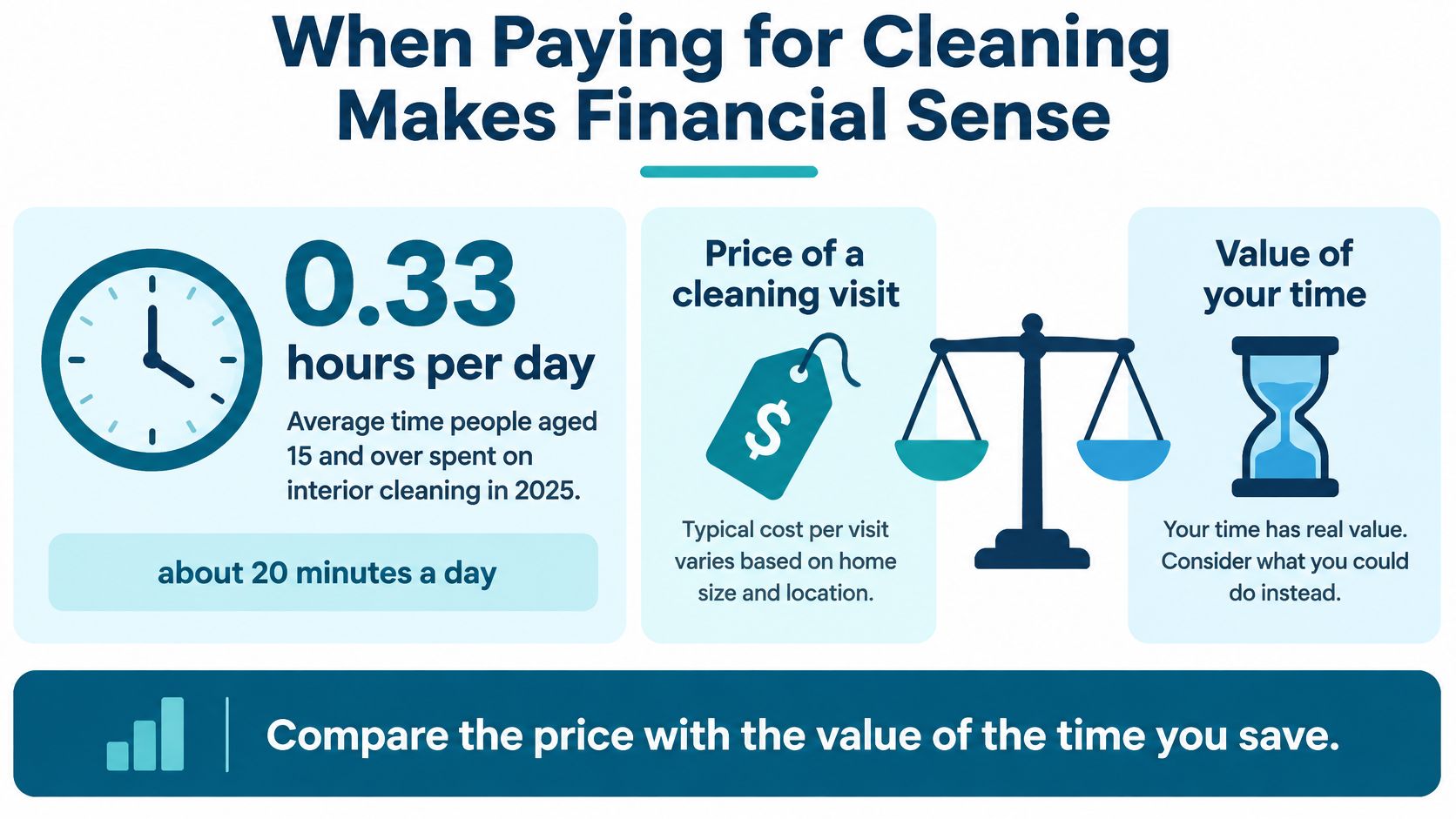
The decision isn't really about the price of a clean. It's about the price of your time. U.S. Bureau of Labor Statistics data show that people age 15 and over spent an average of 0.33 hours per day on interior cleaning in 2025, about 120 hours annually, while total household activities averaged 1.99 hours per day, as the American Time Use Survey activity chart reports. That's a population average, not a target for your home.
Three steps to a break-even number
Step one: find your implied hourly cost. Divide the annual paid cost by the hours you would otherwise spend cleaning. That figure is what you're paying to buy those hours back.
Step two: compare it with your after-tax hourly value. Use your take-home rate, not your gross salary, because that's the money you'd trade.
Step three: add the opportunity cost. Time recovered might go to paid work, to family, or to rest. Only you can price that, but leaving it out of the comparison understates what you gain.
Here's the calculation with real numbers. A biweekly plan at $197 per visit costs $5,122 a year across 26 visits. If your home takes six hours per visit, that's 156 hours, so the implied cost is about $32.83 per hour of cleaning you no longer do. If your after-tax hourly value is $25, paying costs more than your time is worth. If it's $40, paying is the better trade.
The distinction that changes the math
A cleaner covers interior cleaning. Cooking, laundry and household management sit outside that scope, and the 1.99 hours per day of total household activities includes plenty a cleaning visit won't touch. Budget for the hours you're offloading, not every chore on the list.
A rule that survives most situations: a higher flat rate that includes labor-intensive tasks, supplies, equipment and a predictable finish can cost less in practice than a low hourly rate with an open-ended clock.
Get Your Exact Price Before You Book
1. Count the inputs. Bedrooms, bathrooms and approximate square footage are what any quote is built from.
2. Match the service to your home. Standard for upkeep, Deep for buildup, Move In/Out for a handover, Post-Construction after a renovation.
3. Pull the instant quote. You can get an exact online price in under 60 seconds with zero commitment, no home visit and no phone tag.
4. Run the checklist. Confirm the included rooms, the add-ons in the total, and the adjustment rule for a heavier-than-described home.
5. Pick a frequency using the yearly totals, and compare the first visit with the ones after it. If the home needs a full reset before maintenance begins, the Whole-Home Reset Bundle at $499 covers that starting point.
We serve Orlando, Central Florida and Tampa, and you can call (407) 668-0041 with questions before scheduling.
---
J&M Cleaning Team has cleaned Orlando and Central Florida homes since 2006 with flat rates you see before you book, and every visit is handled by bonded, insured, background-checked technicians. If the break-even math in this guide points toward hiring, start with an instant online quote and compare the implied hourly rate with the value of your own time. Visit J&M Cleaning Team to see published starting prices, check availability for your home, and schedule a visit.