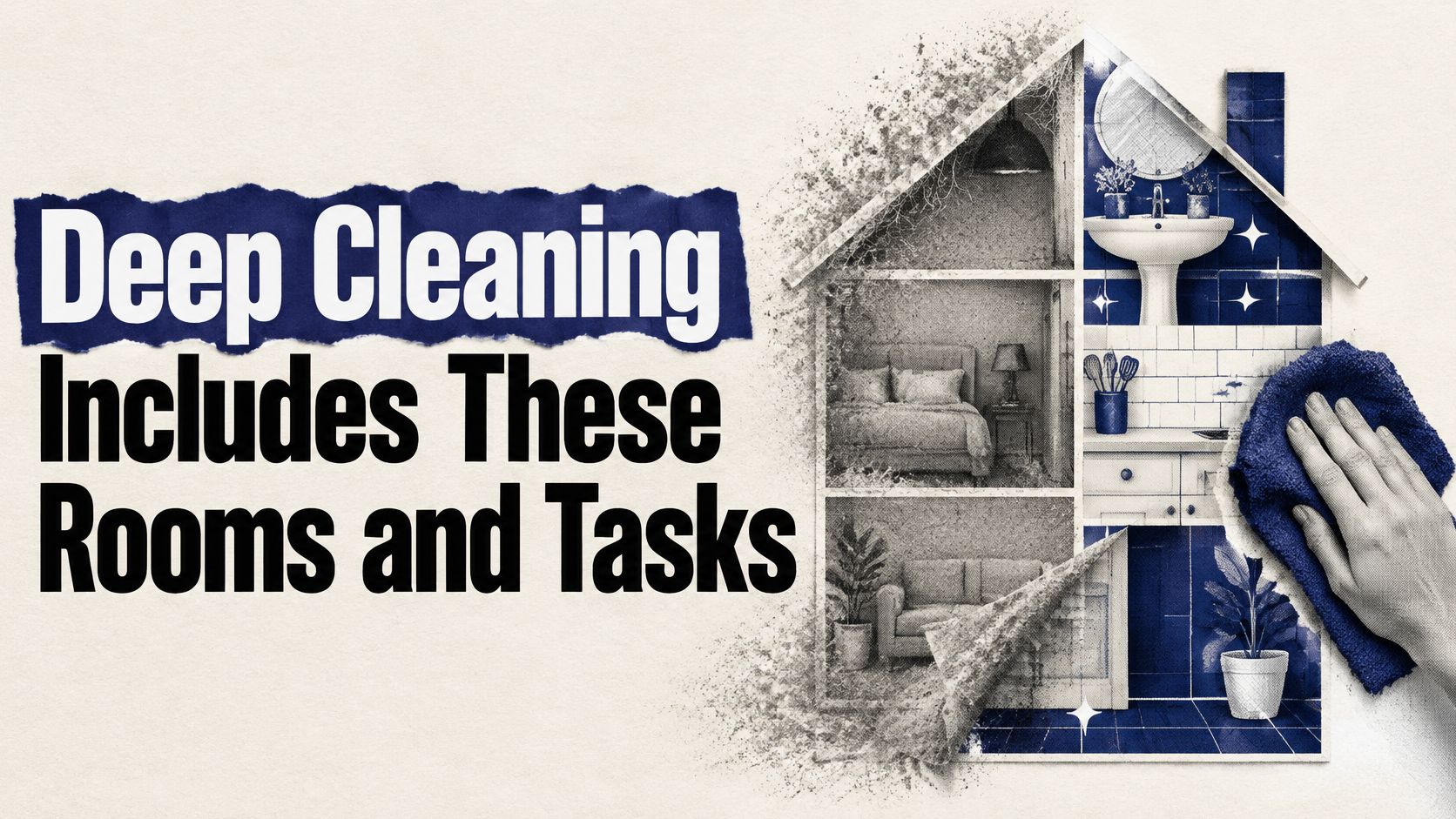
Most room lists treat a deep clean like a longer wipe-down. If deep cleaning includes only the same counters, sinks, and floors you already touch every week, what are you paying for?
A defined scope is the difference. You should be able to point at a room, name the tasks, and see which ones a standard visit already covers. The rest is the gap: grease films, scale, dust that settled months ago, and spots nobody reaches on a quick pass.
Deep Cleaning Scope Room by Room
Use this table as the direct answer. Deep cleaning includes every main room, and the extra tasks sit well past ordinary tidying.
| Room | Deep-clean tasks | Covered by standard cleaning |
|---|---|---|
| Kitchen | Degrease range hood, cabinet fronts and backsplash; scrub inside microwave; clean inside oven and refrigerator | Countertops, sink basins, appliance exteriors |
| Bathrooms | Descale faucets and shower heads; scrub grout and tile; clean exhaust fan covers; wipe inside vanity cabinets | Toilets, sinks, floors, visible surfaces |
| Living areas | Wipe switchplates and door frames; clean upholstery and window tracks | Dust baseboards and ceiling fans, vacuum carpets, mop hard floors |
| Bedrooms | Vacuum under and behind the bed; clean mattress surface; dust upholstered furniture and headboards | Dust surfaces, vacuum carpets, mop hard floors |
| Entryways and hallways | Detail door handles, light switches and stair railings | Floors, visible surfaces |
| Whole home | Dust high ledges and air vents; damp-dust vertical surfaces; clean interior glass | Mirrors and glass surfaces |
Kitchen. A standard visit sanitizes countertops and sink basins and wipes appliance exteriors. The deep pass goes after the film you smell before you see it. Range hood grease, sticky cabinet fronts, and a backsplash splattered with oil need a degreaser and a scrub pad, not a damp cloth. Inside the microwave, oven, and refrigerator is where spills bake on. Those interiors are usually add-on work, so mark them if you want them done.
Bathrooms. Toilets, sinks, floors, and visible surfaces are the weekly baseline. Scale on faucets and shower heads, darkened grout, a dusty exhaust fan cover, and the shelf inside the vanity are what a reset is for. Mineral deposits don't lift with one swipe of all-purpose spray.
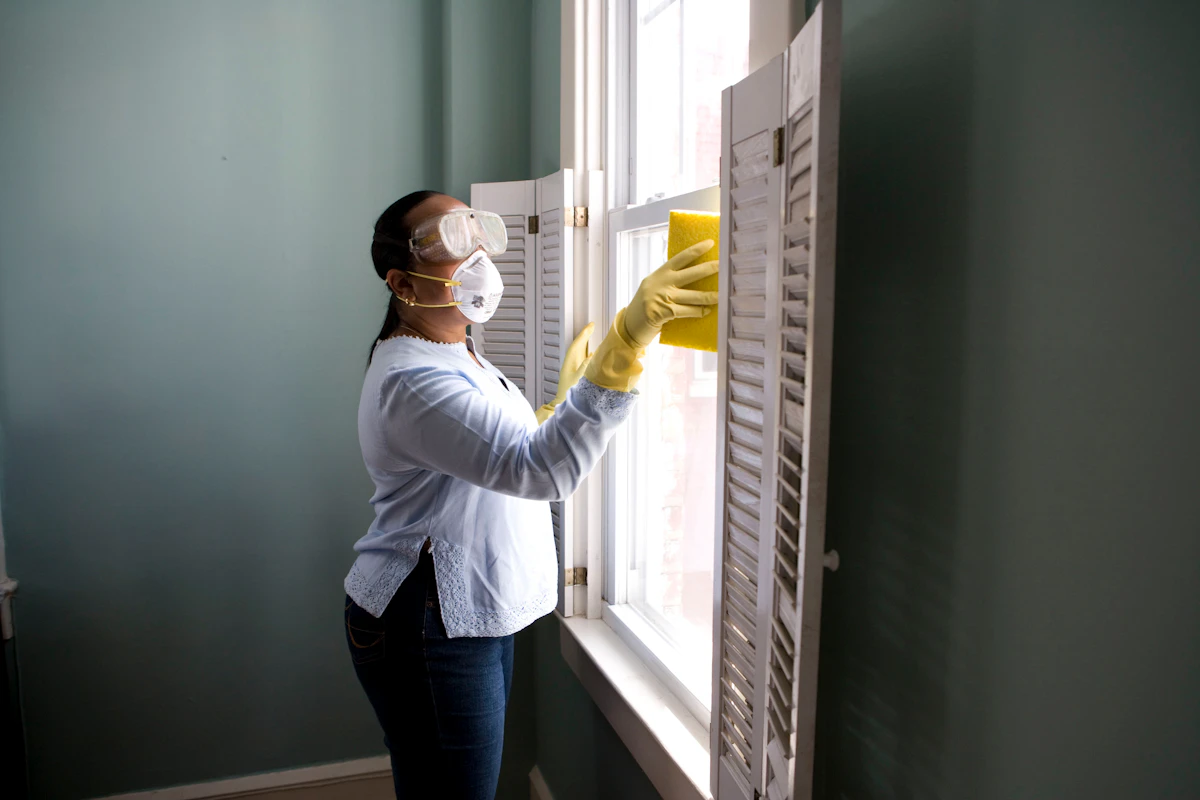
Living areas. Baseboards, ceiling fans, carpets, and hard floors are already on a standard checklist. Deep work adds switchplates, door frames, upholstery, and window tracks, where hand oils and dust collect in a line.
Bedrooms. Surface dusting, vacuuming, and mopping keep a bedroom presentable. Pulling the bed out, vacuuming the gap behind it, wiping the mattress surface, and dusting headboards and upholstered chairs clears what a made bed hides.
Entryways, hallways, and the whole home. Floors and obvious surfaces get routine attention. Handles, switches, and stair railings need a detailed pass because hands hit them all day. High ledges, air vents, vertical surfaces, and interior glass finish the house, beyond mirrors that are already wiped.
Before you book, print the table or keep it open and mark every room where you want the extra column, not just the standard one.
Why Deep Cleaning Goes Beyond Routine Tidying
Routine cleaning clears the dinner table. A deep clean pulls the fridge out and scrubs the floor behind it. Build-up hides where a weekly visit never goes: range hood grease, soap scum tucked behind faucet bases, and a gray coat on ceiling fan blades.
Soil and the surfaces hands hit
The CDC home cleaning guidance names tables, countertops, doorknobs, light switches, handles, desks, phones, keyboards, toilets, faucets, and sinks as high-touch surfaces that need regular cleaning. A full reset therefore walks kitchens, bathrooms, living areas, bedrooms, and hallways, including pieces ordinary maintenance skips.
Two jobs get mixed up constantly.
Cleaning with soap or detergent and water removes dirt and many germs. Disinfecting is a separate step meant to reduce what is left. Clean first. Dirt and other impurities can cut how well a disinfectant works, the same way mud on a windshield blocks wiper fluid. Spraying a grimy switchplate and wiping it dry is not disinfection.
Say a house sat untouched for two months. Dust mats the vents. The oven door has a brown film. Bathroom fixtures wear a chalky ring. That house needs soil removed room by room. It does not automatically need a disinfectant on every wall.
When disinfection belongs
| Situation | Clean | Disinfect |
|---|---|---|
| Routine upkeep in a healthy home | Yes | Not needed |
| Someone in the home is sick | Yes | Yes, high-touch surfaces |
| A sick person has recently visited | Yes | Yes |
| A household member has a weakened immune system | Yes | Yes |
| Bleach solution with no manufacturer instructions | Clean first | Keep visibly wet for at least one minute |
Routine upkeep in a healthy home is cleaning, not a standing disinfection ritual. Disinfect high-touch surfaces when someone is sick, when a sick person has just visited, or when a household member has a weakened immune system. That split is how you read a quote. Ask whether disinfection is in the package or an extra, and don't assume every deep-clean label includes antimicrobial treatment. The difference between a deep cleaning vs regular cleaning visit is scope and method, not a stronger smell.
Contact time is the part people skip
A product only does the job on the label if the surface stays wet for the stated contact time. Wiping it off early throws that time away. The CDC disinfectant instructions say that when manufacturer directions aren't available, a diluted bleach solution should stay on the surface for at least one minute, kept visibly wet. Read the label for dilution, ventilation, and gloves. Don't promise a universal kill rate a bottle never claimed for your counter.
Practical rule: A deep clean resets a home. Routine cleaning maintains it afterward.
How to Run a Deep Clean From Top to Bottom
Order matters more than elbow grease. Dust that falls onto a floor you already mopped is a second job. Organic soil can also shield germs, so soil comes off before any targeted disinfectant. The Washington State Department of Health safe cleaning practices page is the logic behind the sequence below.
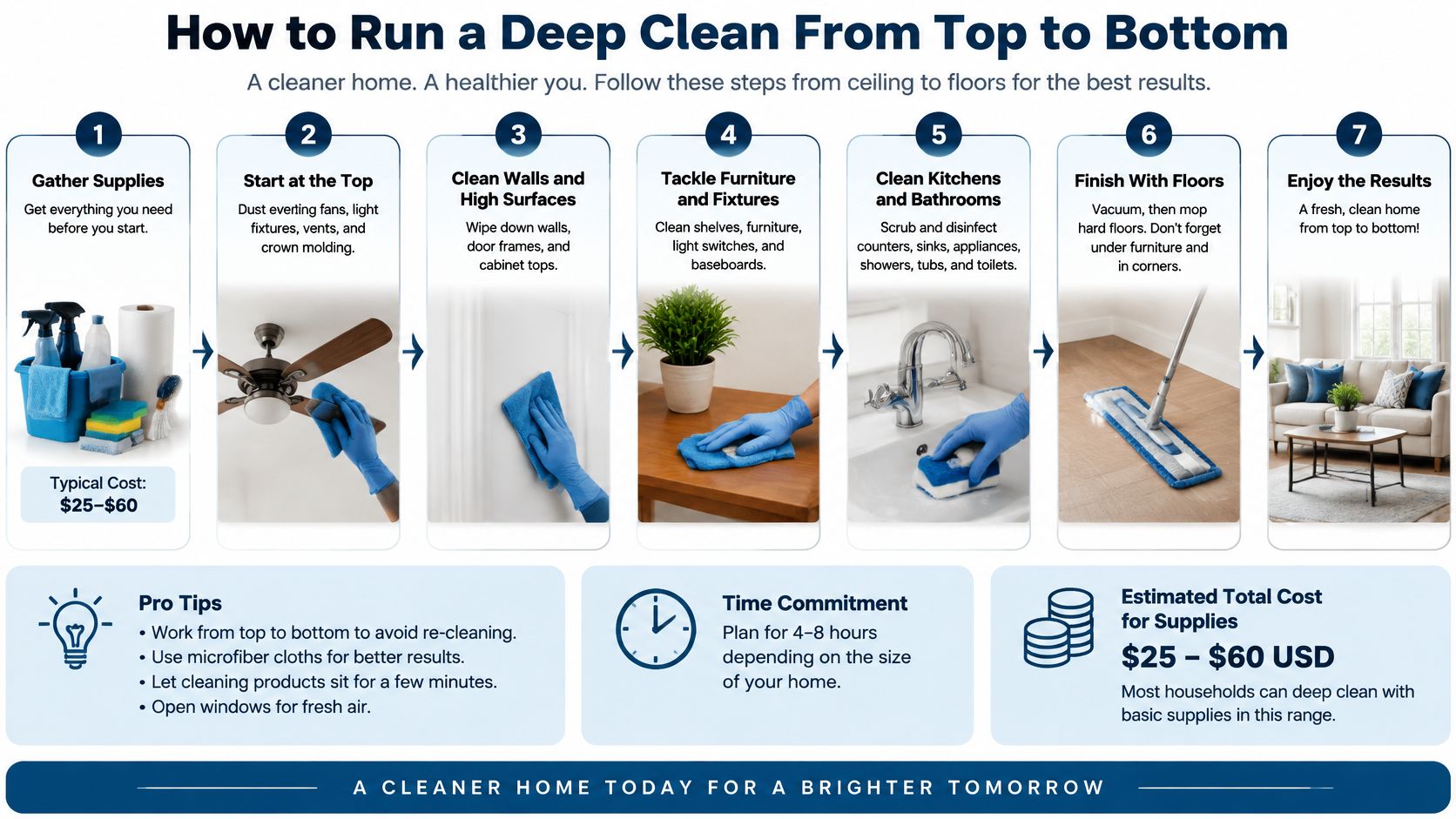
1. Dust high to low. Start with ceiling fans, light fixtures, high ledges, and vent covers. Falling dust lands on surfaces you haven't finished, which is the point of going top first.
2. Vacuum carpets and rugs, edges included. Use a HEPA-filter vacuum when you have one. It holds fine particles instead of blowing them back into the room. Slow passes along baseboards catch the grit a quick middle-of-the-room pass misses.
3. Damp-dust flat and raised surfaces. Switchplates, door frames, shelves, and sills get a microfiber cloth you rinse often. Dry dusting mostly relocates the film.
4. Scrub kitchens and bathrooms. Degrease the range hood and cabinet fronts. Descale faucets. Scrub grout. A surface-compatible detergent or soap comes before any disinfectant, and only when illness or body-fluid contamination calls for that second step.
5. Detail the pieces hands grab. Doorknobs, handles, faucets, and countertops get their own pass after the heavy soil is gone, so you're not wiping grease back onto clean hardware.
6. Mop hard floors last. Dust and crumbs should already be in the vacuum, not swimming in the bucket.
7. Walk the room once more. Touch points and mirrors are the last check, not the first.
Change or rinse cloths between rooms. Bathroom grime does not belong on a kitchen cloth, and a laundered set beats one rag carried through the house.
What finished looks like
A finished room has no dust line on the fan housing, no grit in the window track, and a floor that stays dull-free after it dries. Run a white cloth along a door frame and a baseboard. If it comes back gray, that zone isn't done. If it comes back clean, move on.
Allergens, Air and What Deep Cleaning Cannot Fix
Will deep cleaning fix your allergies? It can shrink the places allergens sit. It can't promise your symptoms will ease, and it can't pull every particle out of the air.
The EPA indoor air bulletin places dust mites in carpets, upholstered furniture, bedding, and household dust. The Consumer Product Safety Commission, cited in that same guidance, says regular cleaning can reduce but not eliminate dust mites, pollen, and pet dander.
What actually lowers the load
Damp dust before you vacuum. A slightly damp microfiber cloth grabs dust that a dry feather duster would launch. Do furniture, shelves, and vent areas first so the vacuum isn't chasing a fresh cloud.
Vacuum on a schedule with a fitted HEPA filter. Weekly passes, with the filter seated and maintained, cut buildup in carpet and upholstery. If you have asthma or allergies, leave the room while someone else vacuums. The machine stirs particles even when the filter is doing its job.
Wash bedding in hot water and cover the mattress. Allergen-proof mattress covers, paired with that hot-water wash, keep mites from treating the bed as a pantry. A wiped mattress surface helps on cleaning day. The cover is what holds the line afterward.
Open windows or run ventilation once the dust settles, if outdoor air isn't a pollen problem that day. A short video on dust-mite hotspots makes the hiding places easier to picture before you start.
The line a cleaning visit cannot cross
Mold behind drywall, a failing HVAC system, and a measured air-quality problem are specialist work. No cloth, vacuum, or spray replaces remediation, a technician's filter and duct service, or testing equipment. If sneezing continues after a thorough reset, look at those systems rather than booking the same scrub again. For the week-to-week side of dust, a plan to reduce dust in the house matters more than one heroic Saturday.
Deep cleaning lowers the load, but it does not clean the air.
Hard-to-Reach Spots Most Cleaners Skip
Pull a sofa off the wall and you'll often find a private landfill: cracker crumbs, pet hair, and a year's dust packed into a gap two inches wide. That's where a deep clean earns the name. The middle of the room was never the hard part.
In 2024, 49% of Americans named hard-to-reach areas, such as behind or underneath furniture or appliances, among the most dreaded spring-cleaning tasks, according to the American Cleaning Institute national cleaning survey. Dread is why those spots get skipped on a quick visit. A written checklist is how you stop that.
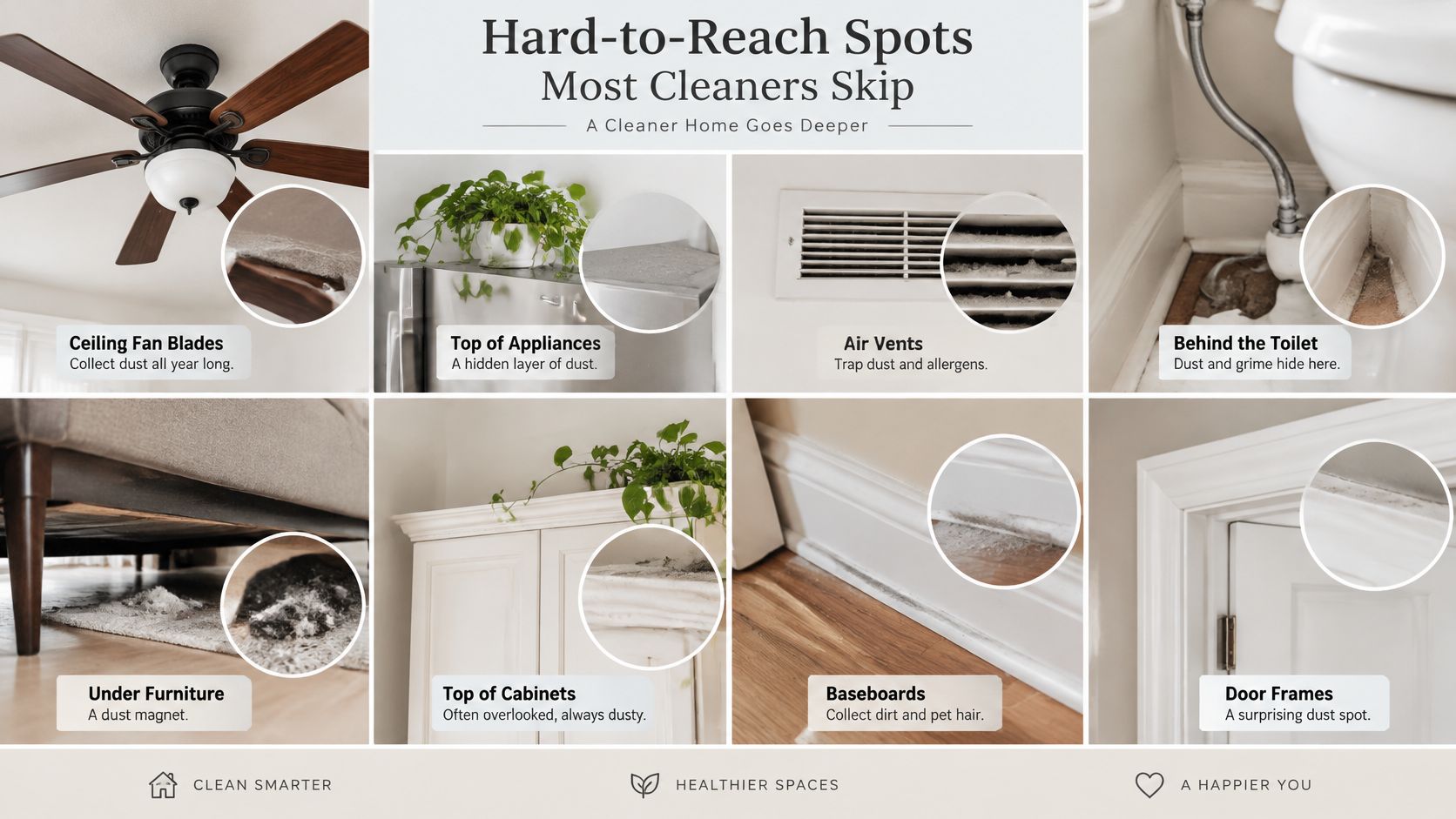
Where to look, and what reaches it
Behind and under the refrigerator and stove. Unplug only if you can do it safely, then slide the appliance out on a protected floor. An extension wand gets the dust wall the broom can't. Coil the cord back so it isn't pinched when you reset the unit.
Under beds and sofas. A flat tool or crevice nozzle pulls hair from the frame and the floor. Don't drag a heavy frame across hardwood. Lift a corner onto sliders, clean, then set it back square.
Cushions and seams. Shake cushions outside if you can, then run a slim brush along the seam where coins and crumbs live. Upholstery shampoo is a separate job from this dry detail.
Window tracks, vent covers, and fan blades. A dry brush loosens grit in the track before a damp cloth. Pop a vent cover if it releases easily, wash it, dry it, and click it back. Fan blades get a cloth sleeve so dust doesn't rain on the sofa you just did.
Baseboards, light fixtures, and grout lines. A slim scrub brush follows the grout. A microfiber sock on a duster handles the top of a sconce without a ladder dance. Baseboards want a damp cloth after the vacuum, not instead of it.
Ask whether these spots are on the visit, because a timed tidy often stops at what is already visible. Move furniture with a second person when it's heavy, and put every piece back before you call the room done.
Confirm Your Home's Scope Before Booking a Deep Clean
A quote is only useful when it names the work, like a recipe that lists ingredients before it promises dinner. Three checks keep "deep" from turning into a vague promise of more time.
Match the rooms to your house. Deep cleaning covers living spaces, kitchen, bathrooms, and bedrooms, and the checklist is customized to each home. Walk room to room with your own floor plan, then add the out-of-sight areas you care about so they are written into the visit instead of assumed.
Separate cleaning from disinfection, and name the limits. A routine reset for a healthy home is soil removal: dust, grease, soap film, tracked-in grit. A sick household, a recent sick visitor, or a weakened immune system is the case to ask about disinfecting high-touch surfaces. If the underlying problem is allergies, mold, or the HVAC system, say so early, because a scrub cannot replace specialist work.
Confirm method, supplies, and conditions. Confirm in the quote whether any disinfecting is included, and make sure the product suits the surface, from sealed stone to a plastic switchplate. Ask for the checklist in writing, with HEPA vacuuming and damp dusting before floors so debris moves down and out. The home needs running hot water, working electricity, and a climate-controlled indoor temperature during the visit.
Your next step is simple. List your rooms, mark the yes/no items, and bring that list when you compare deep cleaning cost and book. A clear list is how the visit you get becomes the visit you pictured.
---
J&M Cleaning Team resets Orlando and Central Florida homes with a deep clean built around living spaces, kitchens, bathrooms, and bedrooms, using family-safe supplies and a checklist shaped to your house. If your place has gone a month or two without a thorough pass, or more than 30 days without professional cleaning, start with the reset before recurring upkeep. See what J&M Cleaning Team includes and book a scope that matches your rooms.