Deep cleaning is a thorough, whole-home reset that removes accumulated dust, grime and residue from floors, furniture, surfaces and hard-to-reach areas, going well beyond routine upkeep. It's also the exception rather than the rule: 74% of U.S. adults describe their usual cleaning as light, surface-level work, and only 26% say deep cleaning is their standard approach.
Which raises the practical question. If three homes out of four never get past the surfaces people can see, what happens to the dust on top of the door frame, the grease film on the cabinet fronts above the stove, and the grout that's gone a shade darker in the corner of the shower?
The phrase gets used loosely by cleaning companies, and that looseness costs homeowners money. One company means a longer version of the usual visit. Another means something closer to disinfection. A third puts the tasks in writing. What follows is the plain version: what the term covers, what it doesn't, and how to tell which one your home needs.
What Deep Cleaning Means for a Home
Deep cleaning is a thorough, whole-home reset that removes accumulated dust, grime and residue from floors, furniture and surfaces, and keeps going into the edges, fixtures and corners that routine upkeep skips.
The American Cleaning Institute's 2018 national cleaning survey, which polled 1,000 U.S. adults, found that 74% of respondents described their most common activity as "light cleaning", defined as general surface-level household cleaning, while 26% identified deep cleaning as their usual approach. The same survey characterized deep cleaning as cleaning the entire household, including floors, furniture and surfaces.
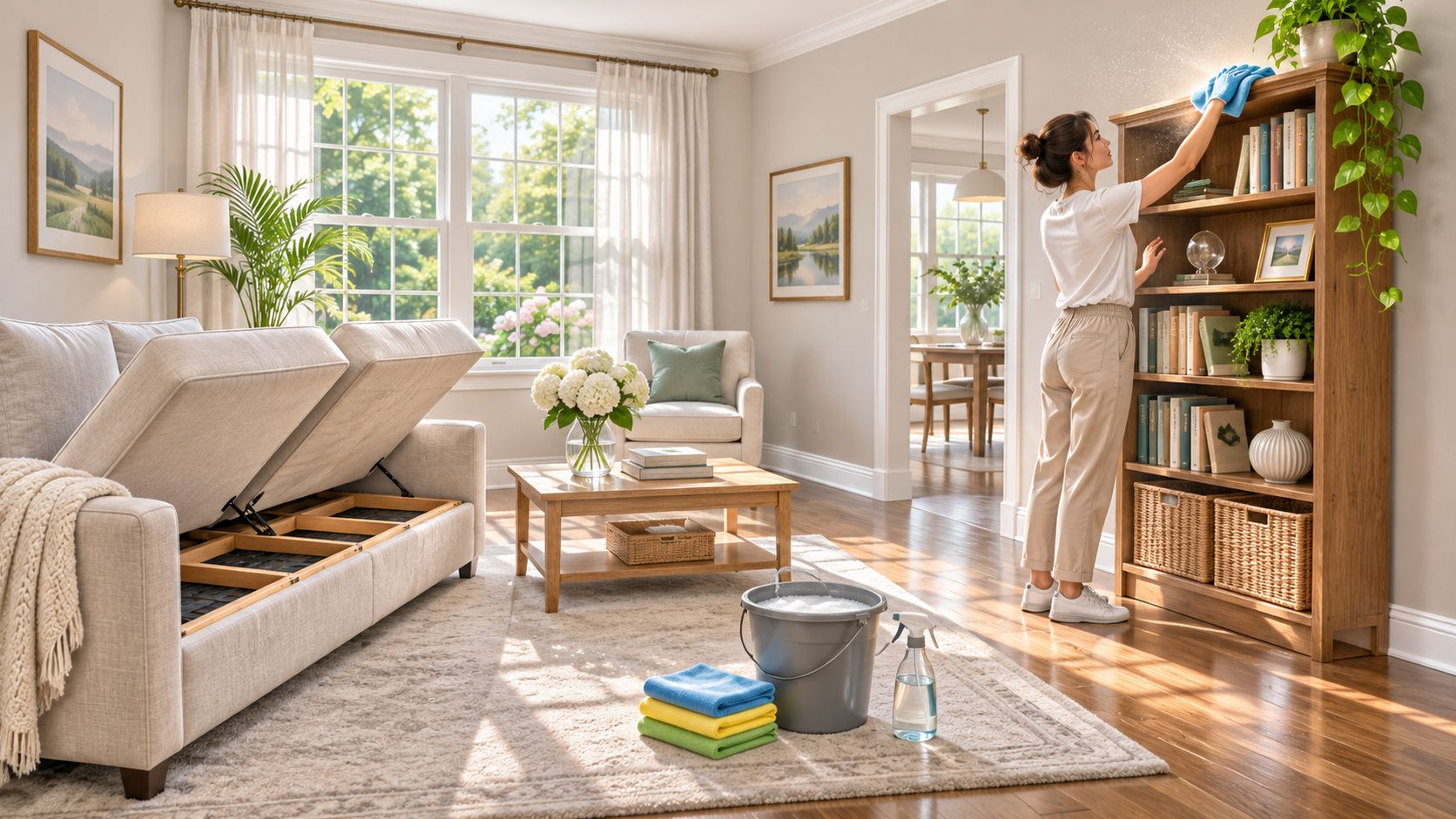
The distinction is easier to feel than to define. Routine cleaning is wiping the counter after dinner and running the vacuum over the middle of the rug. A deep clean is the day you pull the stove forward, brush out the grout line, wash the cabinet doors above the kettle, and clear the corners you've walked past all week.
Working definition: a deep clean is defined by which rooms, surfaces and tasks are on the list, not by how strong the chemicals are or how long the visit runs.
Time explains why it stays occasional. The same survey found Americans spent an average of 6 hours per week cleaning, with parents averaging 7 hours and 28% reporting 7 hours or more. No household folds a whole-home reset into that budget every week, which is why the deep clean is usually a periodic event followed by lighter maintenance.
Three things the term doesn't mean, because most of the confusion starts here:
- Not a longer dusting. Reaching the same surfaces for twice as long never touches the buildup behind the sofa or on top of the refrigerator.
- Not disinfection. Removing soil and killing germs are separate steps with separate products and label instructions.
- Not a sterile home. A residential clean doesn't remove every allergen or microbe, and a company promising that is describing something it can't measure.
A ninety-second test tells you whether a room is a candidate. Stand in the doorway. If the room looks fine but you can't remember the last time anyone cleaned behind the sofa, the top of the door frame, or the front of the upper cabinets, it's due for the wide version rather than another pass over what's visible.
How Deep Cleaning Differs from Standard Cleaning
| Area | Standard Cleaning | Deep Cleaning |
|---|---|---|
| Kitchen counters and sink basins | Wiped down | Scrubbed, with edges and faucet bases cleaned |
| Baseboards and door frames | Dusted | Detailed wipe-down of baseboards, switchplates and frames |
| Behind and under furniture | Not moved | Furniture moved and surfaces behind it cleaned |
| Ceiling fans and high ledges | Often skipped | Dusted and wiped |
| Appliance exteriors | Wiped | Wiped and degreased |
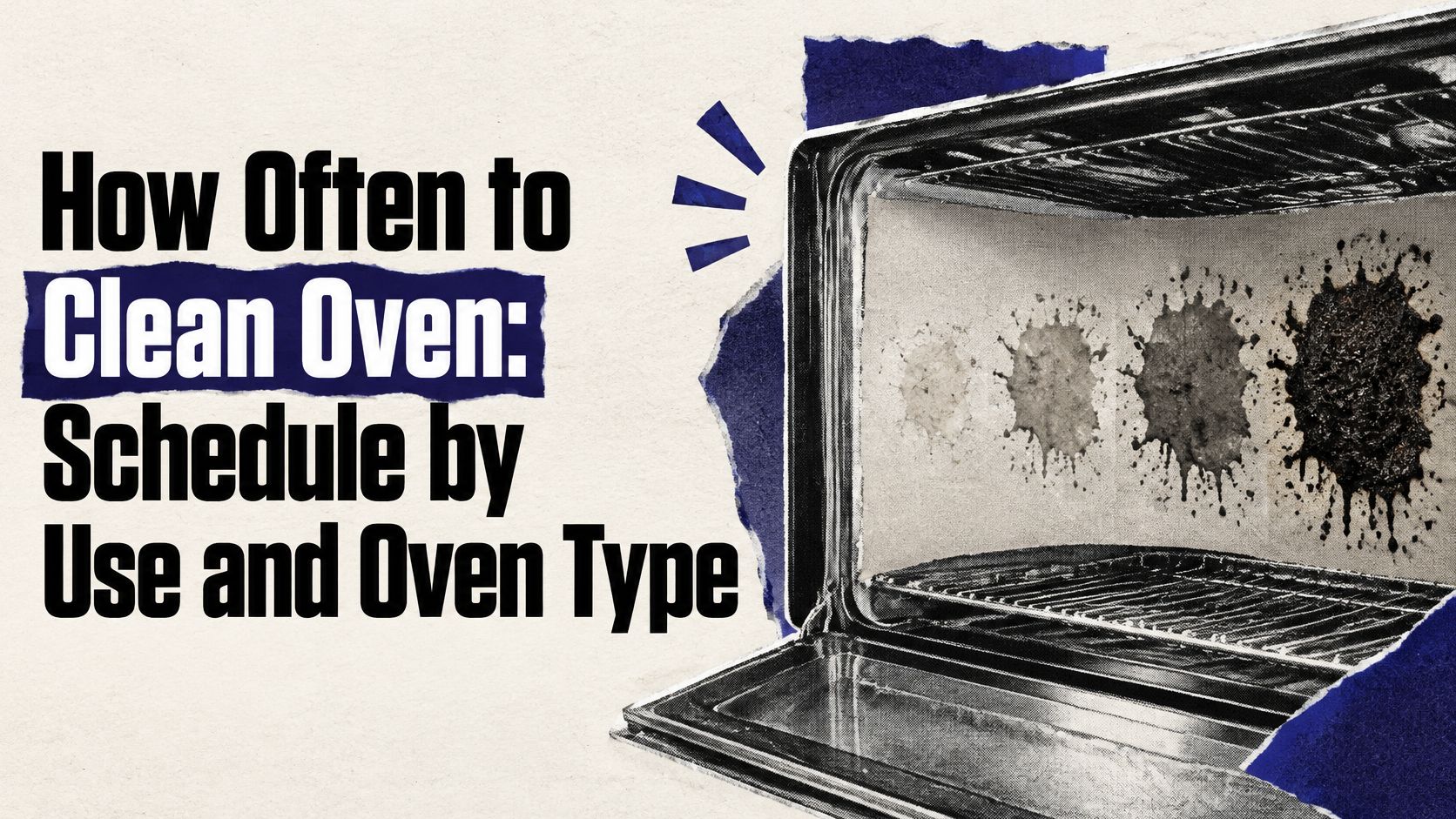
| Oven and refrigerator interiors | Not included | Available as add-ons |
| Bathroom grout and fixtures | Surface wipe | Grout scrubbed and hard-water deposits removed |
| Glass and mirrors | Cleaned | Cleaned plus window sills and tracks |
Read those rows as two tiers of one job rather than two products with different chemicals. Standard cleaning is the maintenance tier. It keeps the surfaces you use every day tidy, and it's built to be repeated on a weekly, biweekly or monthly schedule. Deep cleaning adds the edges, fixtures, furniture moves and scrubbed residue that a maintenance visit has no time for.
Why routine visits skip the right-hand column
The logic is about time and access, not effort. Routine visits are paced and priced for recurring upkeep, so the tasks that need moving, soaking or scraping get grouped into a separate, less frequent service instead. Pull the refrigerator out and scrub grout with a brush on every maintenance visit, and the visit costs more and runs longer than most households want on a repeating schedule.
Two rows deserve a note. Oven and refrigerator interiors are usually add-ons rather than default tasks. They change labor, they need dwell time for a degreaser to work, and they carry a higher risk of scratching or leaving residue if rushed. Ask for them when you book, not when the cleaner is already on the clock.
Practical rule: compare two quotes only when both name the same tasks. A lower price that skips baseboards, grout and window tracks isn't the same job.
The room test
Pick one room, ideally the kitchen or a bathroom, and walk the right-hand column of the table. Count how many of those tasks haven't been done in the last month. One or two untouched spots means routine upkeep is running slightly behind. Five or six means the room is due for the wide pass, and a standard visit afterward will hold the result instead of working on top of old deposits.
Where Deep Cleaning Reaches Beyond Visible Surfaces
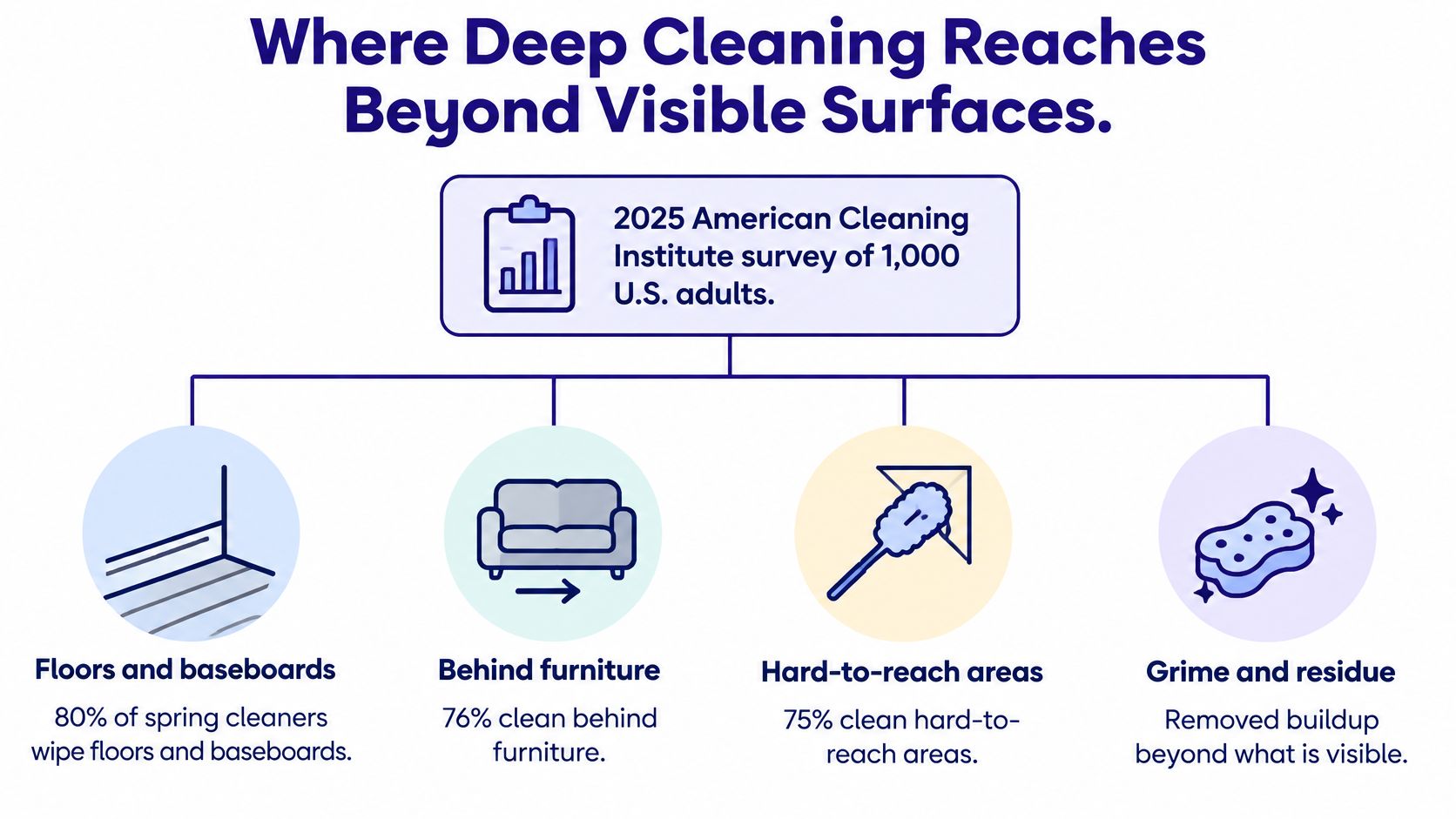
The scope gets clearer when you look at what people do when they set out to clean thoroughly. The American Cleaning Institute's 2025 spring cleaning survey of 1,000 U.S. adults found that among respondents who spring clean, 80% included floors and baseboards, 76% cleaned behind furniture, 75% organized storage areas such as garages, attics, basements, sheds or closets, 75% washed windows, and 73% cleaned appliances. The list then moves into fabrics: 67% washed bed linens or mattresses, 59% cleaned upholstered or fabric surfaces, and 55% washed curtains.
Three layers, three different jobs
Sort those activities and a structure appears. Most homes have three layers of soil, and each one needs different work:
1. Visible surfaces. Counters, tables, glass, appliance fronts. Standard service covers this layer well, which is exactly why a home can look clean while the other two layers sit untouched.
2. Edges and fixtures. Baseboards, door frames, ceiling fans, switchplates, grout lines, window tracks. This is the layer where a deep clean starts to earn the name.
3. Fabrics and storage. Bedding, curtains, upholstery, closets, garages, attics. This is the layer most often quoted separately, because it adds drying time and handling that a surface wipe doesn't need.
The reason the layers matter isn't cosmetic. Dust and cooking residue settle into fabric and into storage areas, and a damp cloth over the countertop never reaches them. A thorough visit works top-down through all three in order, high dusting first, then surfaces, then fabrics, then floors last, so nothing lands on a surface that's already finished.
Frequency backs up the same picture. In the same survey, 80% said they spring clean at least once a year, which fits the pattern of a periodic event rather than a weekly habit.
So the question to ask when booking isn't "how deep is it?" but "which of these are on the list?" If you want a task-by-task reference to hold a quote against, this guide to deep cleaning a house breaks the work down room by room. Confirm bedding, curtains, upholstery and storage separately, because those requests are often added to a quote rather than assumed.
Why Deep Cleaning Removes Buildup Before Disinfecting
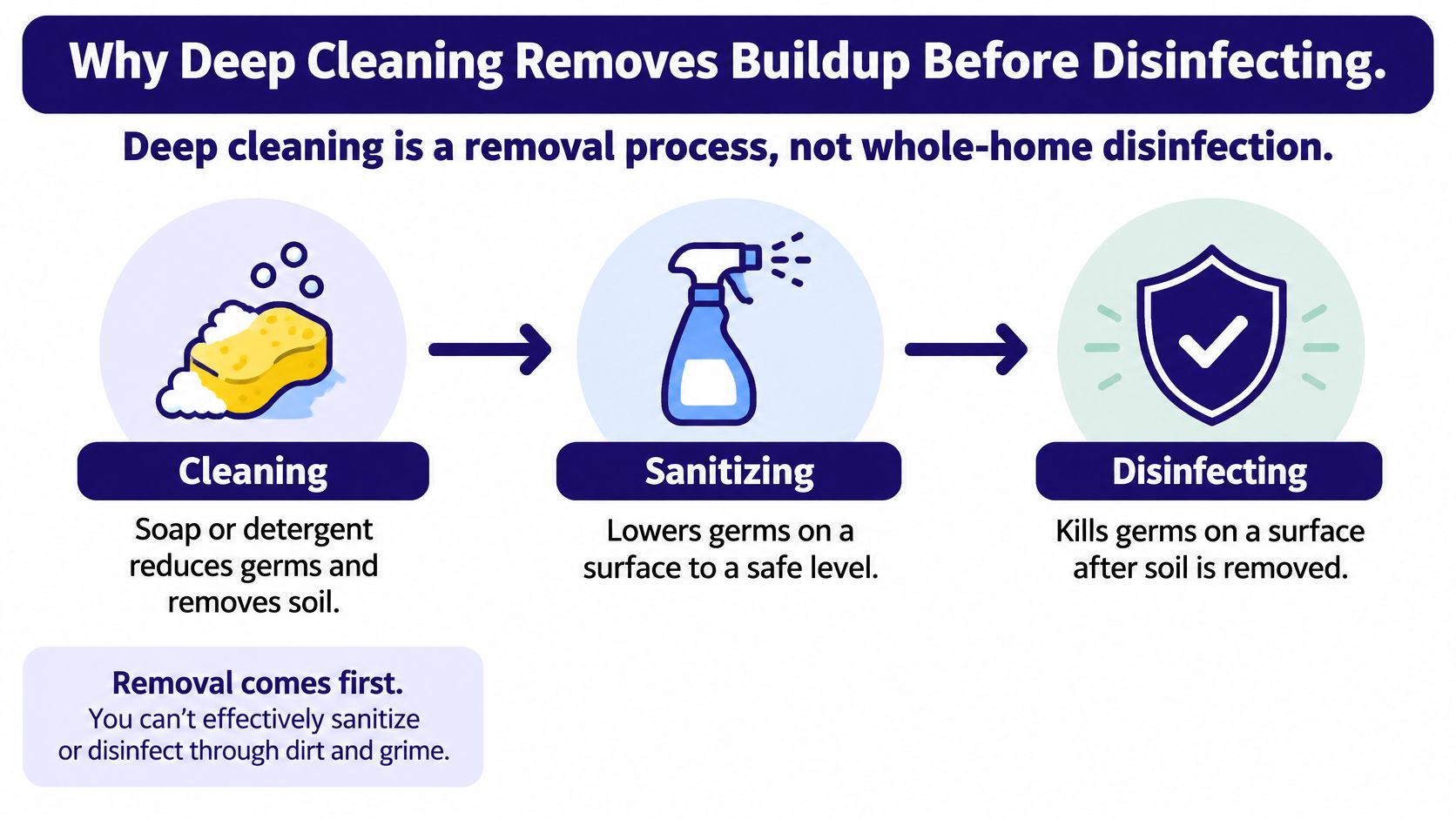
Cleaning, sanitizing and disinfecting describe three different outcomes, and only one of them is what a deep clean does. CDC guidance on cleaning and disinfecting your home draws the line: cleaning with soap or detergent reduces the amount of germs and lowers surface-contamination risk, while sanitizing and disinfecting are separate steps with their own product and label requirements.
The mechanism is mostly mechanical. Detergent, water, agitation, microfiber capture and vacuum extraction loosen and lift dust, grease, biofilm and particulate matter off the surface. That's the whole point of the extra time: more surfaces get reached, and what's stuck to them leaves.
The order that works
1. Take loose dust from the top down. Ceiling fans, light fixtures, vents, high ledges. Dust falls, so starting high keeps you from re-soiling a surface you already wiped.
2. Vacuum and capture what's left. A HEPA vacuum pulls particulate out of carpet, upholstery and floor edges instead of pushing it back into the room.
3. Degrease kitchens and bathrooms. These two rooms hold moisture and organic residue, so a detergent needs a little dwell time before you scrub.
4. Wipe high-touch points. Handles, switches, faucets, toilet bases, countertops, remote controls.
5. Disinfect only where the situation calls for it. Follow the label, keep the surface visibly wet for the stated contact time, and don't spray over soil you haven't removed.
Contact time is where most disinfecting fails. The CDC's guidance on cleaning and disinfecting with bleach notes that when bleach label instructions aren't available, its household guidance gives at least one minute of wet contact time, and it warns against mixing bleach with other cleaners because dangerous vapors can form.
Removal first: a disinfectant sprayed onto a greasy range hood spends its contact time on the grease, not on the surface underneath.
For a home that's gone a month or two without professional attention, the goal is a clean baseline: strip the accumulated soil, then keep it from rebuilding. Disinfection stays targeted rather than implied. The CDC says it's generally unnecessary at home unless someone is sick or recently sick, and visibly dirty surfaces should be cleaned before they're disinfected. If illness has been through the house, our disinfecting services are a separate add-on aimed at high-touch points, not a substitute for the removal work.
Air Quality and Who Should Take Precautions
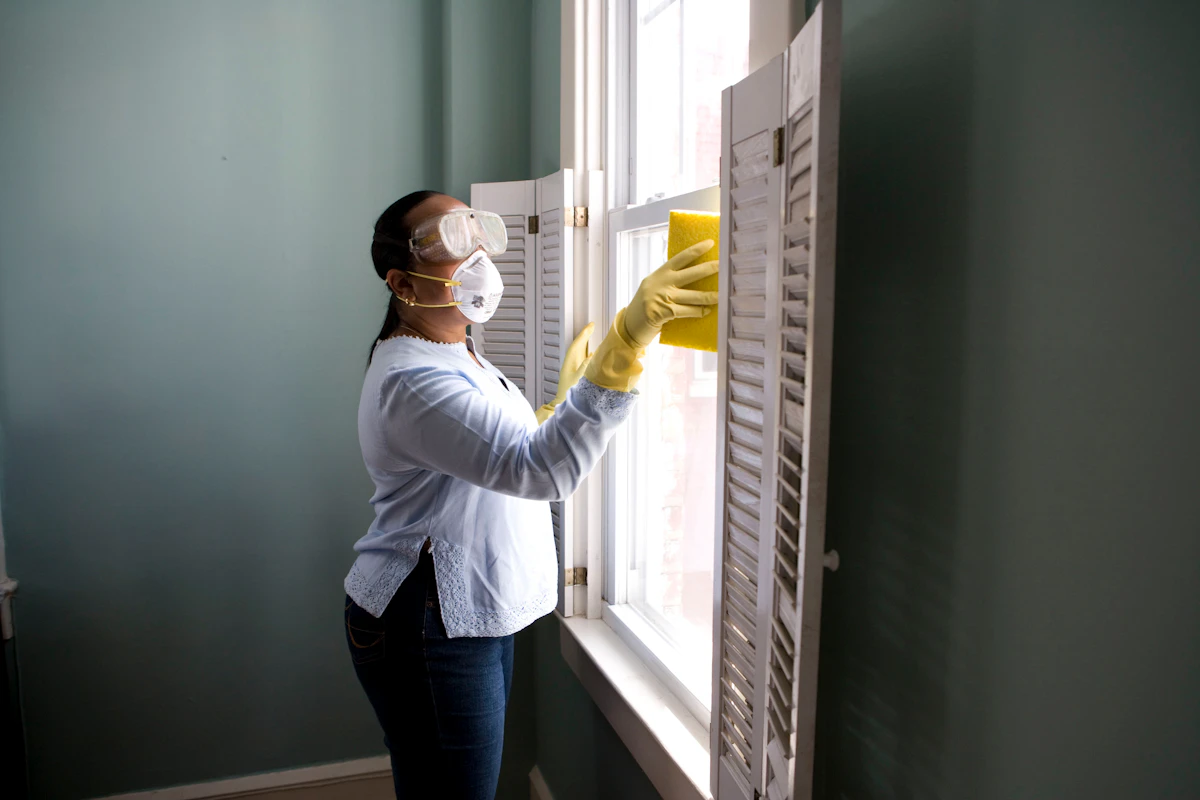
A clean that looks aggressive isn't automatically a healthier clean. Fast dry-dusting, heavy product use and a closed-up house can leave the air worse for a few hours than it was before anyone started, especially in a home with pets or anyone who reacts to dust.
The EPA's indoor air guidance explains why. Cleaning can stir settled dust, allergens and other contaminants back into the air, and cleaning products can add pollutants of their own. Ventilation before, during and immediately after the work is what dilutes and removes them.
Four habits make the difference, and none of them cost extra:
- Damp dust instead of dry dusting. A damp microfiber cloth traps what a feather duster or a dry rag launches into the room.
- Control the vacuum. A machine with decent filtration, moved slowly, picks up more than a quick pass at full speed.
- Run the exhaust fans. Bathroom and kitchen fans that vent outdoors pull particles and product odors out rather than recirculating them.
- Move the sensitive occupants. Children, pets and anyone with asthma stay out of the room being cleaned until airborne dust and odors settle.
Product choice matters less than quantity and airflow. The EPA recommends reducing indoor use of cleaners, choosing less-toxic options where possible, and following labels rather than improvising stronger mixtures. A stronger mix isn't a deeper clean; it's more residue on the surface and more vapor in the air.
The honest limit: a deep clean is a controlled reset followed by maintenance. It removes what has settled and lowers exposure. It can't sterilize a home or eliminate every allergen.
That's also the answer for anyone who asks whether the process makes indoor air worse before it gets better. Briefly, yes, if it's done dry and fast. Managed properly, with damp methods and airflow, the room ends cleaner than it started and the dust stays out longer. For upkeep between visits, these habits to reduce dust in the house do more than an extra deep clean would.
When a Home Needs a Deep Clean
Say a family signs a lease on a rental that sat empty for three months. The photos looked fine. In person, the cabinet fronts above the stove carry a tacky film, the shower grout has gone two shades darker, and the window tracks are packed with grit. Nobody did anything wrong. Buildup accumulates at the speed of cooking, showering and dust settling, and it doesn't announce itself.
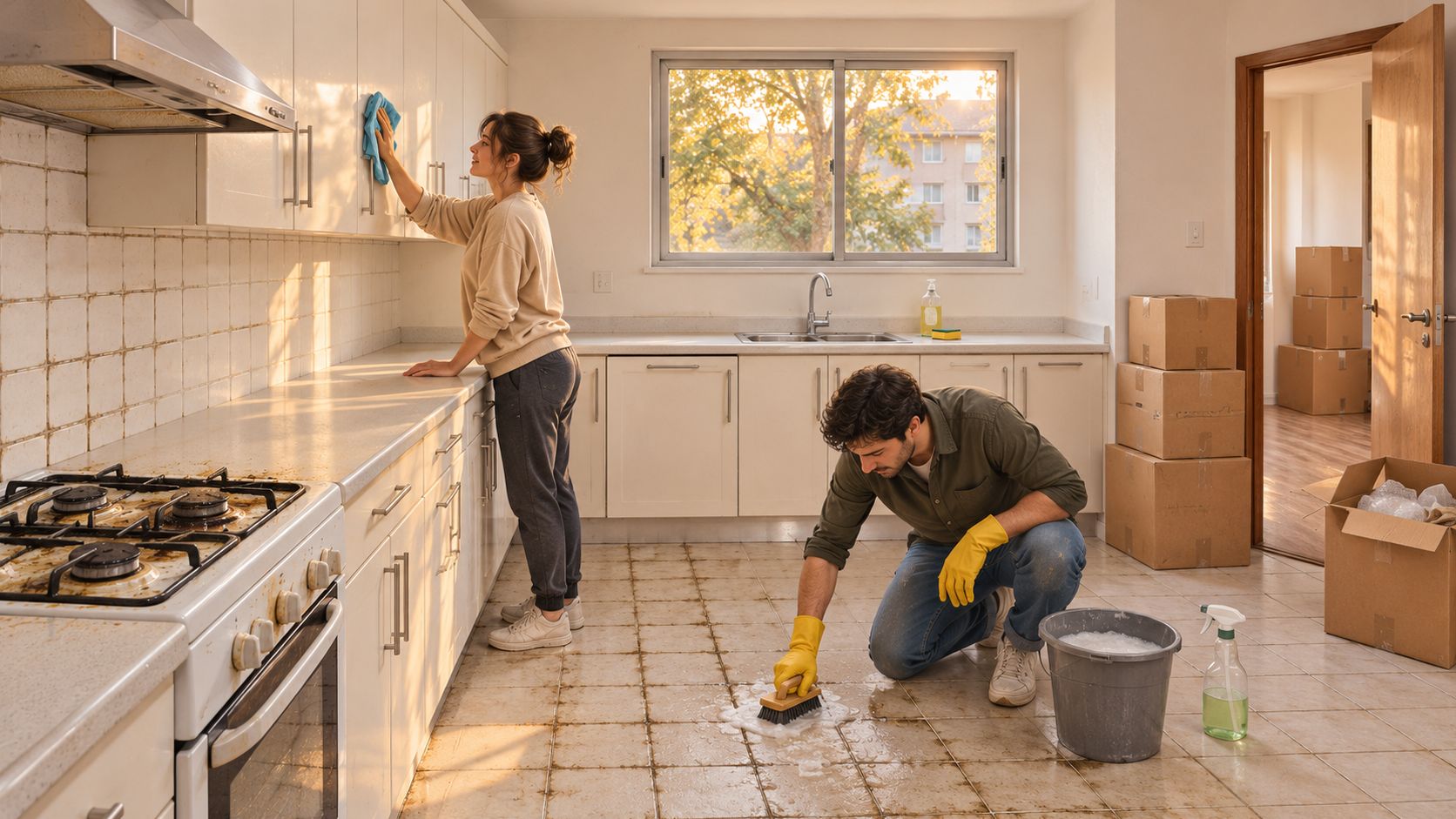
That pattern, not a date on the calendar, is what decides when a deep clean is the right first step. A home that's gone a month or two without professional service is usually past what a single maintenance visit can catch up on.
| Situation | Typical trigger | Recommended service |
|---|---|---|
| First visit to a home | First booking or a home never professionally cleaned | Deep clean before recurring service |
| Long gap in cleaning | One to two months or longer without service | Deep clean, then standard upkeep |
| Move-out or listing | Handover to a new tenant or buyer | Move-in or move-out clean |
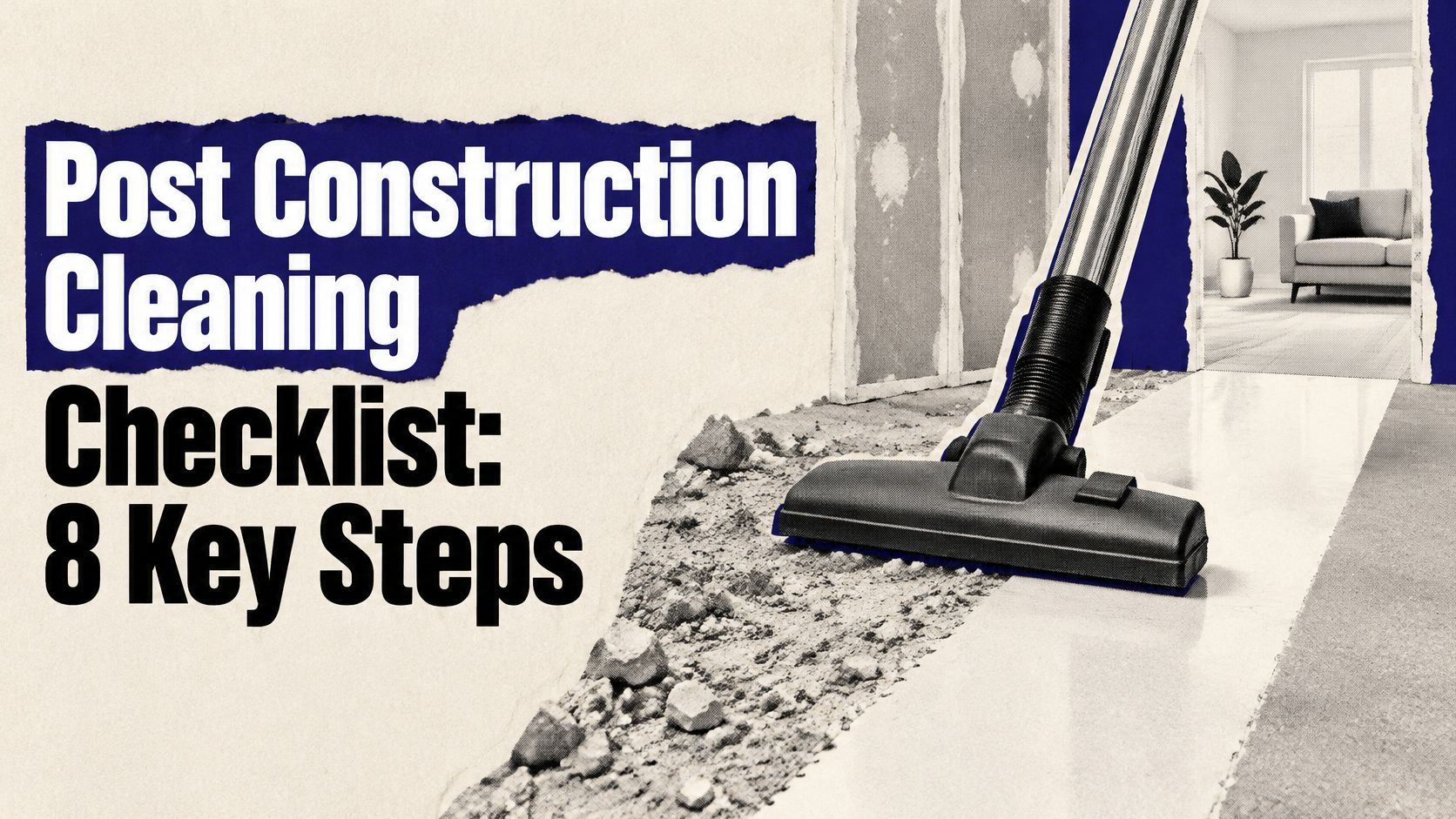
| Renovation dust | Dust and debris left after construction work | Post-construction clean |
| Recent illness at home | Someone sick or recently sick | Targeted disinfection of high-touch points |
| Yearly reset | Annual spring or seasonal clean | Deep clean once a year, standard cleaning between |
Read that table by trigger rather than by season. Two homes on the same street can need entirely different services, because one sat empty for a summer and the other was cleaned every two weeks until last month.
Three checks before you book
1. How long since the last professional clean? A month or more points to the wide pass first, with routine visits after.
2. Is this household buildup or renovation dust? Fine construction dust travels into sills, cabinet exteriors and vents, and it needs capture rather than a damp mop, so post-construction work is the right service.
3. Is anyone sick or recently sick? That calls for targeted disinfection of high-touch points on top of the cleaning, not a whole-home disinfection claim.
A yes on the first check, or a no on the other two, points to deep cleaning. Our deep cleaning is built for first visits and for homes that haven't had professional service in over 30 days, and the checklist is adjusted to each home rather than copied from a template, because a house with two dogs and a house with two retirees don't collect the same soil.
Before you call, note the rough date of the last professional clean and the two rooms that bother you most. Those two details set the scope faster than any phone description of "pretty dirty."
---
J&M Cleaning Team has cleaned Central Florida homes since 2006, with one-time deep cleaning starting at $490 and recurring visits from $187 per visit, all performed by bonded, insured and background-checked technicians using family-safe supplies. If your home has gone a month or two without professional attention, that flat-rate deep clean is the reset, and standard cleaning afterward is what keeps the result from sliding back. Get an exact price in about a minute through the online quote tool at J&M Cleaning Team and pick a schedule window that fits your week.