People spend approximately 90% of their time indoors, and concentrations of some indoor pollutants are commonly 2 to 5 times higher than typical outdoor concentrations, according to the U.S. Environmental Protection Agency indoor air quality report. That reframes deep cleaning house work as more than tidying. Dust, dust mites, mold, pet dander, cockroach allergens, particulate matter and residues from household products build up on floors, furniture and fixtures, and several are recognized asthma triggers.
A good deep clean is a sequence of dry and wet passes, not a random task list. You remove loose material first, wash soil off surfaces second, disinfect only where and how the label allows, and do floors last. Skip the sequence and you'll often get a home that looks clean for a day while dust resettles, disinfectant fails on dirty surfaces, and damp problems stay hidden under a fresh scent.
How Long a Full-Home Deep Clean Takes
Block the time before you pick up a cloth. These estimates assume a reasonably tidy home, no furniture moved and no heavy grease or long neglected build-up.
| Home size | One person | Two-person team |
|---|---|---|
| Studio or 1-bedroom | 4-6 hours | 2-3 hours |
| 2-bedroom | 6-9 hours | 3-5 hours |
| 3-bedroom | 9-12 hours | 5-6 hours |
| 4-bedroom or larger | 12-16 hours | 6-8 hours |
Where the Estimate Grows
Add 30-50% when you've got pets, a neglected kitchen, or a home that hasn't been cleaned in six months or more. Pet hair slows vacuuming and upholstery work. Grease on a range hood, cabinet fronts and backsplash needs repeated detergent passes, not one quick wipe. Bathrooms with hard water scale and soap film behave the same way.
Kitchens and bathrooms consistently take longer than bedrooms because they combine water, grease, grout, fixtures and high-touch hardware. Bedrooms are mostly dusting, floors and glass. Ceiling fans, inside cabinets and inside appliances are the other common underestimates. I'd allow roughly an extra hour for each of those jobs if it's been a while, especially an oven that needs soaking and scraping rather than a wipe.
Splitting the job is normal. In 2024, 45% of U.S. adults said spring cleaning takes three or more days, according to the American Cleaning Institute's Wakefield Research survey. A two-day split isn't a failed plan, it's how many households finish.
Practical rule: Give the kitchen and bathrooms the first calendar block while your energy is highest, then divide the remaining rooms using the table.
If you can't protect that block, cut scope deliberately rather than rushing every room. Drop inside cabinets or interior windows for this round. Don't cut detergent cleaning before disinfecting, or floors last, because those steps protect the quality of everything else you've already done.
Mold, Moisture and When to Stop Cleaning
Moisture control, not scrubbing, limits indoor mold growth. Mold produces allergens and irritants, exposure can trigger allergic reactions, and mold spores can't be completely eliminated because they occur in indoor air and house dust, according to the EPA brief guide to mold, moisture and your home. Dead mold can still cause allergic reactions in some people, so killing color on a surface doesn't finish the job if the material stays damp or contaminated.
Central Florida makes this distinction matter. Humidity and air-conditioning condensation can keep window frames, exterior walls, bathroom caulk and areas under sinks damp for long stretches. A deep clean can reset maintainable surfaces, but it can't repair a leak, fix a poorly draining AC system, or dry water inside a wall.
Warning Signs to Check First
- Returning musty smell: The odor fades after cleaning, then comes back within days.
- Drywall or ceiling staining: Discoloration suggests water moved through the material, not just surface dirt.
- Peeling paint: Look near bathrooms, windows and exterior walls where condensation collects.
- Wet window frames: Repeated condensation keeps sills, tracks and nearby drywall damp.
- Dark spots behind furniture: Pieces pushed tight against exterior walls trap still, humid air.
- Damp under-sink areas: Slow drips can soak cabinet floors and the wall behind them.
A small patch on a hard, nonporous surface can usually be cleaned with detergent and water, then dried fully. Tile, sealed stone, glass and metal give you a surface you can wash and inspect. Stop and get professional help when growth is widespread or keeps recurring, when drywall or carpet is water damaged, when there's visible structural damage, or when someone in the home has allergy or asthma symptoms that worsen indoors.
I would fix the order this way every time. Repair the leak, improve ventilation and check AC humidity first. Remove or remediate damaged porous material where needed. Deep clean last, once surfaces are dry and the source is controlled. Scrubbing first creates a false sense of resolution because the stain improves while the condition that fed it stays untouched.
The Work Order and Safe Disinfecting
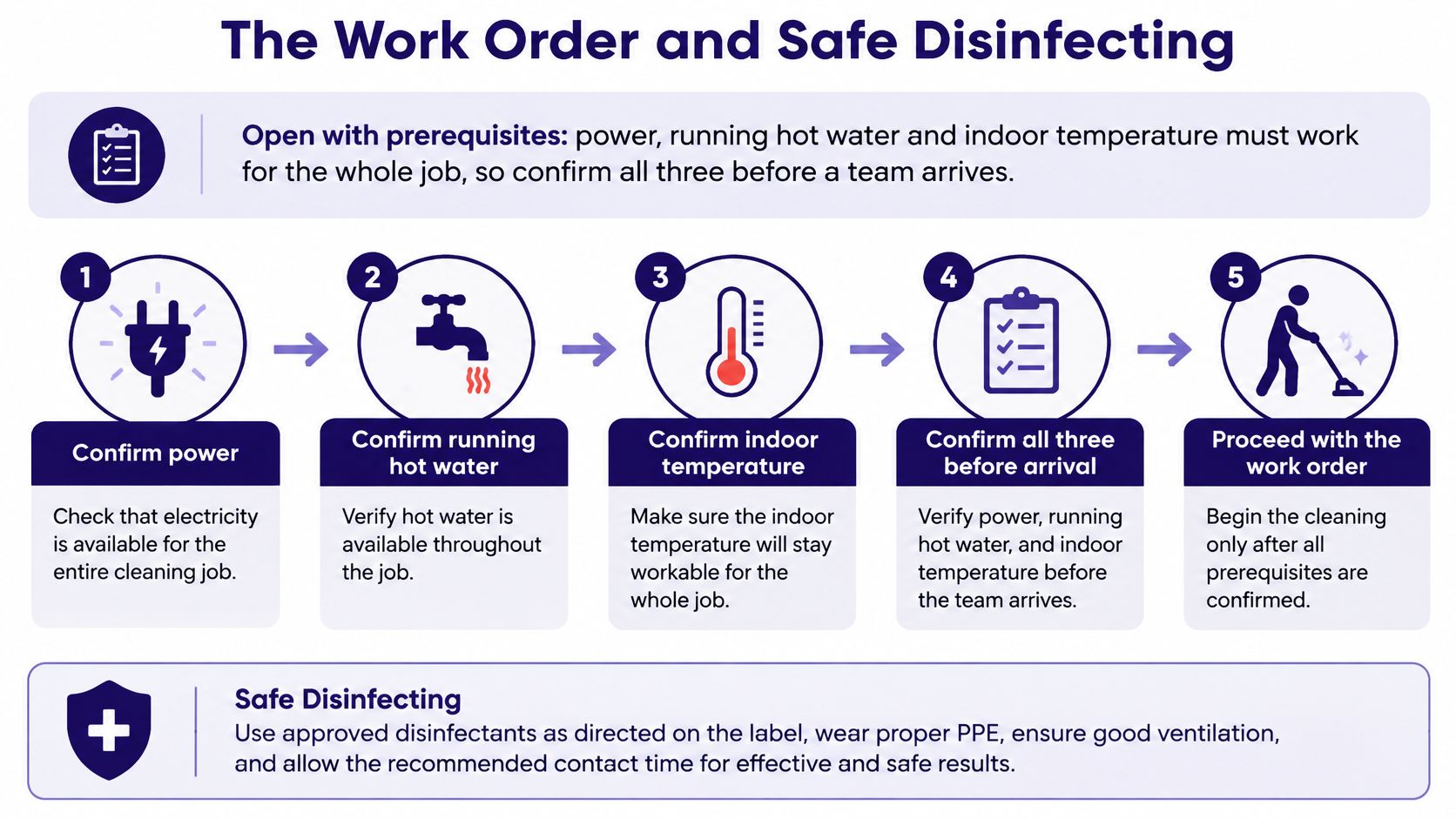
Start with prerequisites, not products. Running hot water, functional electricity, and climate-controlled indoor temperatures are mandatory during the cleaning. Confirm all three will work for the whole job before a team arrives or before you start yourself. A vacuum, lights, hot rinse water and a workable indoor temperature aren't conveniences, they're how the work gets done safely and in order.
The graphic below sets out those prerequisites before the cleaning sequence begins.
The Numbered Sequence
1. Clear surfaces and remove clutter. Bag trash, move laundry, clear counters and empty the sink. You can't clean under piles, and shuffling objects from one dirty surface to another just spreads dust. The slip is decluttering room by room as you go, which breaks the dry pass into starts and stops. Clear the whole work area first.
2. Dust high to low. Start with ceiling fans, light fixtures and vent covers, then shelves, picture frames and furniture tops. Use a damp microfiber cloth or an extendable duster that traps dust rather than flicking it into the air. Falling dust should land on surfaces you haven't cleaned yet. If you polish a table and then dust the fan above it, you've created a second job.
3. Clean from least soiled to most soiled. Do bedrooms and living areas first, then hallways, then the kitchen, and bathrooms last. WHO recommends progressing from cleaner to dirtier areas to prevent transferring contamination back onto cleaned surfaces, according to WHO guidance on cleaning and disinfecting surfaces. The common slip is carrying a bathroom cloth into the kitchen. Use separate or color-coded cloths and change them when they're visibly soiled.
4. Detergent-clean before you disinfect. Wash fixtures, counters, handles, switches and cabinet pulls with detergent and water. Soil and organic matter can reduce disinfectant performance, so spraying disinfectant onto a greasy or visibly dirty surface wastes the product. Rinse or remove residue where the label requires it. This is the wet pass often rushed, and it's the one that determines whether the next step works.
5. Disinfect priority touch points at label strength. Apply the product at the label-specified concentration and volume, and keep the surface visibly wet for the full contact time. CDC guidance states the product label determines contact time and the surface must remain wet throughout that interval, as set out in the CDC guide to cleaning and disinfecting your home. A fine spray that evaporates in thirty seconds didn't meet a multi-minute dwell time, no matter what the bottle promises.
6. Vacuum, then damp-mop floors last. Vacuum carpets, rugs, edges and hard floors after overhead work is complete. Damp-mop hard floors with a clean pad, changing it when it starts pushing gray water. Floors done early collect everything you knock down later.
The calendar works in the opposite direction to the cleaning order. You block kitchen and bathroom time first because they're longest, but you clean them last because they're the most soiled. Keep those two ideas separate and the day runs more smoothly.
This short video shows the sequence in practice, with the dry work finished before wet cleaning reaches the floors.
Product Rules That Prevent Most Failures
| Product | Best use | Key rule |
|---|---|---|
| Diluted bleach | Disinfecting hard, nonporous surfaces after cleaning | Use room-temperature water unless the label says otherwise, never mix with vinegar or ammonia |
| Quaternary ammonium disinfectant | Disinfecting hard surfaces after cleaning | Keep the surface visibly wet for the full label contact time |
| Detergent and microfiber cloth | Cleaning fixtures, counters and cabinet pulls before any disinfecting | Wash or replace cloths when visibly soiled, keep bathroom and kitchen cloths separate |
Product choice only helps if your cloths, pads and dilutions are ready before you start, which is why a stocked caddy matters. Our guide to house cleaning supplies for a complete cleaning caddy covers what to assemble so you aren't improvising mid-room.
Safety and Air Quality
Apply disinfectant with a product-soaked cloth or wipe rather than spraying clouds into an occupied room. You'll get better surface coverage, less inhaled product, and a wet surface that stays wet longer. Never mix bleach with vinegar or ammonia, and don't combine chemical products to make them stronger. In a CDC survey of 502 U.S. adults conducted in May 2020, only 35% knew that bleach should not be mixed with vinegar, while 58% knew it should not be mixed with ammonia, according to the CDC Morbidity and Mortality Weekly Report on cleaning practices.
Open windows when outdoor conditions permit and run bathroom and kitchen exhaust fans during and after cleaning. Cleaning changes indoor air temporarily. One study detected post-cleaning increases in approximately 60% of measured volatile organic compounds and 80% of semivolatile compounds, with some remaining high for more than five hours, as reported in a study of cleaning and indoor air concentrations in residences. A strong fragrance isn't proof of clean air.
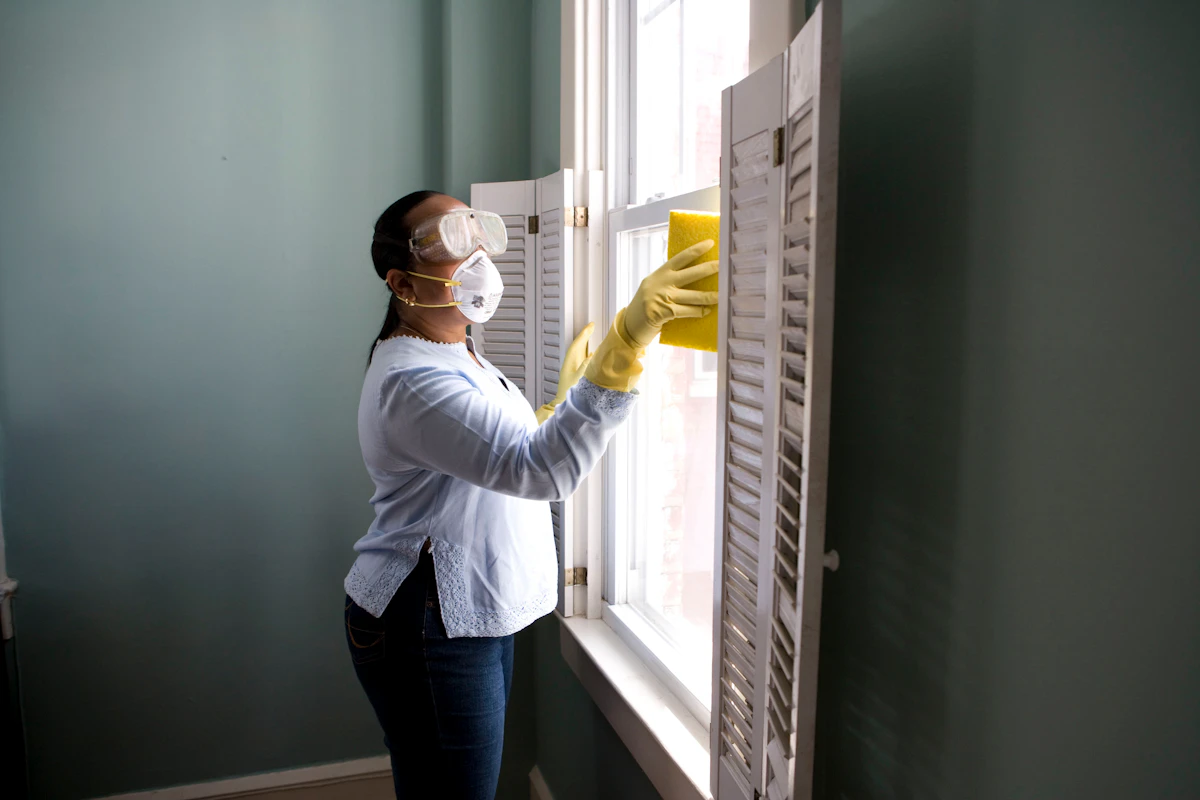
Skip heavy fragrance where children, pets, asthma or fragrance sensitivity are present. Wear the skin and eye protection the label requires, wash hands after using products, and store chemicals away from children and pets. A product marketed as natural still has a label, and the label still governs dilution, ventilation and contact time.
A room is done when a fresh pass with a clean, lightly damp cloth picks up no new dust, touch points feel free of residue, and floors show no grit at the edges where vacuums often miss.
Record what you used if you're handing the home back to family members with sensitivities. A simple checklist with product name, dilution, target surface and contact time prevents a second person from reapplying a different chemical over the first one.
Room-by-Room Checklist for Every Space
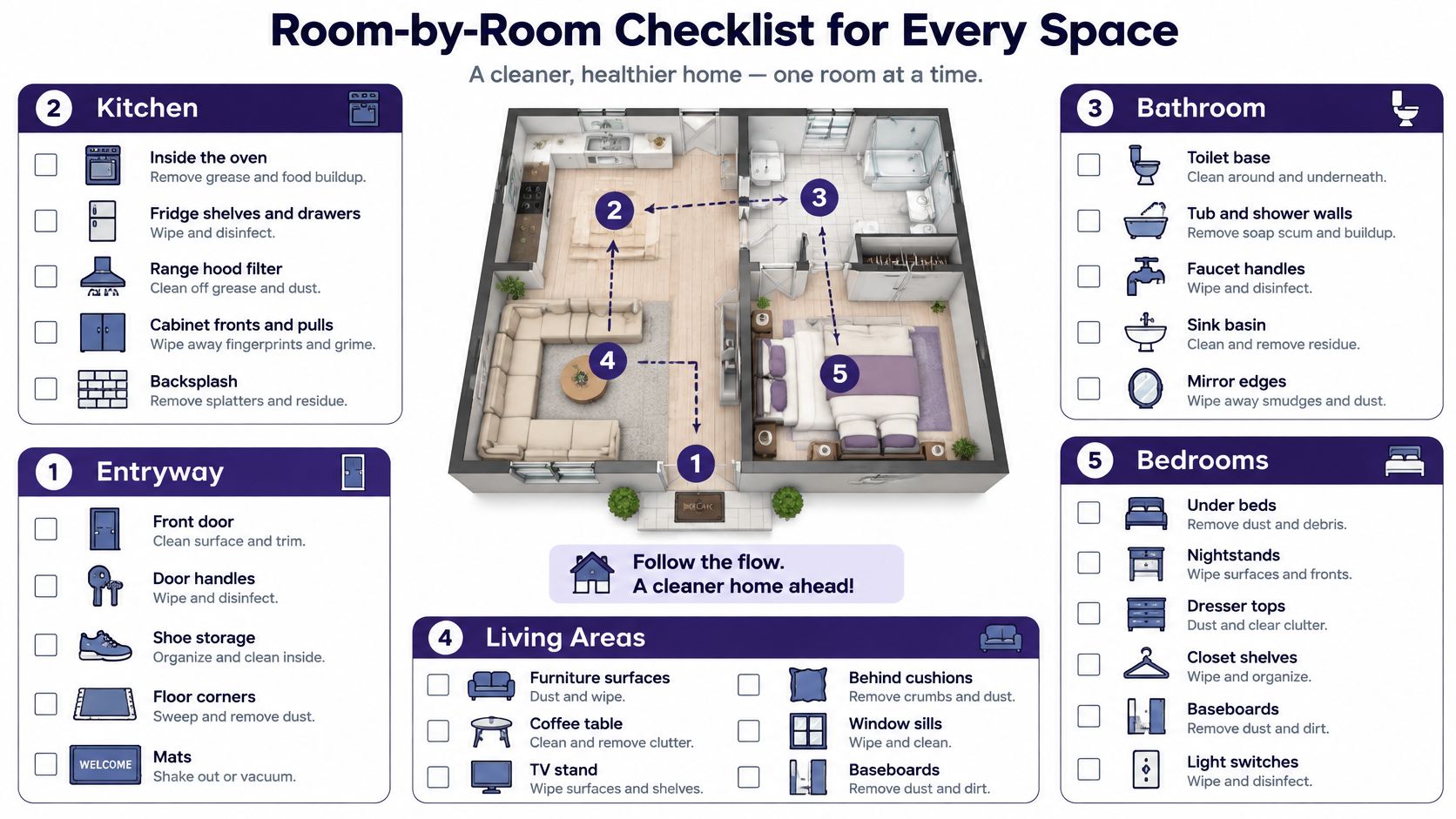
Work through the home in the order you'd walk it, but keep the sequence from the previous plan inside each room. Dry dust first, wet cleaning second, floors last. The per-room times below are for one person and help you split the full-home estimate across a day or a weekend.
The visual checklist below maps those tasks by room so you can check items off as you move.
Kitchen About 2 Hours
- Inside oven and fridge: Remove shelves and drawers, wash separately, and wipe seals where crumbs collect.
- Range hood filter: Degrease or soak it, because a loaded filter spreads odor instead of removing it.
- Cabinet fronts and pulls: Wash grease film off handles before disinfecting.
- Backsplash and grout: Scrub joints behind the stove and sink.
- Sink basin and faucet base: Clean the crevice where water and residue sit.
- Hidden item: The dishwasher filter and door seal, which people skip until odor gives them away.
Bathrooms 45 to 60 Minutes Each
- Grout and shower walls: Scrub after detergent has loosened soap film.
- Showerhead descaling: Remove mineral build-up so spray holes clear evenly.
- Caulk and exhaust fan cover: Wash the cover separately and let it dry before refitting.
- Toilet base and behind it: Clean the floor line, bolts and water supply area.
- Vanity drawers: Empty, vacuum crumbs and hair, then wipe.
- Hidden item: Tile edges behind the door, where dust and moisture collect unnoticed.
For a closer look at grout, fixtures and ventilation in this room, see our walkthrough on how to deep clean a bathroom without missing hidden build-up.
Bedrooms 30 to 45 Minutes Each
- Ceiling fans and blinds: Trap dust with a damp cloth instead of shaking it onto bedding.
- Under beds and closet floors: Vacuum edges where dust balls form.
- Mattress vacuum: Use an upholstery tool along seams.
- Mirrors and glass: Buff dry to prevent streaks.
- Hidden item: Closet shelf tops, which hold fine dust above clean clothes.
Living Areas About 60 Minutes
- Upholstery vacuum: Lift cushions and vacuum the deck underneath.
- Baseboards and window tracks: Vacuum tracks before wiping or you'll make mud.
- Light switches: Clean with a barely damp cloth, never a wet spray into the plate.
- Electronics: Dust with a dry microfiber cloth.
- Hidden item: The floor strip behind the sofa, even if you aren't moving heavy furniture fully.
Entries Hallways and Laundry
Entries and hallways need 15 to 20 minutes for door frames, switchplates, doorknobs, shoe storage and mat edges. The hidden item is the wall corner at hand height where bags and hands brush daily. Laundry needs about 15 minutes for dryer vent lint you can reach safely and the washer door gasket. That rubber fold traps moisture and residue, so wipe it and leave the door open to dry.
What separates this from routine upkeep is reach. A weekly clean handles visible surfaces and floors. A deep clean gets inside appliances, behind cushions, into tracks, along grout and around fixture bases. Use one done test across every space: no residue on touch points, no streaks on glass, and no grit underfoot, especially at room edges and in front of sinks and stoves.
Deciding Whether to Deep Clean Yourself or Hire a Team
In 2025, 17% of U.S. adults said their home had not been deep cleaned during the previous year, according to the ACI survey conducted by Wakefield Research. If you're in that group, the decision isn't about effort alone. It's about time, reach and whether the reset will get finished.
Three Decision Questions
- Timing: How long has it been since the last deep clean?
- Reach: Can you reach ceilings, high shelves and inside appliances safely?
- Hours: Do you have the hours the time table requires for your home size?
Deep cleaning is recommended for first-time visits and for homes that have not been professionally cleaned in over 30 days. If a question above reveals a gap, I would use a professional clean as the starting point. Our advice on how to hire a house cleaner with clear scope and pricing can help you compare what's included.
If you do it yourself, plan the first full clean across a weekend. After the reset, standard cleaning is intended for routine upkeep once deep build-up has been removed, on a weekly, biweekly or monthly schedule. Your concrete next step is simple: block the calendar using the time table, then print the room checklist before you start.
---
If your Orlando home needs the reset but you don't have a full weekend to give it, J&M Cleaning Team offers one-time deep cleaning and recurring maintenance performed by bonded, insured and background-checked technicians with family-safe supplies. Get a transparent flat-rate quote online in about a minute and choose a schedule that fits your household at J&M Cleaning Team.