You've wiped the sink, brushed the toilet bowl, and mopped the floor, but the bathroom still doesn't feel clean. The shower glass stays cloudy, the faucet has a crust around its base, and dust clings to the exhaust cover. Another quick wipe won't remove buildup that needs a different cleaner, more dwell time, or detailed scrubbing.
A deep cleaning bathroom service should address those neglected surfaces without promising that every stain will disappear. The useful distinction isn't more cleaning. It's knowing what needs soil removal, what warrants disinfection, and what may need a repair rather than another pass with a brush.
What a Bathroom Deep Clean Includes, Task by Task
| Task | Standard Cleaning | Deep Cleaning |
|---|---|---|
| Toilet | Exterior wiped, bowl brushed | Full bowl, base, area behind and around seat cleaned, flush handle sanitized |
| Shower and tub | Wiped down | Soap scum removed, grout scrubbed |
| Grout and descaling | Not included | Grout scrubbed and compatible surfaces descaled |
| Faucets and high-touch hardware | Sanitized | Sanitized, with mineral deposits removed where appropriate |
| Vents and ceiling fan | Ceiling fan dusted | Vent covers wiped and dusted |
| Mirrors and glass | Cleaned | Cleaned with edges and tracks detailed |
| Baseboards, door frames, switchplates | Baseboards dusted | Detailed throughout |
| Floors | Mopped | Mopped, with edges and the space behind the toilet base cleaned |
This comparison is a baseline for agreeing on scope, not a fixed contract for every bathroom. Our Deep Cleaning covers living spaces, the kitchen, bathrooms, and bedrooms, and we customize the full checklist to each home's needs. A bathroom with natural-stone tile, aging chrome, or damaged grout needs a different approach from one with intact ceramic tile and newer fixtures.
Where the extra work matters
Shower film and mineral deposits require different treatment. Soap scum needs a compatible cleaner that loosens the film before agitation. Mineral crust needs a suitable descaling product, and an acidic descaler that works on some fixtures can damage acid-sensitive stone.
Grout also deserves more attention than a general shower wipe-down. A narrow nylon grout brush can reach recessed joints that a flat cloth passes over, but aggressive abrasion isn't a sensible answer to crumbling grout. The technician should distinguish removable soil from damaged material before scrubbing harder.
The toilet base and floor edges are another meaningful difference. Mopping the open floor doesn't necessarily reach the narrow space behind the toilet, the base profile, or the junction between the fixture and flooring. Those areas need direct access and separate detail work, not more mop solution.
Scope check: A deep clean should name the neglected surfaces being addressed, not just promise a more thorough bathroom.
What to confirm in writing
Vent work should mean cleaning accessible covers, not assuming that duct cleaning or mechanical repairs are included. Glass detailing should identify accessible edges and tracks, rather than imply that technicians will dismantle an enclosure.
Likewise, sanitizing hardware and removing mineral deposits are separate tasks. Don't interpret one as proof that the other is included, and don't assume every surface can tolerate the same product.
Before booking, compare each table row against the written quote. Flag any missing task, identify fragile finishes, and make sure the agreed checklist states what will be cleaned and what remains outside the visit.
A Sample Bathroom Before and After a Deep Clean
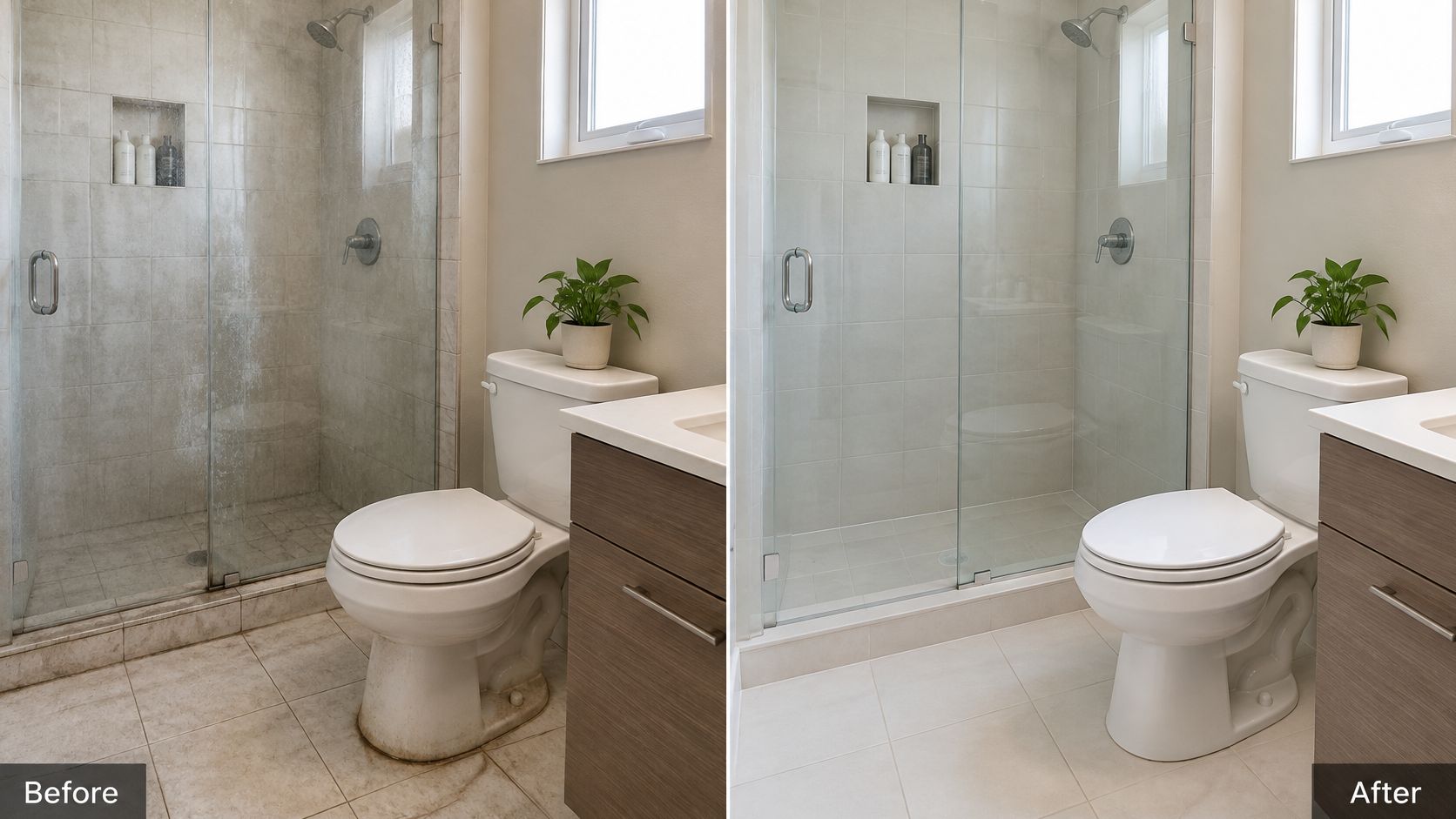
Consider a bathroom with cloudy shower glass, darkened grout along the shower floor, and a grime ring around the toilet base. Soap residue coats the vanity faucet, mineral crust surrounds the aerator, and dust mats the exhaust cover. The floor near the toilet feels sticky even after a quick mop.
This illustration shows the kind of visible change a detailed visit can produce.
Following the buildup through the room
The technician begins overhead, removing loose dust from accessible ceiling fixtures and the vent cover before wet-cleaning anything below. Vacuuming the cover with a brush attachment captures loose material; wiping afterward removes what remains on its surface. That sequence avoids dropping dust onto a freshly finished vanity.
Next comes the shower film. A compatible cleaner stays on the affected area for its directed dwell period, rather than being sprayed and immediately wiped away. The technician agitates the loosened residue with a non-scratch pad, then rinses and checks the glass.
Grout gets a separate pass with a narrow brush. The faucet's mineral deposits receive a finish-compatible treatment, with care around the aerator and trim. Removing an aerator isn't automatically necessary, especially if it's seized or its finish is deteriorating.
More pressure isn't always better cleaning. Let the right product loosen the residue before increasing agitation.
What the finished bathroom should show
The technician details the toilet base and accessible surrounding floor, then finishes the open floor and edges. In this scenario, removable film comes off the glass, the vanity feels free of soap residue, and the floor no longer feels tacky. Accessible surfaces should be free of loose dust, cleaner residue, and obvious missed patches.
That doesn't mean every material looks new. Grout may remain discolored after its surface soil is removed, and permanently etched glass can stay cloudy. Worn caulk, damaged plating, and stained tile may need repair or replacement rather than stronger chemistry.
A useful final walkthrough separates cleaning results from material condition. Check the glass under ordinary bathroom lighting, look behind the toilet where accessible, and inspect the floor edges rather than judging only the mirror.
Afterward, maintain the surfaces that collected buildup instead of waiting until the whole room looks neglected. Remove fresh soap residue, dry persistently wet ledges, and keep accessible edges clear enough to clean. The finished bathroom is a workable starting point, not a guarantee against future wear or buildup.
Choosing Deep Cleaning Over a Standard Clean
| Situation | Best Fit | Starting Price |
|---|---|---|
| First visit or home not professionally cleaned in over 30 days | Deep Cleaning | $490 |
| Routine upkeep after buildup is removed | Standard Cleaning | $350 |
| Moving out before a lease ends | Move In/Out Cleaning | Quote at booking |
| Dust and debris after renovation | Post-Construction Cleaning | Quote at booking |
| Whole-home reset with a full team | Whole-Home Reset Bundle | $499 |
| Ongoing maintenance after a starter clean | Recurring maid service | Quote at booking |
These are home-service options, not bathroom-only prices. Select the service for the condition and purpose of the property, then confirm the bathroom tasks within that service. A bathroom needing detailed work doesn't automatically mean every room needs the same treatment.
First visits versus routine upkeep
We recommend Deep Cleaning for first-time visits and homes that haven't been professionally cleaned in over 30 days. That gives the team scope to address accumulated residue rather than trying to fit restorative work into a maintenance visit.
Once that buildup is removed, Standard Cleaning for routine home upkeep is the appropriate option for maintaining floors, bathrooms, the kitchen, and visible surfaces. Booking repeated intensive work on already-maintained surfaces isn't automatically better value.
The practical reader test is straightforward: if the shower needs repeated scrubbing to look clean, fixtures show scale, or touchpoints remain sticky after a quick wipe, start with a deep clean. If ordinary maintenance removes the fresh soil without prolonged treatment, a standard visit is more suitable.
In the 2024 American Cleaning Institute national survey conducted by Wakefield Research, 38% of surveyed U.S. adults identified cleaning places that can become filthy, including bathrooms, vents, and basements, as a task they dread, according to the American Cleaning Institute. Those easily postponed areas are precisely where a defined detail-cleaning checklist helps.
Match the service to the deadline
Move In/Out Cleaning suits a property handover, where access and readiness matter as much as bathroom appearance. Share the turnover requirements before scheduling rather than assuming every landlord checklist is automatically included.
Post-Construction Cleaning addresses renovation dust and debris. Tell us what work was completed and whether the bathroom contains fresh coatings, sealants, or recently installed fixtures so cleaning can respect their care requirements.
The Whole-Home Reset Bundle includes a multi-technician team, restorative kitchen and bathroom scrubbing, interior appliance cleaning, and attention to ceiling fans, light fixtures, and high-reach ledges. Recurring maid service instead starts with a starter clean and continues with general maintenance.
For Deep Cleaning and Move In/Out Cleaning, the exact flat rate reflects square footage, bedroom and bathroom count, and selected add-ons. Choose the scope first, then compare the final quote, not just the starting figure.
How a Bathroom Deep Clean Runs, Step by Step
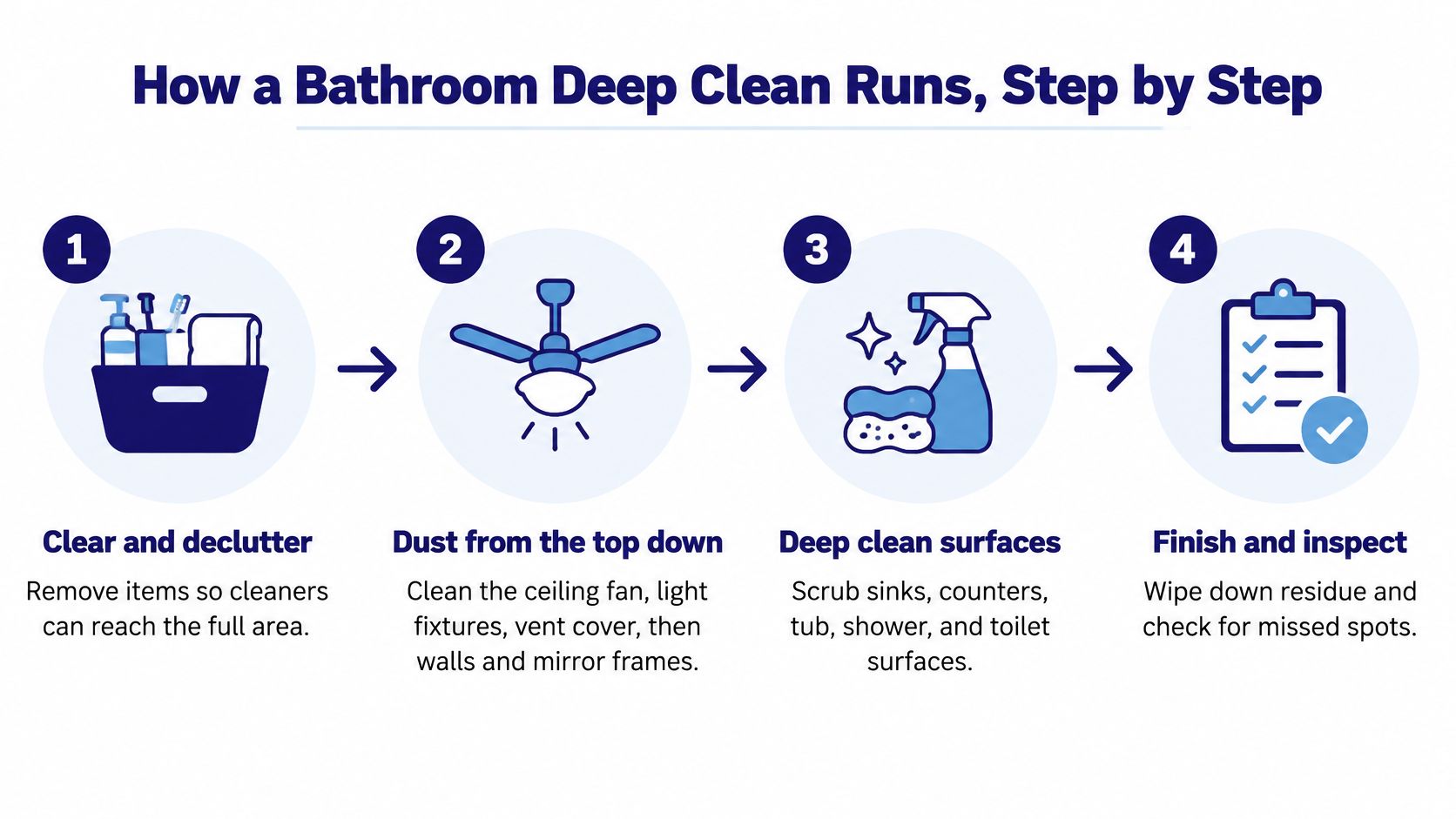
A dependable workflow keeps loose dust, chemical residue, and toilet-cleaning tools from undoing finished work. Our specialists bring professional-grade products, microfiber cloths, HEPA vacuums, and specialized tools; the home must provide running hot water, functional electricity, and climate-controlled indoor temperatures.
The process overview shows the main work stages.
The working sequence
1. Clear and declutter. Remove toiletries, bathmats, waste, and loose items so the technician can reach complete surfaces. Keep personal-care items outside the working area rather than shifting them between wet counters.
2. Dust from the top down. Clean accessible ceiling fans, light fixtures, and vent covers, then address wall dust and mirror frames. Use controlled vacuuming or a microfiber duster so loose debris doesn't spread across the room.
3. Treat soap scum and body-oil film. Apply a cleaner compatible with the surface and allow its directed dwell time before agitation. Keep the product from drying where its instructions prohibit that, and use a non-scratch pad rather than an unnecessarily abrasive tool.
4. Detail grout and remove compatible scale. Work grout joints and shower corners with a nylon brush, then treat deposits on suitable faucets and showerheads separately. Don't use acidic descalers on acid-sensitive stone or assume every metal finish tolerates them.
5. Wash fixtures without transferring toilet soil. Clean mirrors, the sink, and bathing surfaces before finishing the toilet, using dedicated toilet cloths and tools. Work from less-soiled areas toward dirtier ones and change cloth faces before they become loaded with residue.
6. Disinfect selected high-touch surfaces after cleaning. Treat appropriate nonporous flush handles, faucet handles, door hardware, shower controls, and switchplates with an EPA-registered disinfectant suitable for the surface and intended use. Follow label application directions and keep electrical components from becoming saturated.
7. Finish, inspect, and ventilate. Complete any label-required rinsing only after the full disinfectant contact time has elapsed, then check for streaks, residue, and missed edges. Ventilate while products are in use and allow cleaned floors to dry before normal traffic resumes.
Why wet time changes the result
Cleaning and disinfection are different operations. The CDC's cleaning and disinfection guidance explains that surfaces should be cleaned before disinfection and that disinfectant must remain wet for the contact time specified by its label. Spraying a dirty handle and immediately wiping it dry doesn't accomplish the same process.
Read each product label before use, never mix cleaners, and use separate treatments only after removing the previous product as directed. Don't add bleach to an acidic toilet or descaling product.
The demonstration below provides another view of bathroom-cleaning technique.
For a broader view of room sequencing and equipment preparation, our guide to how to professionally clean a house puts bathroom work into a whole-home workflow. Appointment duration should reflect the agreed scope, access, buildup, and material care, not an unsupported promise that every bathroom takes the same amount of time.
What a Deep Clean Cannot Fix on Its Own
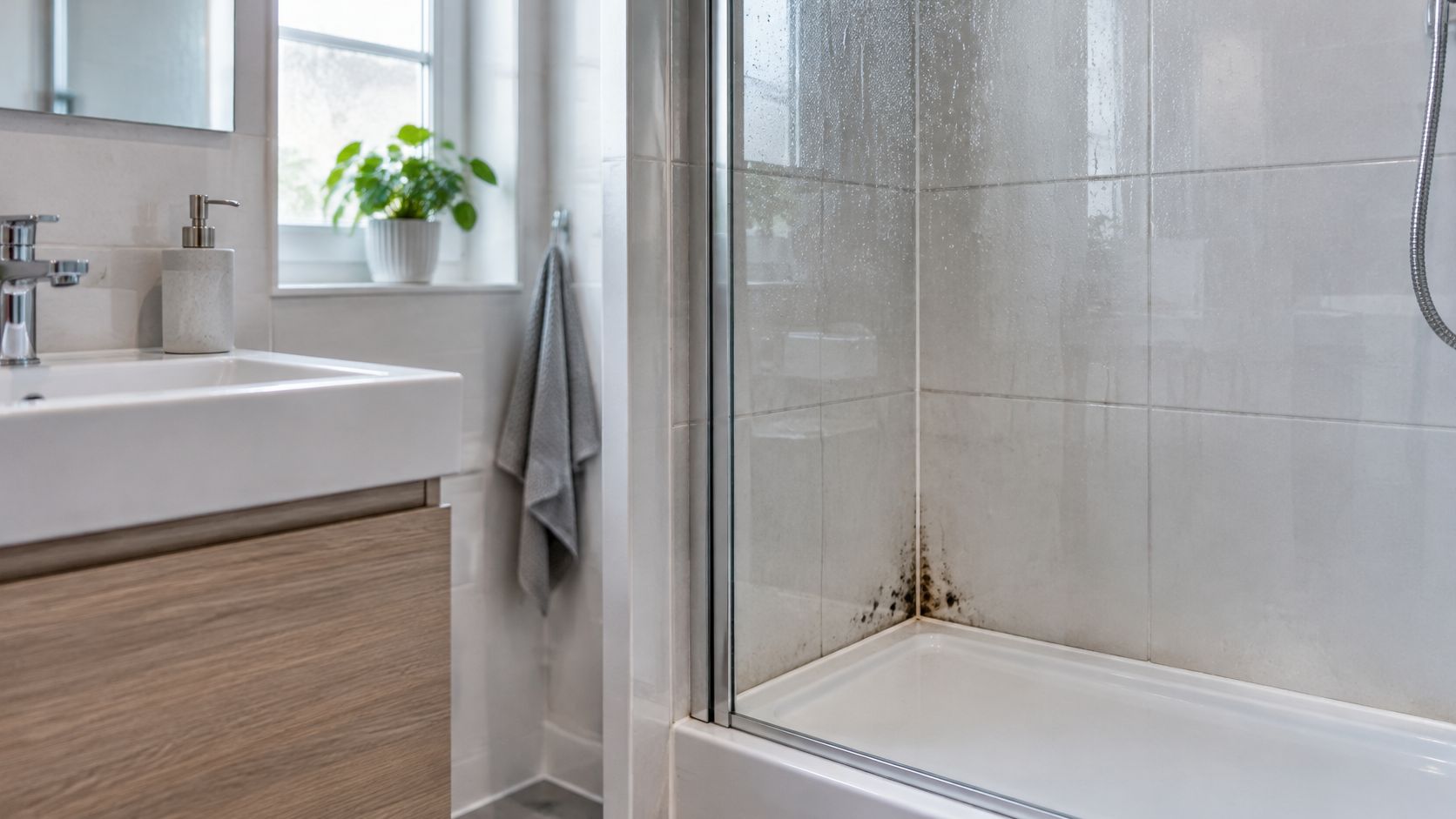
A deep clean can't repair a leak, restore failed waterproofing, or permanently solve mold while the moisture source remains. A bathroom can look much better after cleaning and still have damp drywall, inadequate exhaust, or water entering behind damaged joints.
The CDC's mold guidance calls for removing mold and correcting the moisture problem, recommends indoor humidity at or below 50%, and advises using bathroom exhaust fans that vent outdoors. Removing the visible patch without addressing why it grew is incomplete work.
A shower corner like this deserves a condition check, not an automatic promise of stain removal.
The boundary between cleaning and specialist work
Limited surface mold on hard, intact material may be suitable for careful cleaning when the extent, occupant health, and working conditions allow it. That doesn't mean every dark grout line is mold, or that a cleaner can determine what's happening behind tile by looking at its face.
These conditions warrant repair or specialist assessment rather than repeated cosmetic treatment:
- Recurring growth: The same area develops visible growth again after cleaning.
- Damaged drywall: Softness, swelling, deterioration, or water damage suggests a problem beyond surface residue.
- Failed caulking: Open or deteriorated joints need evaluation and repair, not merely whitening.
- Ceiling staining: Discoloration may require investigation of plumbing, roof, or condensation issues.
- Poor ventilation: Persistent dampness or ineffective extraction needs attention beyond wiping the grille.
Extensive contamination and suspected growth behind drywall raise the level of caution. Occupants with allergies, immune suppression, or lung disease also need a more protective approach; ordinary housekeeping shouldn't be treated as a substitute for an appropriate assessment.
A clean-looking wall isn't evidence that the wall behind it is dry.
What useful documentation looks like
A good service report distinguishes observation from diagnosis. It should identify visible growth or staining, note damp areas and damaged materials, and record accessible ventilation observations without claiming to certify the system.
For example, a technician can document a heavily obstructed vent cover or that the fan didn't operate during a basic check. That isn't an airflow measurement, duct inspection, or confirmation that the exhaust terminates outdoors.
Recommended next steps should be concrete: arrange leak investigation, have damaged joints assessed, or obtain remediation advice where warranted. Don't keep paying for stronger scrubbing when the same spot returns. Resolve the underlying condition before treating another cleaning visit as the permanent answer.
Confirm the Scope and Book a Bathroom Deep Clean
Book against a written task list, not a vague promise of a spotless bathroom. Our final flat rate is calculated from home size and bathroom count, with no surprise travel fees; Deep Cleaning and Move In/Out quotes also account for bedroom count and optional add-ons selected before booking.
Customers can get an instant online price in under 60 seconds with zero commitment. For help understanding how service scope affects the total, our house cleaning cost guide provides booking context without replacing your home's exact quote.
Resolve the details before scheduling
Use this checklist to make the appointment clear:
- Bathroom coverage: Match the written scope to the actual work needed, especially shower film, grout, fixture deposits, glass tracks, and the area behind the toilet.
- High-touch treatment: Confirm whether disinfection is included and which surfaces will receive it, rather than assuming every surface needs disinfectant.
- Material care: Identify natural stone, refinished tubs, damaged plating, loose grout, and any manufacturer care instructions.
- Product suitability: Tell us about asthma, fragrance sensitivities, children, and pets before the visit so product-use questions can be resolved.
- Home readiness: Ensure hot water, electricity, and indoor temperature control are available, and clear access to the agreed work areas.
- Completion expectations: Separate removable residue from permanent staining, worn finishes, and repairs so the final walkthrough uses realistic criteria.
Our service uses non-toxic, family- and pet-safe supplies, but those descriptions don't mean unrestricted exposure is appropriate. Confirm safety claims in writing against the actual product labels or safety data sheets, including ventilation, handling, and re-entry instructions.
The EPA's guidance on greener cleaning products supports choosing products carefully and targeting disinfectant use to appropriate surfaces rather than treating every cleaning task as a reason for blanket disinfection. Stronger chemistry isn't a substitute for correct application.
Keep optional work explicit
Available add-ons include oven interiors, refrigerator deep cleans, interior windows, and baseboard detailing. If bathroom trim is already part of the customized scope, clarify what any additional baseboard service would cover so the quote remains easy to understand.
For an Orlando or Central Florida home, get the instant quote after identifying the bathroom's condition and the work you want completed. If there's uncertainty about access, damaged finishes, or the right service category, call (407) 668-0041 to confirm the scope before booking.
---
J&M Cleaning Team offers customized Deep Cleaning for bathrooms and the rest of your home, with professional supplies and an exact flat-rate quote before scheduling. Visit J&M Cleaning Team to price your Orlando or Central Florida home and choose a service that addresses the buildup you need removed.