You're hauling boxes, the fridge is half-empty, and the landlord wants the keys back fast. The main risk isn't whether the place looks “pretty,” it's whether the unit can survive a deposit review when someone checks the oven, the bath edges, the sliding tracks, and the photo log you didn't make. A move out cleaning checklist for renters works best when every room is treated as a deposit checkpoint, with the cleaning task paired to the evidence that proves you did it and the rule that controls the charge.
Table of Contents
- [1. Move-Out Documentation and Final Walkthrough](#1-move-out-documentation-and-final-walkthrough)
- [2. Kitchen Appliance Deep Clean](#2-kitchen-appliance-deep-clean)
- [3. Bathroom Descaling and Mold or Mildew Removal](#3-bathroom-descaling-and-mold-or-mildew-removal)
- [4. Floor Cleaning, Vacuuming, and Carpet Care](#4-floor-cleaning-vacuuming-and-carpet-care)
- [5. Walls, Baseboards, Doors, and Switch Plates](#5-walls-baseboards-doors-and-switch-plates)
- [What to photograph after this pass](#what-to-photograph-after-this-pass)
- [6. Windows, Sliding Glass Doors, Tracks, and Screens](#6-windows-sliding-glass-doors-tracks-and-screens)
- [7. Light Fixtures, Ceiling Fans, Vents, and AC Filter Replacement](#7-light-fixtures-ceiling-fans-vents-and-ac-filter-replacement)
- [8. Kitchen and Bathroom Cabinets, Drawers, and Closets](#8-kitchen-and-bathroom-cabinets-drawers-and-closets)
- [9. Outdoor Spaces, Balcony, Garage, and Storage Areas](#9-outdoor-spaces-balcony-garage-and-storage-areas)
- [10. Professional Move-Out Cleaning Service](#10-professional-move-out-cleaning-service)
- [Move-Out Cleaning: 10-Item Comparison](#move-out-cleaning-10-item-comparison)
- [Turn Your Checklist Into a Deposit Record](#turn-your-checklist-into-a-deposit-record)
<a id="1-move-out-documentation-and-final-walkthrough"></a>
1. Move-Out Documentation and Final Walkthrough
Start the deposit record before you clean. Florida's deposit timeline gives the landlord a short window after the tenancy ends, since a landlord who does not plan to claim any deposit must generally return it within 15 days, and a landlord who does intend to claim part of it must generally send written notice within 30 days (Florida Statutes 83.49). Document the unit's condition before you surrender possession. Once the landlord has made notes, your evidence carries less weight.
Take time-stamped photos in daylight, then repeat the same rooms with the lights on so shadows do not hide wear. Save wide shots and close-ups in one folder, label them by room, and record a slow video walk-through as backup. Bring your move-in report, compare each room, and ask for a signed checklist at the final walkthrough.
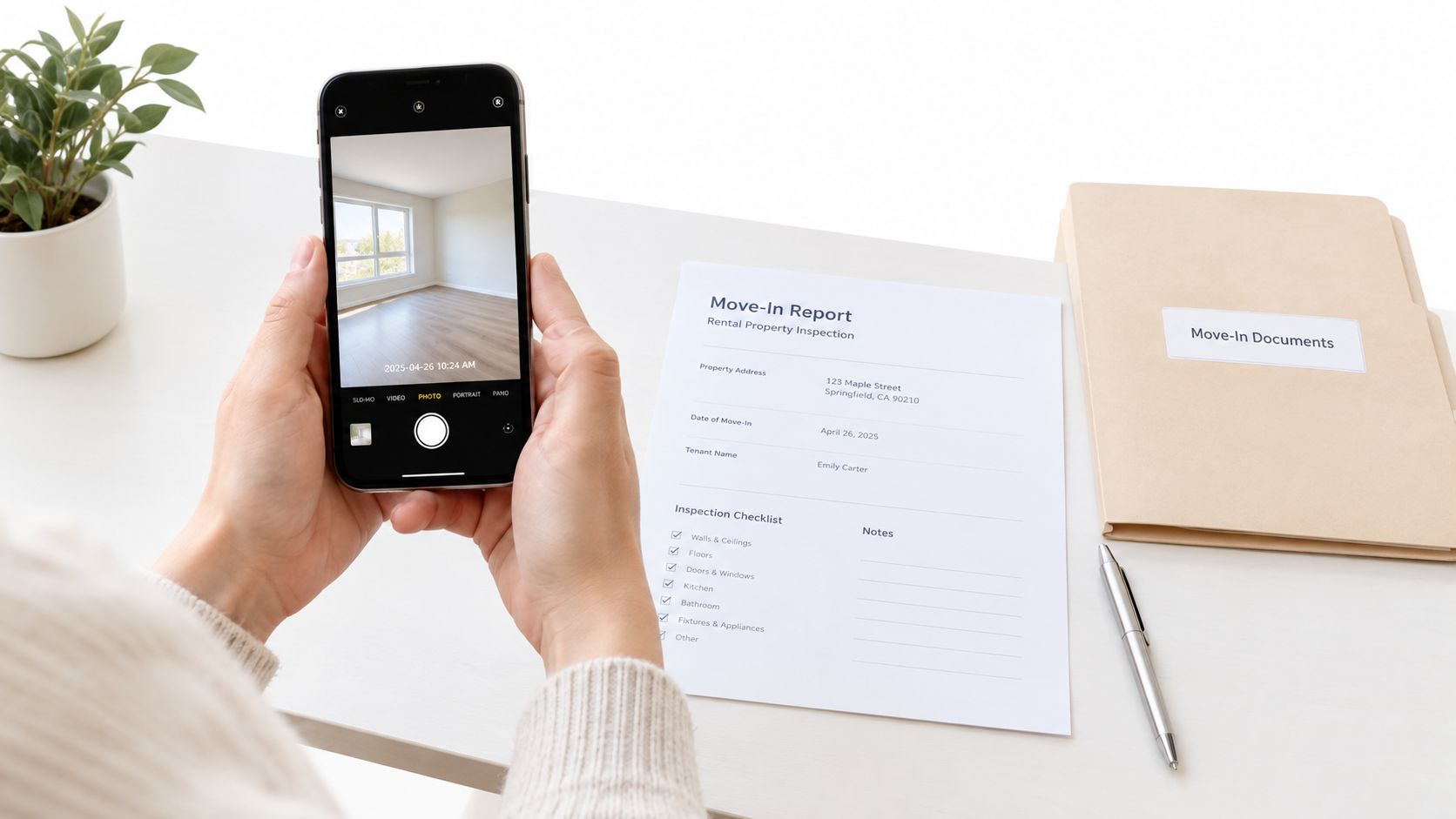
Keep the keys until the inspection is finished. If you hand over possession first, you make it harder to prove what the unit looked like at the moment that matters. The same goes for small damage disputes. A dated carpet stain, a pre-existing wall mark, or a chipped tile is much easier to defend when it is already in your photo log and on the signed form.
Store the signed checklist, your forwarding address confirmation, and the photos that show earlier condition issues. If the charge looks wrong later, that file gives you a clean record to answer it. For budgeting the walkthrough and any cleanup help, this service estimate guide shows how professional cleaning is usually scoped.
<a id="2-kitchen-appliance-deep-clean"></a>
2. Kitchen Appliance Deep Clean
The kitchen is where deposit arguments often start, because landlords check for grease, residue, and food left behind inside appliances. A real move-out clean means opening the oven, pulling out the racks, checking the fridge seals, emptying the dishwasher filter, and wiping the microwave turntable, not just wiping the counters and calling it done. That's also why the kitchen usually gives you the biggest return for the time you put in.
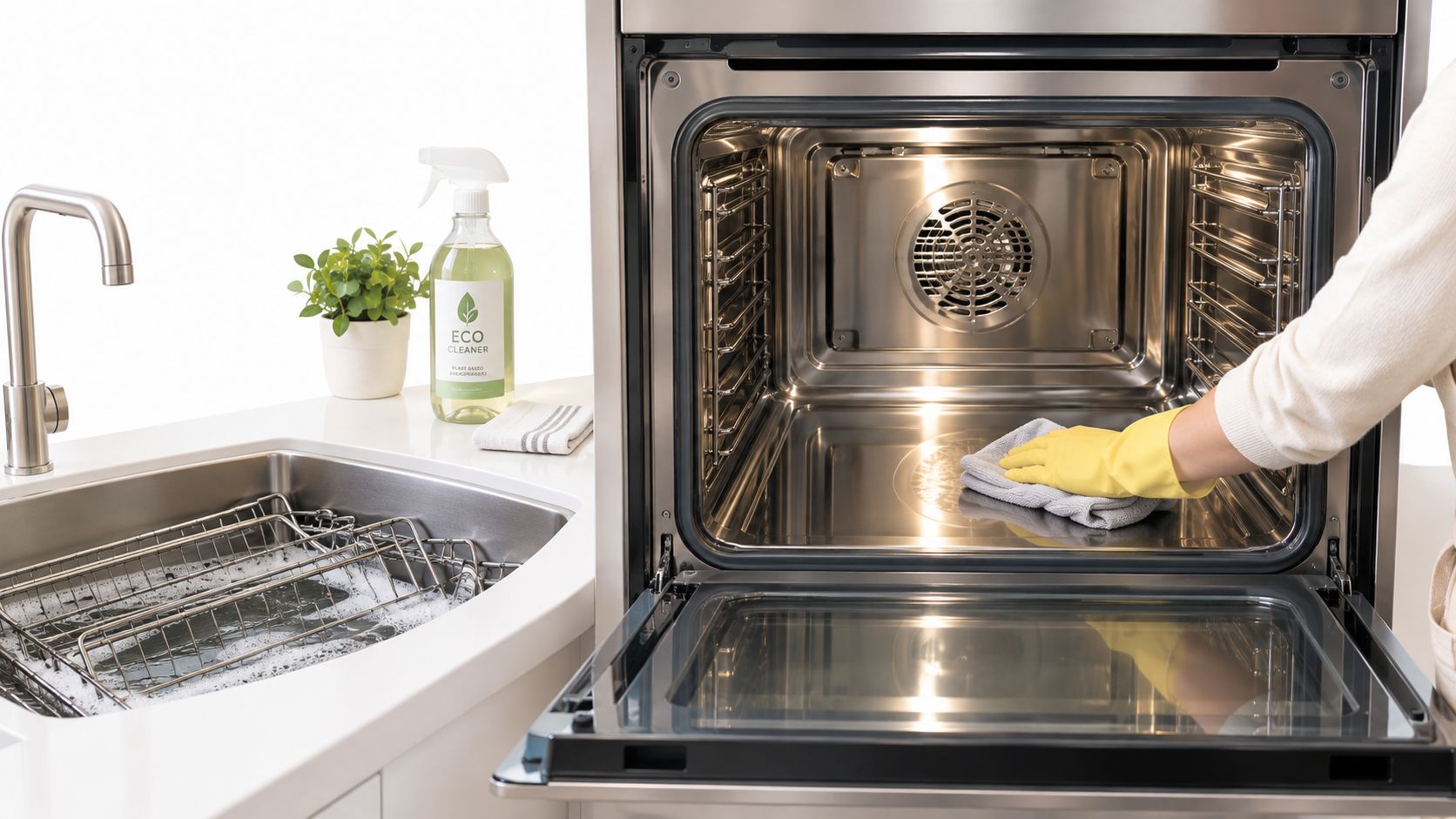
Unplug the refrigerator if you're able to, remove shelves, and let wet surfaces dry with the door open so odor doesn't settle in. Soak oven racks in warm water and dish soap, then use a plastic scraper on baked-on residue instead of grinding it in with a harsh pad. Clean the dishwasher filter, wipe the door gasket, and check the microwave ceiling where splatter often hides.
- Oven and stovetop: Degrease the interior, racks, and burners, then photograph the cleaned cavity and the drip areas.
- Fridge and freezer: Wipe shelves, bins, seals, and the floor under drawers, then leave the doors cracked open to dry.
- Dishwasher and microwave: Remove food debris, clean the filter and gasket, and show the empty interior in your move-out photos.
If your lease calls for professional service, keep the receipt with your inspection file. Even if it doesn't, a before-and-after record of the appliance interiors gives you something concrete to point to if a landlord later says the oven was left dirty. J&M's deep cleaning service is the type of add-on many renters use when the appliances need more than a basic wipe-down.
<a id="3-bathroom-descaling-and-mold-or-mildew-removal"></a>
3. Bathroom Descaling and Mold or Mildew Removal
Bathrooms get judged harder than most rooms because they show neglect quickly. Soap scum on glass, hard-water film on faucets, mildew in grout, and toilet staining all stand out the moment an inspector walks in, especially in humid Florida conditions. Cleaning here is about removing buildup that can be removed, then photographing anything that cleaning can't fix.
Use a grout brush and a mildew-specific cleaner, and let the product sit for the label's full dwell time before scrubbing. Ventilate the room, don't mix cleaners, and handle the tub, shower, sink, toilet base, and faucet edges separately so you don't miss hidden residue. If the shower curtain liner is reusable, wash it; if it's beyond saving, replace it.
If you've told the landlord about a persistent moisture problem in writing, keep that message with your checklist. A written complaint about a leak or mildew issue helps separate maintenance problems from tenant cleaning duties.
Take close photos of grout lines, caulk edges, and the underside of the sink after you finish. Those are the places landlords usually inspect for soap film and moisture damage, and they're also the places where pre-existing discoloration is easiest to confuse with poor cleaning. Your goal isn't to make old tile look new, it's to show that every removable deposit and surface film was addressed before handoff.
<a id="4-floor-cleaning-vacuuming-and-carpet-care"></a>
4. Floor Cleaning, Vacuuming, and Carpet Care
Floors are easy to underestimate because they look clean from the doorway and fail inspection up close. Sand, pet hair, crumbs, tracked-in dust, and dark edge grime around baseboards all show up once the room is empty. A good floor pass is high-visibility work, and it's one of the fastest ways to change how a unit reads in a walkthrough.
Vacuum carpet and rugs slowly, move furniture if it's still there, and run the nozzle along the room edges and under fixed shelving. On hard flooring, mop from the far corner back toward the exit, changing the water when it turns gray so you're not spreading residue around. If the lease requires professional carpet cleaning, follow it exactly and keep the receipt with your move-out photos.
- Carpet and rugs: Vacuum twice in opposite directions, then spot-treat visible stains and photograph any stain that won't lift.
- Tile or vinyl: Mop after dry debris is removed, then check grout edges and transition strips.
- Hardwood or laminate: Use a manufacturer-safe cleaner and avoid steam unless the floor finish allows it.
The trade-off is simple. DIY cleaning saves money, but it only helps if you finish the corners, under furniture, and along the edges that landlords check first. A receipt helps when a landlord questions carpet condition, but a clean photo set helps when the room looks empty and the evidence is all that's left.
<a id="5-walls-baseboards-doors-and-switch-plates"></a>
5. Walls, Baseboards, Doors, and Switch Plates
Walls and trim are where small marks become expensive arguments. Scuffs near doors, fingerprints around switches, crayon in a child's room, and tiny nail holes are common, but landlords will still look at them room by room. Clean gently, because one harsh sponge on painted drywall can create a bigger problem than the mark you started with.
Dust the baseboards first, then wipe from the bottom up so dirty water doesn't streak down onto already-clean spots. Test any cleaner in a hidden area, especially on flat paint, and use a microfiber cloth before reaching for liquid. For small nail holes, spackle and touch-up paint can be enough, but larger holes or damaged drywall belong in the “repair” category, not the “clean” category.
<a id="what-to-photograph-after-this-pass"></a>
What to photograph after this pass
Take one wide shot of each wall, then a closer image of any repaired spot, switch plate, or door frame that had visible wear. If you removed crayon, adhesive residue, or smudges, photograph the area after cleaning so you can prove the condition improved before move-out. That record matters more than a vague claim that the room was “left tidy.”
<a id="6-windows-sliding-glass-doors-tracks-and-screens"></a>
6. Windows, Sliding Glass Doors, Tracks, and Screens
Windows and sliders are inspection magnets because they catch dust where people forget to look. In Florida, sand and pollen settle into tracks and screen edges fast, so a clean glass pane can still fail the eyeball test if the track is packed with grit. This is one of those jobs where the details matter more than the broad view.
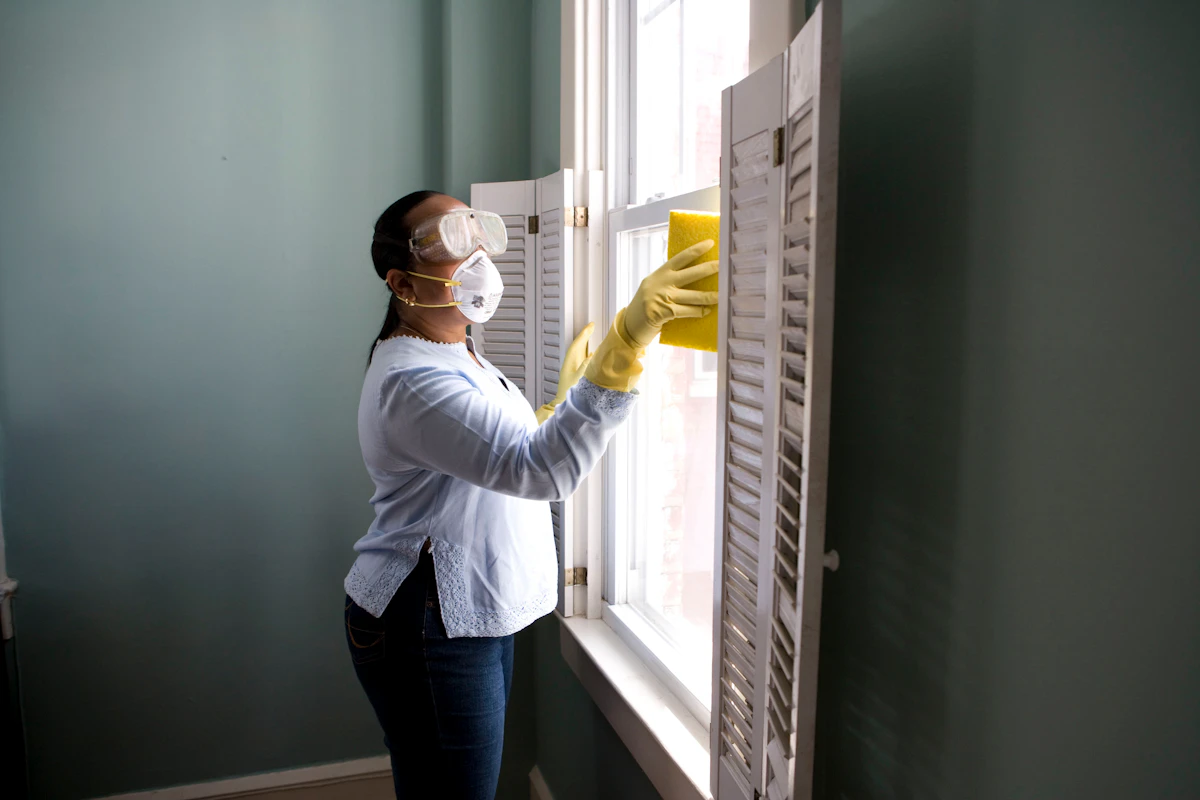
Start by vacuuming the tracks with a brush attachment, then loosen grit with a small brush or old paintbrush before wiping with a damp cloth. Use a squeegee on the glass and a microfiber towel on the frame so you don't leave lint behind. If screens are removable, take them out gently and rinse them flat, then let them dry fully before reinstalling.
Do not climb to reach second-story exterior glass. Landlords usually care more that the interior glass, tracks, and screens are free of visible dirt than whether you took a risk with a ladder. A clean track and dust-free screen often matter more in inspection than a perfectly polished pane that was hard to reach safely.
<a id="7-light-fixtures-ceiling-fans-vents-and-ac-filter-replacement"></a>
7. Light Fixtures, Ceiling Fans, Vents, and AC Filter Replacement
Dust collects overhead, and inspectors know it. Light fixtures, ceiling fan blades, air vents, and return grilles often show a unit's true maintenance level more clearly than a freshly mopped floor. In Florida, the HVAC filter gets noticed because AC runs constantly enough that a dirty filter is hard to ignore.
Turn off the fan and wait for the blades to stop completely before wiping them. A pillowcase or microfiber sleeve works well on fan blades because it catches dust instead of pushing it around the room. Check the filter size on the frame, replace it with the correct match if your lease makes that your responsibility, and save the receipt if you buy a new one.
Practical rule: Photograph the old filter and the new filter together if you're replacing it yourself. That's the easiest way to show you handled the change instead of just saying you did.
Clean the vent covers and the inside of light fixtures where dead bugs can collect. If a fixture is still dirty after a careful pass, photograph it and note it on the checklist rather than pretending it's spotless. That's a better dispute record than a perfect-sounding statement that can't be backed up.
<a id="8-kitchen-and-bathroom-cabinets-drawers-and-closets"></a>
8. Kitchen and Bathroom Cabinets, Drawers, and Closets
Empty storage spaces are where inspectors look for leftover trash, food crumbs, and sticky residue. A cabinet can look fine from the outside and still fail the move-out check if the shelf liners are torn, the corners have syrup or grease, or old snacks got pushed to the back and forgotten. Once everything is out, these spaces clean up quickly, but only if you clear them methodically.
Empty cabinets and drawers first, then wipe the inside, the shelf edges, and the tops of upper cabinets. Use a degreaser on handles and fronts where fingerprints build up, and check under sinks for drips, swelling, or stains. If old contact paper is holding grime underneath, remove it slowly with low heat so you don't tear the finish.
- Kitchen storage: Wipe shelves, drawer bottoms, and corner seams, then photograph any stains or damage that remain.
- Bathroom storage: Check for moisture, rust, and toothpaste residue, especially around sink plumbing.
- Closets: Vacuum the floor, dust the rods and shelves, and show that nothing personal was left behind.
The main trade-off here is time versus thoroughness. A quick wipe feels efficient, but it often misses the corners where pests, leaks, or sticky spills get noticed first. A renter who documents a clean, empty cabinet has a much stronger answer if a landlord later points to food residue or a forgotten item.
<a id="9-outdoor-spaces-balcony-garage-and-storage-areas"></a>
9. Outdoor Spaces, Balcony, Garage, and Storage Areas
Outdoor and secondary areas count too, and they're often the easiest places to miss during a rushed move. Patios, lanais, balconies, garages, and storage closets are part of the lease in many rentals, and inspectors will check whether you removed debris, swept surfaces, and left behind any personal items. If a grill or outdoor furniture came with the unit, those pieces need attention as well.
Use a soft broom before any rinsing, then go after stuck-on debris with a gentle scrub. Keep pressure settings low on screens and painted surfaces, because overdoing it can create damage that's harder to explain than the dirt you were trying to remove. Empty storage bins, wipe them out, and confirm that nothing in the space belongs to you.
If the area contains a grill, clean the grease tray and photograph it with the lid open. That kind of detail helps because outdoor items are easy to overlook, but they're also easy for a landlord to itemize if they come back dirty. A clean storage area and a cleared lanai tell the same story as the rest of the unit, the renter took responsibility before handoff.
<a id="10-professional-move-out-cleaning-service"></a>
10. Professional Move-Out Cleaning Service
There are times when DIY makes sense and times when it doesn't. If your schedule is compressed, the unit is larger than you can reasonably handle, or you're dealing with floors, appliances, and dusty storage areas all at once, a professional move-out service can be the cleaner path to a documented handoff. The value isn't just the cleaning, it's the consistency of a service that can follow your lease's inspection targets.
Book early if you're moving at month-end or during a busy season, because the window before key return disappears fast. Ask whether the company gives you a written checklist, and make sure add-ons like oven interiors, refrigerator cleaning, baseboards, and interior windows are included if your unit needs them. Then do your own declutter and trash removal first so the crew can work on the surfaces landlords inspect.
J&M Cleaning Team's move-out cleaning service fits the kind of turnover renters use when they want the unit cleaned before the walkthrough rather than after a landlord complaint. A professional receipt doesn't erase damage or pre-existing issues, but it does support the record that the unit was returned in clean condition. That matters most when your move-out date is fixed and you don't want to gamble on the last hour.
<a id="move-out-cleaning-10-item-comparison"></a>
Move-Out Cleaning: 10-Item Comparison
| Item | Complexity (🔄) | Resources (⚡) | Expected Outcomes (📊⭐) | Ideal Use Cases (💡) | Key Advantages (⭐) |
|---|---:|---:|---|---|---|
| Move-Out Documentation and Final Walkthrough | Low–Moderate: systematic photos + scheduling | Smartphone, cloud storage, printed reports | Strong evidence trail; helps win deposit disputes 📊 | Tenants needing deposit protection or comparison with move‑in report 💡 | Very low cost; quick; signed walkthroughs strengthen claims ⭐ |
| Kitchen Appliance Deep Clean (Oven, Refrigerator, Dishwasher, Microwave) | Moderate: scrubbing, degreasing, possible repeat treatments 🔄 | Degreasers, gloves, scrapers, time | Reduces common appliance deductions; cleaner inspection results 📊 | Units with heavy cooking use or visibly dirty appliances 💡 | Targets high-deduction area; inexpensive supplies ⭐ |
| Bathroom Descaling and Mold or Mildew Removal | Moderate: careful product use, safety precautions 🔄 | Mildew cleaners, grout brush, ventilation | Prevents mildew/mold charges; improves air quality 📊 | Humid climates (e.g., Central FL) or visible grout/mildew issues 💡 | Addresses high-visibility deduction items; prevents staining ⭐ |
| Floor Cleaning: Vacuuming, Mopping, and Carpet Care | Low–Moderate: routine tasks; pro service may be needed for carpets 🔄 | Vacuum, mop, spot remover, possible pro carpet clean ⚡ | Obvious visual improvement; may meet lease cleaning requirements 📊 | Leases requiring professional carpet cleaning or visible stains 💡 | Low-cost, quick impact; clear inspection results ⭐ |
| Walls, Baseboards, Doors, and Switch Plates | Low: spot cleaning and minor patching 🔄 | Mild cleaners, microfiber, spackle, magic eraser ⚡ | Removes marks that could trigger repaint fees; neater appearance 📊 | Rooms with scuffs, crayon marks, or small nail holes 💡 | High appearance uplift with minimal effort/cost ⭐ |
| Windows, Sliding Glass Doors, Tracks, and Screens | Low–Moderate: interior simple, exterior/height has safety concerns 🔄 | Squeegee, microfiber, small brushes, ladder if needed ⚡ | Improved light and function; prevents sticking and track issues 📊 | Sandy/pollen-prone areas or sticky sliding doors (Florida) 💡 | Quick visible improvement; functional benefit for next tenant ⭐ |
| Light Fixtures, Ceiling Fans, Vents, and AC Filter Replacement | Low–Moderate: requires safety (power off) 🔄 | Ladder, new HVAC filter, duster, vacuum ⚡ | Better air quality; visible maintenance noticed by inspectors 📊 | Year‑round AC climates; dusty fixtures or old filters 💡 | Inexpensive; improves air quality and perceived upkeep ⭐ |
| Kitchen and Bathroom Cabinets, Drawers, and Closets | Low: emptying and wiping; occasional adhesive removal 🔄 | Degreaser, cloths, hair dryer for liners, time ⚡ | Prevents pest/odor issues; avoids abandoned‑property disputes 📊 | Cabinets with food residue, sticky liners, or storage areas 💡 | Fast, inexpensive, prevents major disputes ⭐ |
| Outdoor Spaces: Patio, Lanai, Balcony, Garage, and Storage Areas | Moderate: surface cleaning; careful pressure‑washing may be needed 🔄 | Broom, hose/pressure washer (low setting), screen repair kit ⚡ | Clean leased outdoor areas; avoids outdoor cleaning charges 📊 | Units with lanais/garages, Florida screens prone to damage 💡 | Prevents slip hazards, staining, and storage disputes ⭐ |
| Professional Move-Out Cleaning Service | Low for tenant (outsourced); planning required 🔄 | Service fee, scheduling, receipts; optional add‑ons ⚡ | Comprehensive clean to inspection standards; time saved 📊 | Limited time/ability, month‑end moves, or long leases 💡 | Predictable, thorough, reduces tenant labor and risk ⭐ |
<a id="turn-your-checklist-into-a-deposit-record"></a>
Turn Your Checklist Into a Deposit Record
Two weeks before move-out, print this checklist, assign one day to documentation and one to cleaning, and book the walkthrough for the day you leave, after cleaning is complete. Keep every photo, receipt, and signed form until the deposit is returned, because that file is your strongest answer to any itemized deduction.
Use the Florida timing rules as your operational anchor. If the landlord doesn't intend to claim any deposit, the return window is generally 15 days. If the landlord does intend to claim part of it, the written notice is generally due within 30 days after the tenancy ends, and that makes your move-out evidence most useful when it's already organized and time-stamped (Florida Statutes 83.49).
A practical file has four parts, the move-in report, the cleaned move-out photos, the signed walkthrough form, and any receipts for services or supplies. Add notes for anything the landlord flagged in person, then keep the folder in one place until the deposit clears. If you're renting in Orlando or nearby Central Florida and don't want to spend the last day scrubbing appliances, J&M Cleaning Team is one local option that offers move-out cleaning with documented service output and transparent booking.
---
If you want a cleaner handoff without scrambling on move-out day, J&M Cleaning Team can handle move-in/out cleaning for Orlando and nearby Central Florida homes. Their service is relevant when you need the kitchen, bathrooms, floors, and visible surfaces cleaned before the walkthrough, and you want a straightforward quote before scheduling.