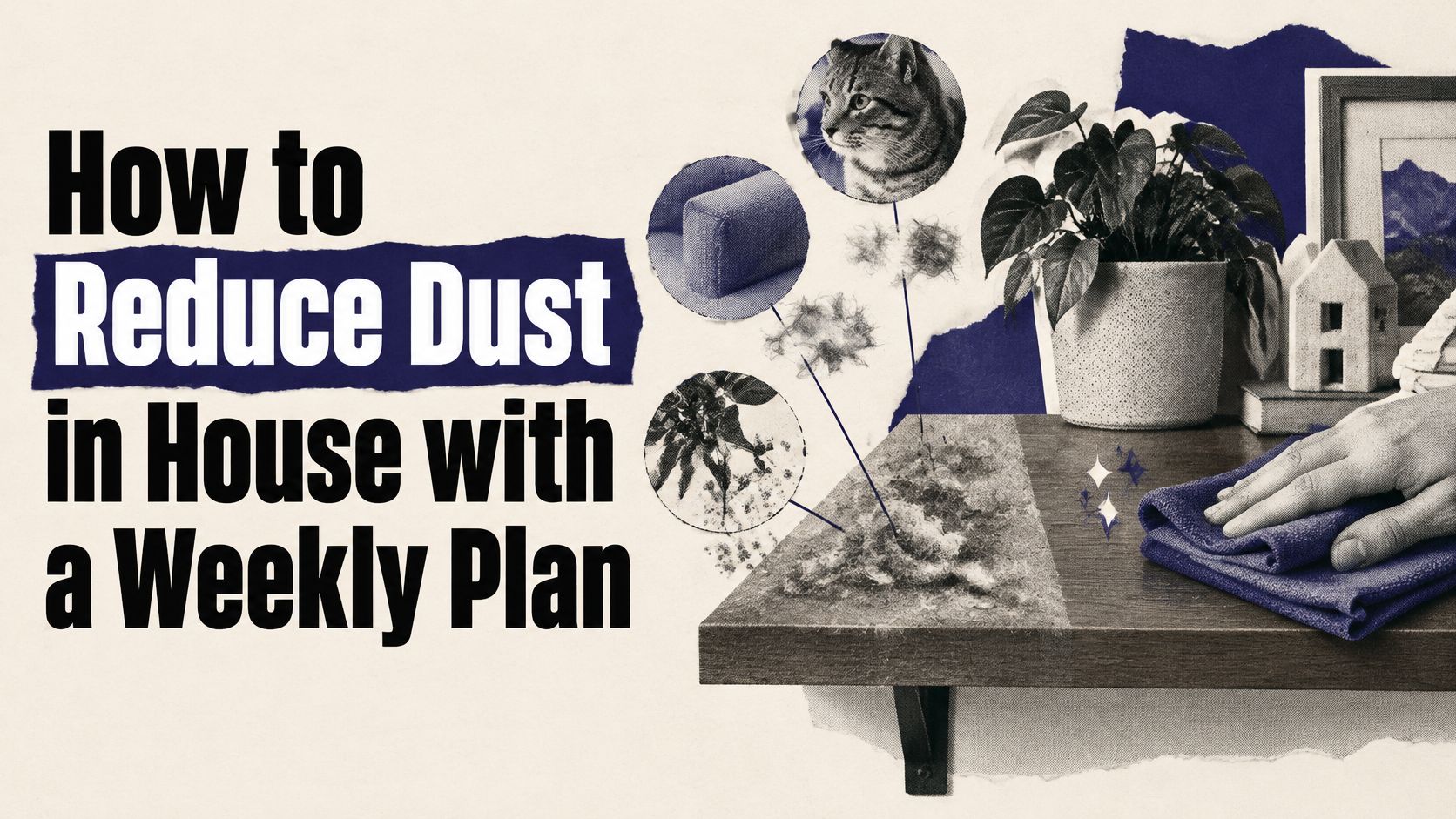
The most popular dust advice is to clean more often. But if the same patch of grit or film keeps coming back, another wipe may only treat the symptom. To learn how to reduce dust in a house, first find its main route inside, then change that route before buying equipment or booking a service.
A simple one-week audit can tell you whether the dust is coming from shoes, open windows, soft furnishings, renovation work, or the HVAC system. Once you know the likely source, you can choose a focused first fix and build a cleaning routine that doesn't send settled particles back into the air.
Table of Contents
- [Find the Dust Source Before Buying Equipment](#find-the-dust-source-before-buying-equipment)
- [Track one week of clues](#track-one-week-of-clues)
- [Treat rapid buildup as a reservoir clue](#treat-rapid-buildup-as-a-reservoir-clue)
- [How to Dust and Vacuum in the Right Order](#how-to-dust-and-vacuum-in-the-right-order)
- [Work from high surfaces down](#work-from-high-surfaces-down)
- [Finish without spreading dust again](#finish-without-spreading-dust-again)
- [Filters That Catch Dust Without Starving the HVAC](#filters-that-catch-dust-without-starving-the-hvac)
- [Check compatibility before changing a filter](#check-compatibility-before-changing-a-filter)
- [Ventilate Only When Outdoor Air Is Clean](#ventilate-only-when-outdoor-air-is-clean)
- [Weekly Habits That Stop Dust From Returning](#weekly-habits-that-stop-dust-from-returning)
- [Put the recurring jobs on a calendar](#put-the-recurring-jobs-on-a-calendar)
- [When DIY Resets Stop Being Enough](#when-diy-resets-stop-being-enough)
<a id="find-the-dust-source-before-buying-equipment"></a>
Find the Dust Source Before Buying Equipment
Use the pattern of dust as a clue. This table matches common signs to a likely pathway and the first action to try. Choose the row that best fits what you see, rather than taking on every fix at once.
| Dust source | Where it shows | First action |
|---|---|---|
| Tracked-in soil | Grit just inside doors and on entry floors | Add an exterior mat, take shoes off, and launder the mat |
| Outdoor pollen | Windowsills and surfaces near open doors | Close windows on high-pollen days and damp-wipe sills |
| Carpet and upholstery fiber | Under sofas and along fabric edges | HEPA-vacuum textiles and edges weekly |
| Pet dander | Beds, sofas, and low shelves | Wash bedding weekly and keep pets off beds |
| Renovation residue | Fine film on every horizontal surface | Contain the work zone and remove debris before normal cleaning |
| HVAC recirculation | Dark streaks at supply vents | Check filter size and MERV rating, then replace a loaded filter |
| Cracks and pest entry | Baseboards, wall holes, and soil trails | Seal openings and fix moisture before extra wiping |
<a id="track-one-week-of-clues"></a>
Track one week of clues
Each evening, look at the same few places: the entry floor, windowsills, textiles, supply vents, and any area affected by recent work. Note where fresh dust is thickest. Add a short observation about what happened that day, such as a patio door staying open, a pet resting on the sofa, or renovation work taking place.
A streak at a vent doesn't prove the ducts need cleaning. The U.S. EPA says duct cleaning has not been shown to prevent health problems, and studies haven't conclusively shown that dirty ducts raise household particle levels. Dust patterns are more useful as a starting point for finding a source than as a reason to buy a service by default. The EPA guide to air cleaners for the home puts source control ahead of treating filtration as a stand-in for removing the cause.
<a id="treat-rapid-buildup-as-a-reservoir-clue"></a>
Treat rapid buildup as a reservoir clue
If the same shelf looks dusty again within a couple of days, check what may be feeding the buildup before wiping it again. Look for a slow leak, musty odor, wall opening, or pest trail. A pooled analysis of nine U.S. housing studies found that high dust-mite allergen levels were associated with mold odor (odds ratio 2.5), homes built before 1951 (2.1), and slab-on-grade construction (1.9). High cockroach allergen levels were associated with wall cracks or holes (odds ratio 2.1), according to this EPA-hosted summary of residential air-cleaner information.
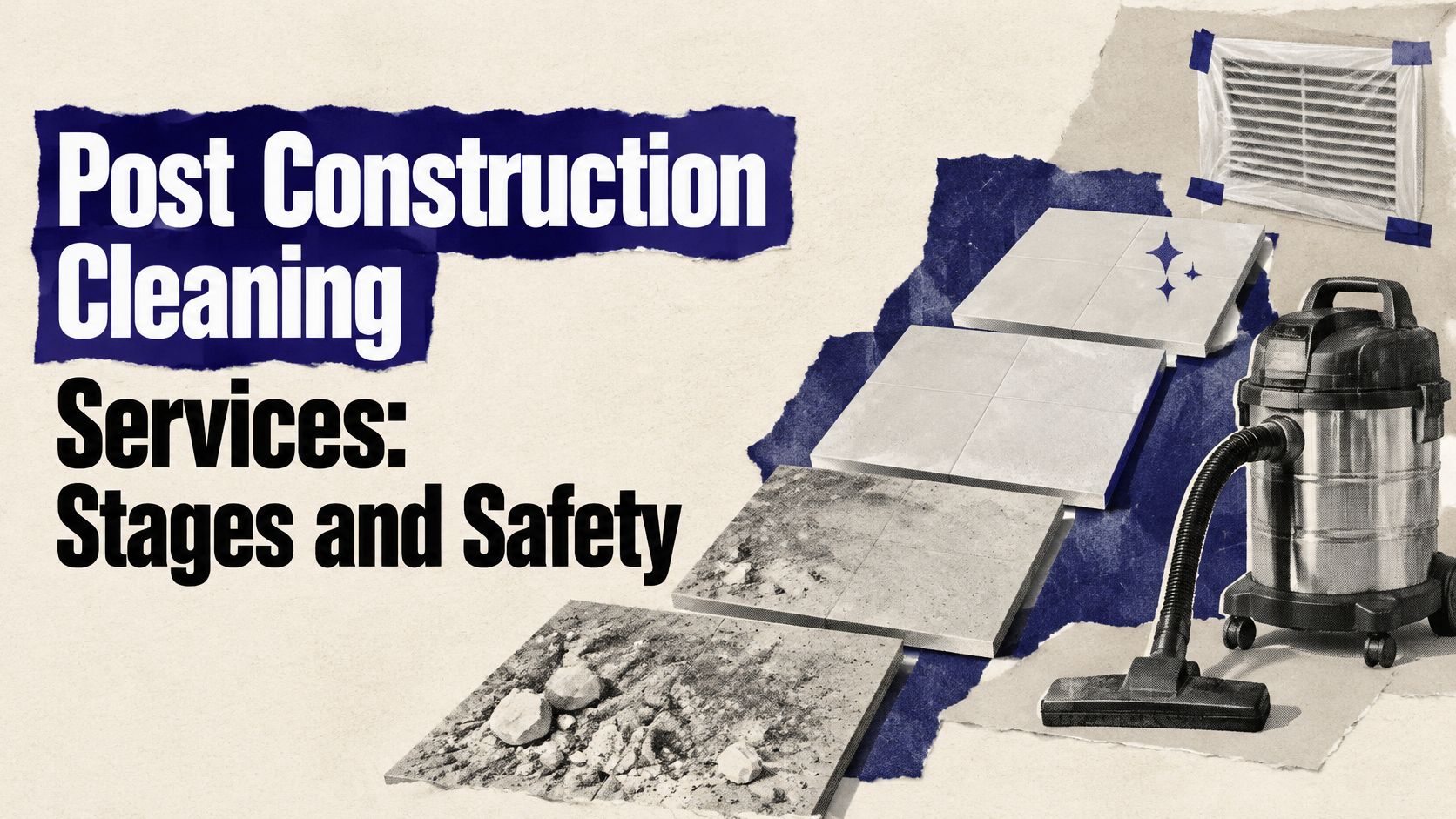
Those associations don't diagnose a specific home, but they're a reason to take moisture and openings seriously. Repair a leak or seal an entry point before adding more surface cleaning. If the dust is concentrated in a room after remodeling, distinguish renovation residue from ordinary settled dust; post-construction cleaning in Orlando is designed for the debris left by building work.
At the end of the audit, pick the single source that returns fastest and try its first action. Keep the other possible causes on your notes, but don't buy a purifier or arrange duct cleaning just because one surface looks dusty.
<a id="how-to-dust-and-vacuum-in-the-right-order"></a>
How to Dust and Vacuum in the Right Order
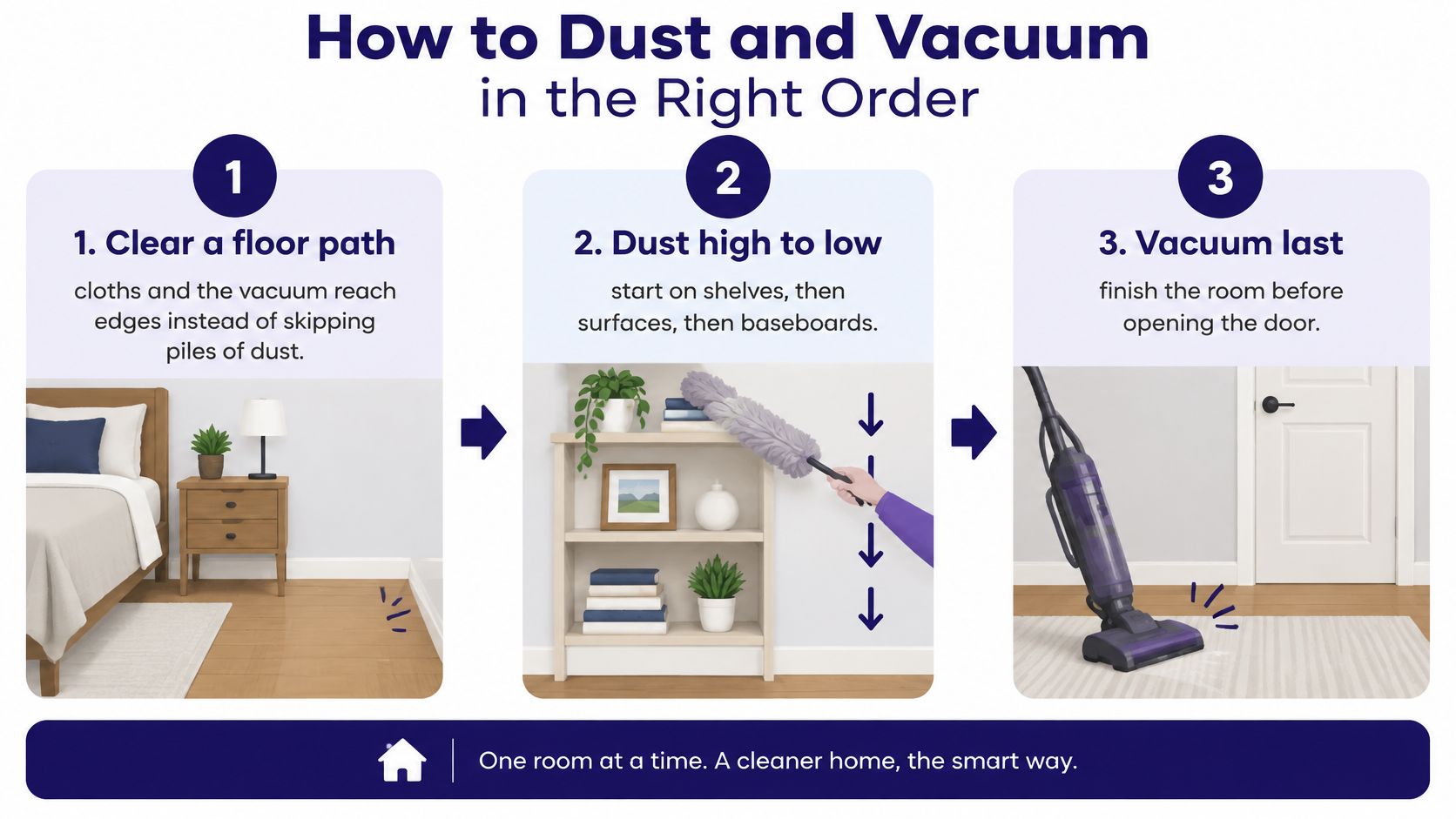
Cleaning in the wrong order can move dust from one place to another. Work in one room at a time, keep its door closed while you clean, and finish the room before moving on. This keeps the job focused instead of carrying dust through the house.
<a id="work-from-high-surfaces-down"></a>
Work from high surfaces down
1. Clear a floor path. Pick up laundry, toys, and small objects so you can reach the floor edges and areas under furniture rather than vacuuming around piles.
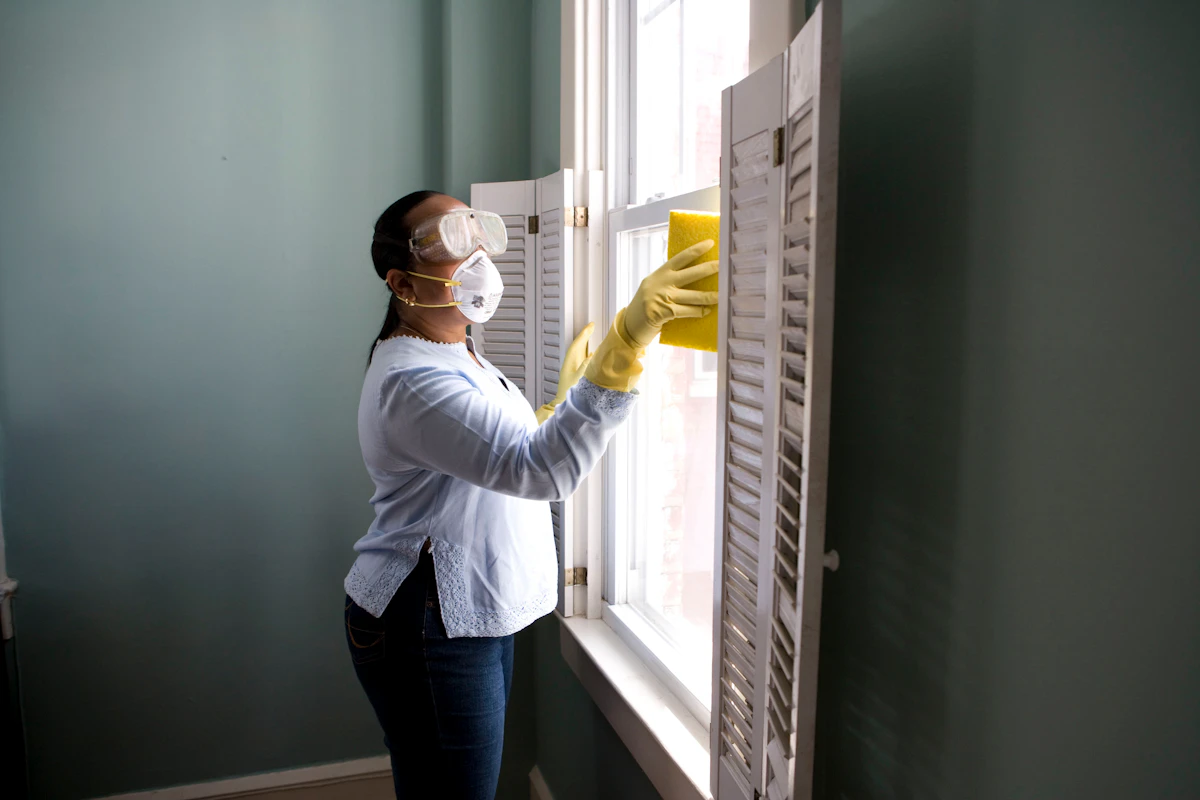
2. Damp-dust from high to low. Start with ceiling-fan blades, door casings, and shelves, then move to lower furniture and baseboards. Use a slightly damp microfiber cloth; a dry feather duster can scatter dust instead of collecting it. Fold the cloth to expose a clean face as it fills, and rinse it before it starts smearing grey residue.
3. Vacuum last. Use slow, overlapping passes on upholstery, carpet edges, and floors, including under the sofa. Rushed passes can skip debris tucked against edges and in fabric seams.
The EPA guidance on indoor particulate matter supports damp dusting and weekly or more frequent vacuuming of carpets and furniture. It also recommends HEPA filtration because ordinary vacuum exhaust can release collected dust back into the room. HEPA media are defined as capturing at least 99.97% of 0.3-micrometer test particles, but a vacuum only delivers that benefit when its seals, bag, and filter are in good condition. Make sure the collection system suits your vacuum, and move slowly enough for it to pick up what's on the surface.
Cleaning order matters: Vacuuming before damp-dusting can stir settled particles back into the air, then leave them on surfaces you've already cleaned.
<a id="finish-without-spreading-dust-again"></a>
Finish without spreading dust again
4. Empty or change the collection system outdoors. Follow the vacuum maker's instructions and avoid shaking a dusty bag or bin inside.
5. Ventilate only when outdoor air is acceptable. Keep windows closed when pollen, smoke, or nearby dusty work could bring more particles inside.
People with asthma or allergies should leave the room during vacuuming and allow a short settling period afterward. In a heavily soiled room, complete all the steps before opening its door. For a practical list of cloths and other tools to keep together, use this guide to house-cleaning supplies.
<a id="filters-that-catch-dust-without-starving-the-hvac"></a>
Filters That Catch Dust Without Starving the HVAC
MERV 13 is a practical minimum target for central HVAC filtration when the system can maintain adequate airflow. ASHRAE reports that MERV 13 removes at least 85% of particles in the 1–3 micrometer range. MERV 14 or higher may be preferable when the equipment can handle it, but don't upgrade a filter blindly. Higher resistance can make a system work against a pressure drop it wasn't designed for.
A HEPA filter's standard test efficiency is at least 99.97% at 0.3 micrometers, but that doesn't mean a HEPA panel belongs in every furnace. The ASHRAE filtration and disinfection FAQ warns that conventional furnaces and air handlers may not be designed for the associated pressure drop.
| Option | Capture | Use it when | Caution |
|---|---|---|---|
| Stock MERV 8-style filter | Weaker on fine dust | The blower can't accept a higher rating | Fine dust may keep recirculating |
| MERV 13 | At least 85% of 1–3 micrometer particles | The system rating allows it; it's a practical minimum target | Confirm dimensions and the manufacturer's limit |
| MERV 14 or higher | Higher than MERV 13 on fine particles | Airflow and static pressure stay adequate | Don't install it if rooms get stuffy |
| Portable HEPA cleaner | At least 99.97% at 0.3 micrometers | One dusty room, with the cleaner sized by CADR | It doesn't replace surface cleaning |
| HEPA panel in the furnace | Same HEPA test efficiency | The air handler is designed for it | Pressure drop can choke a standard blower |
<a id="check-compatibility-before-changing-a-filter"></a>
Check compatibility before changing a filter
1. Read the current filter. Record its dimensions and check the equipment manufacturer's maximum MERV or MERV-A rating.
2. Choose the highest compatible rating. Install it with the airflow arrow pointing in the correct direction, and make sure the frame sits properly so air doesn't bypass the filter.
3. Inspect it monthly during dusty periods. A visibly loaded filter may need attention before the manufacturer's usual replacement interval.
4. Replace it when loaded or at the maker's interval. Don't rely on a vague yearly habit when dust or seasonal conditions call for closer checks.
For one persistently dusty room, consider a portable air cleaner sized by clean air delivery rate (CADR) for that room. Leave space around its intake so air can circulate. If the HVAC blower becomes noisy or rooms feel stuffy after a filter change, stop forcing the higher rating and check the system's compatibility. Filtration helps with airborne particles, but larger dust can settle before a cleaner catches it, so continue cleaning surfaces and textiles.
<a id="ventilate-only-when-outdoor-air-is-clean"></a>
Ventilate Only When Outdoor Air Is Clean
Opening a window can refresh a room, but it can also bring pollen, smoke, or dust indoors. Ventilation is useful when the incoming air is acceptable, not as an automatic step after every cleaning. Use this daily check to avoid wiping a surface only to refill it with outdoor particles.
1. Check outdoor conditions first. Before opening windows, consider whether pollen, smoke, or dusty work nearby could enter.
2. Open windows only when conditions are acceptable. If the air outside is clear, ventilation can help refresh indoor air.
3. Close windows and doors on poor-air days. This is especially useful when pollen is high or nearby outdoor work is producing dust.
4. Run kitchen and bathroom exhaust fans while steam is present. Removing humid air during cooking and showers helps keep moisture from lingering on surfaces.
5. Keep the entry mat and shoes-off routine in place. Open windows aren't the only way outdoor material enters; footwear can bring soil and debris over the threshold.
During work outside or a nearby construction project, close interior doors to rooms you want to protect. If you've just cleaned, check outdoor conditions before cross-ventilating; otherwise, fresh air may carry particles onto the sills and floor. Let the source pattern you recorded guide the choice: windows are a likely route when the dust gathers beside them, while grit by the door points to an entryway problem.
<a id="weekly-habits-that-stop-dust-from-returning"></a>
Weekly Habits That Stop Dust From Returning
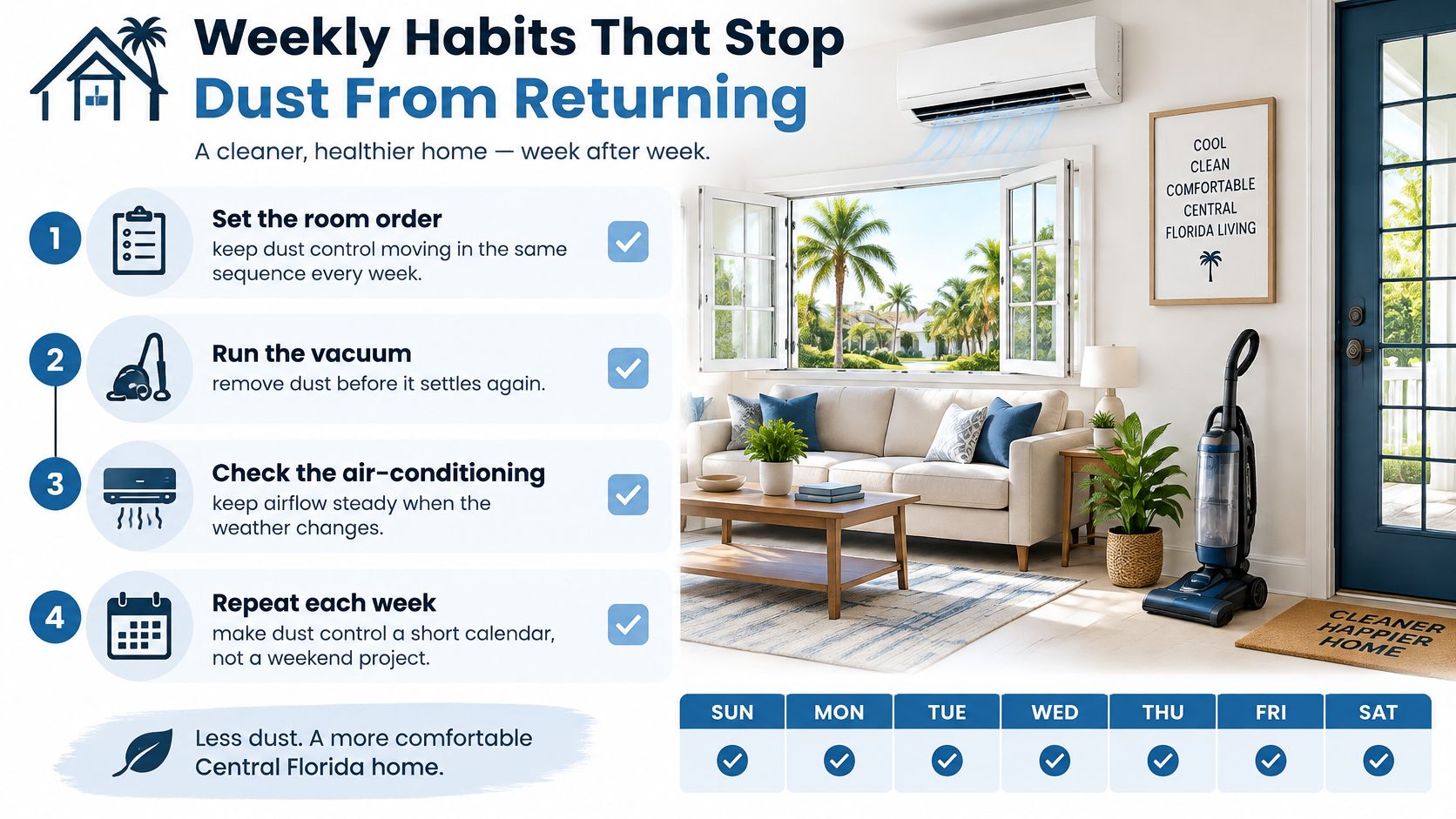
A busy household doesn't need a fresh deep clean every time someone spots a speck. It needs a few repeatable habits. In a Central Florida home, air-conditioning may run while a patio door opens and closes through the week; the entry floor, sofa, and bedding can collect new material even after a room has been cleaned.
Keep surfaces simple. Mail, chargers, and decorative objects all create extra places for dust to settle, so give each room a tray for small items and clear the rest. Store spare blankets and off-season clothes in closed bins, and wash pet bedding with the household linens rather than waiting for it to look dirty.
<a id="put-the-recurring-jobs-on-a-calendar"></a>
Put the recurring jobs on a calendar
- Weekly linen day: Wash sheets and pillowcases weekly, using hot water when the care label allows. Add washable throws and pet bedding to the same load.
- Weekly vacuum pass: Vacuum carpets, rugs, and upholstered seats at least weekly. Add passes where pets shed or children spend time on the floor.
- Weekly high-to-low pass: Damp-wipe dusty surfaces in order, including the fan blades and top of the fridge, then vacuum the floor.
- Entry reset: Shake or launder the entrance mat as its care label allows, clear grit from the floor, and keep shoes at the door.
- Moisture check during cooking and showers: Run kitchen and bath exhaust fans while steam is present.
A set day makes these tasks easier to share. If the household can't keep up with weekly textile care, use a biweekly fallback and expect fabric surfaces to collect more dust between washes. Write three recurring slots on a calendar: entry reset, linen wash, and the high-to-low room pass. A house-cleaning planner can help you assign the jobs without turning dust control into a whole-weekend project.
<a id="when-diy-resets-stop-being-enough"></a>
When DIY Resets Stop Being Enough
Keep using the weekly plan when dust is ordinary and returns slowly after you've addressed its likely source. A larger reset may make more sense when buildup has accumulated across rooms, pet hair has become difficult to manage, or renovation dust has spread beyond the work area. For construction residue, choose a service suited to renovation cleanup rather than treating it like routine upkeep.
For a lived-in home that hasn't been cleaned for one to two months, J&M Cleaning Team's Deep Cleaning starts at $490. The service is suited to a thorough reset, while post-construction cleaning removes dust and debris after renovations or construction and can prepare a unit for move-in or final inspection. Cleaning specialists arrive with professional-grade products, microfiber cloths, HEPA vacuums, and specialized tools for Deep Cleaning.
Before a visit, pick up clothing, toys, and paperwork so the crew can focus on cleaning rather than sorting belongings. Once the heavy buildup is gone, recurring cleaning can help maintain the result; keep the entry and textile routines going between visits so dust doesn't quickly rebuild.
---
If dust keeps returning after you've checked its pathway and changed your routine, J&M Cleaning Team offers Deep Cleaning for built-up household dust and post-construction cleaning for renovation residue in Orlando and nearby Central Florida, including Tampa. Visit J&M Cleaning Team to get an online quote and choose a cleaning option that fits your home.