A house can look “mostly fine” and still need a professional touch. There's dust behind the trash can, grease along the cabinet pulls, soap film in the shower track, and a fridge shelf nobody's opened in months. That's why how do you professionally clean a house isn't a question about scrubbing harder, it's a question about sequence, discipline, and knowing when a surface needs cleaning versus when it needs disinfection.
Table of Contents
- [What a Professional Cleaning Visit Actually Looks Like](#what-a-professional-cleaning-visit-actually-looks-like)
- [What you should see on arrival](#what-you-should-see-on-arrival)
- [Pre-Clean Assessment and Room Preparation](#pre-clean-assessment-and-room-preparation)
- [The prep pass that saves the most time](#the-prep-pass-that-saves-the-most-time)
- [The Room-by-Room Cleaning Workflow](#the-room-by-room-cleaning-workflow)
- [Kitchen, bathroom, bedroom, living area](#kitchen-bathroom-bedroom-living-area)
- [Equipment and Products That Actually Earn Their Place](#equipment-and-products-that-actually-earn-their-place)
- [What actually stays on the cart](#what-actually-stays-on-the-cart)
- [Cleaning Versus Disinfecting and When Each One Matters](#cleaning-versus-disinfecting-and-when-each-one-matters)
- [Why process matters more than stronger product](#why-process-matters-more-than-stronger-product)
- [Matching Service Intensity to the Job at Hand](#matching-service-intensity-to-the-job-at-hand)
- [A sensible way to choose](#a-sensible-way-to-choose)
- [Quality Control and the Final Walk-Through](#quality-control-and-the-final-walk-through)
<a id="what-a-professional-cleaning-visit-actually-looks-like"></a>
What a Professional Cleaning Visit Actually Looks Like
A real cleaning visit starts before anyone sprays a product. On a working morning, the lead tech arrives, does a quick walk-through, confirms the scope, and spots the problems that would slow the crew down later, like cluttered counters, a pet bowl in the way, or a damaged baseboard that needs to be left alone. Good teams don't just carry supplies, they carry a plan, and that plan tells each technician where to start and what to leave for the final pass.
Uniforms, labeled products, a written scope, and a predictable order matter because they keep the job from turning into a random sweep. A tidy crew can look busy without getting a house clean. A trained crew works in zones, documents pre-existing issues, and keeps the pace steady enough that the home gets handled like a job site, not a race.
<a id="what-you-should-see-on-arrival"></a>
What you should see on arrival
- Clear scope confirmation. The lead should know whether the visit is standard maintenance, deep cleaning, move-related turnover, or post-construction.
- Visible prep. Supplies should already be sorted, not mixed together in a pile.
- Basic documentation. Photos of pre-existing damage protect both the homeowner and the crew.
- Zone assignment. One person doesn't bounce aimlessly from room to room.
That structure is what separates a professional visit from a quick “surface wipe.” It also makes the rest of the workflow possible, because every good clean starts with a known target and ends with a room-by-room sign-off.
<a id="pre-clean-assessment-and-room-preparation"></a>
Pre-Clean Assessment and Room Preparation
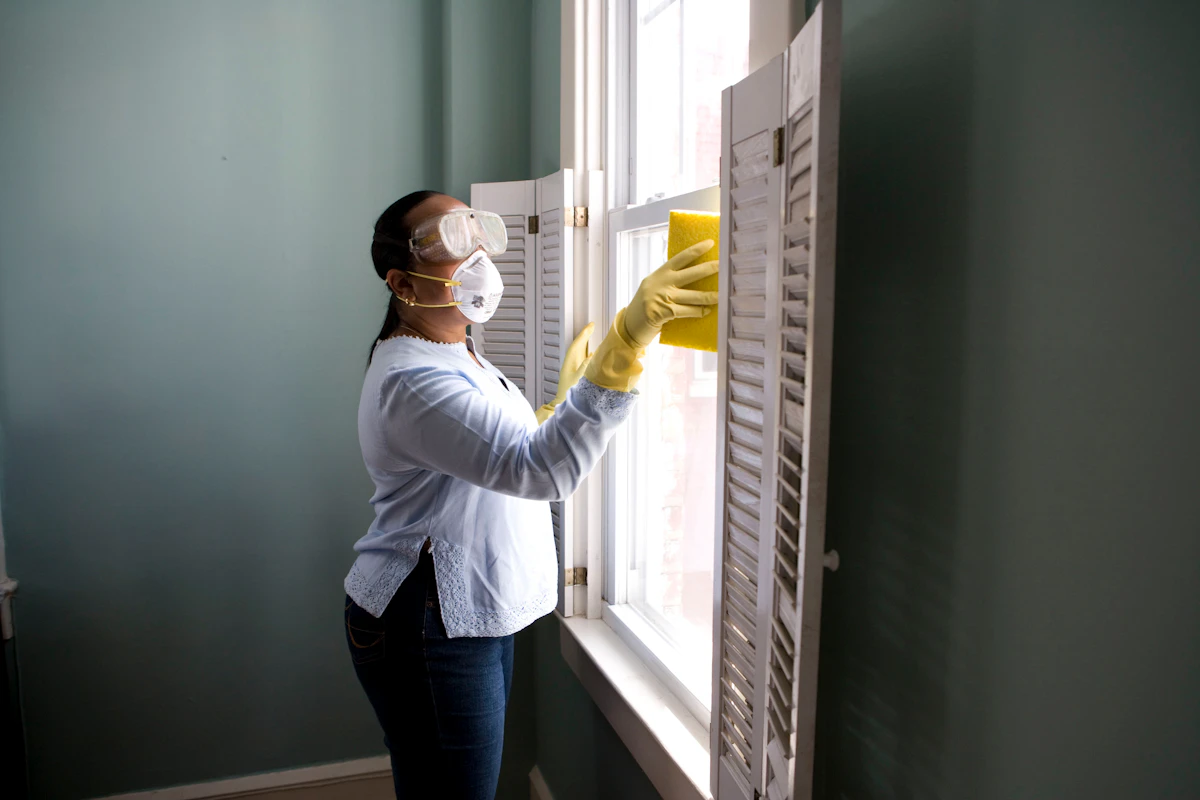
The part homeowners often skip is the part that prevents callbacks. Before the first cloth touches a counter, the area needs ventilation, clutter reduction, and a quick risk scan. That means windows or HVAC settings are checked, loose items are moved out of the way, clean tools stay separate from dirty ones, and the crew decides which surfaces are fragile, coated, unfinished, or likely to scratch.
Practical rule: if the room still needs to be “picked up,” cleaning will take longer and look worse.
That's not theory. It's just what happens when a mop has to deal with shoes, chargers, toys, and stacks of mail. Clutter slows access, and access slows consistency. It also increases the chance of cross-contamination because technicians end up carrying cloths, dust, and moisture from one surface to another.
<a id="the-prep-pass-that-saves-the-most-time"></a>
The prep pass that saves the most time
A smart lead does the same basic sequence every time. First comes ventilation, then clutter removal, then dry pickup of loose debris, then the wet work. High surfaces get handled before low ones so falling dust doesn't land on finished areas, and far corners get worked before exit paths so nobody walks back over what was already done. If someone in the house is sick, or if a vulnerable person is present, the tech should switch from ordinary maintenance to targeted disinfection where it is appropriate.
That assessment also changes how the job is priced and scoped. A home with pets, kids, allergies, or recent illness may need different products and more careful sequencing than a quiet guest room. A crew that asks those questions up front is protecting the finish, the occupants, and the time on site.
<a id="the-room-by-room-cleaning-workflow"></a>
The Room-by-Room Cleaning Workflow
A whole-house clean works best when it moves in one direction and one direction only. Entryway to back of house. High to low. Dry soil first, wet products second. That order keeps dust from turning into paste and stops dirty cloths from getting a free tour through every room.
<a id="kitchen-bathroom-bedroom-living-area"></a>
Kitchen, bathroom, bedroom, living area
The kitchen needs grease knocked back before anything else. Appliance exteriors, cabinet fronts, and handles come before counters, and counters come before floors. Bathrooms go top to bottom, with fixtures handled in a way that keeps splash and residue from settling onto already-finished surfaces. Bedrooms usually start with dry dust removal, because bed frames, nightstands, and trim collect particles that don't belong in wet cleaning solution. Living areas follow the same rule set, high surfaces first, then lower surfaces, then vacuuming, then mopping.
The overlooked detail is cloth control. One cloth shouldn't roam from bathroom to kitchen, and a floor pass shouldn't reuse a towel that just hit a toilet exterior. That habit is where a lot of amateur cleaning falls apart. It looks efficient for ten minutes and messy by the end of the house.
Clean the room in the order gravity would dirty it.
That simple rule is why add-ons like oven interiors, refrigerator interiors, baseboards, and interior windows are usually separated from a standard visit. Household survey data shows how often those hidden or awkward areas get neglected, which is exactly why a deep clean has to be planned rather than improvised. The American Cleaning Institute's 2019 survey found that 77% of U.S. households planned to spring clean, the average project took 6 days to finish, and many people couldn't remember the last time they cleaned the refrigerator, oven, bed linens, or washing machine. ACI survey results
| Professional Cleaning Sequence by Room | First Pass (Dry Soil Removal) | Second Pass (Wet Cleaning) | Final Check |
| --- | --- | --- | --- |
| Kitchen | Dust, crumb pickup, surface debris removal | Counters, appliance fronts, sink areas, floor finish | Handles, edges, appliance smudges |
| Bathroom | Hair, loose dust, dry wipe of fixtures | Toilet exterior, shower, sink, mirrors, floor | Water spots, missed corners, residue |
| Bedroom | Dusting, lint pickup, vacuum around bed and trim | Spot clean surfaces, glass, touch points | Under-bed edges, nightstands, switches |
| Living Areas | High dusting, vacuum furniture seams, floor edges | Tables, consoles, reachable surfaces, floors | Corners, baseboards, fabric crumbs |
For a deeper kitchen reset, this internal guide on how to deep clean a refrigerator fits naturally into the sequence, because appliance interiors should be handled as a separate task, not an afterthought.
<a id="equipment-and-products-that-actually-earn-their-place"></a>
Equipment and Products That Actually Earn Their Place
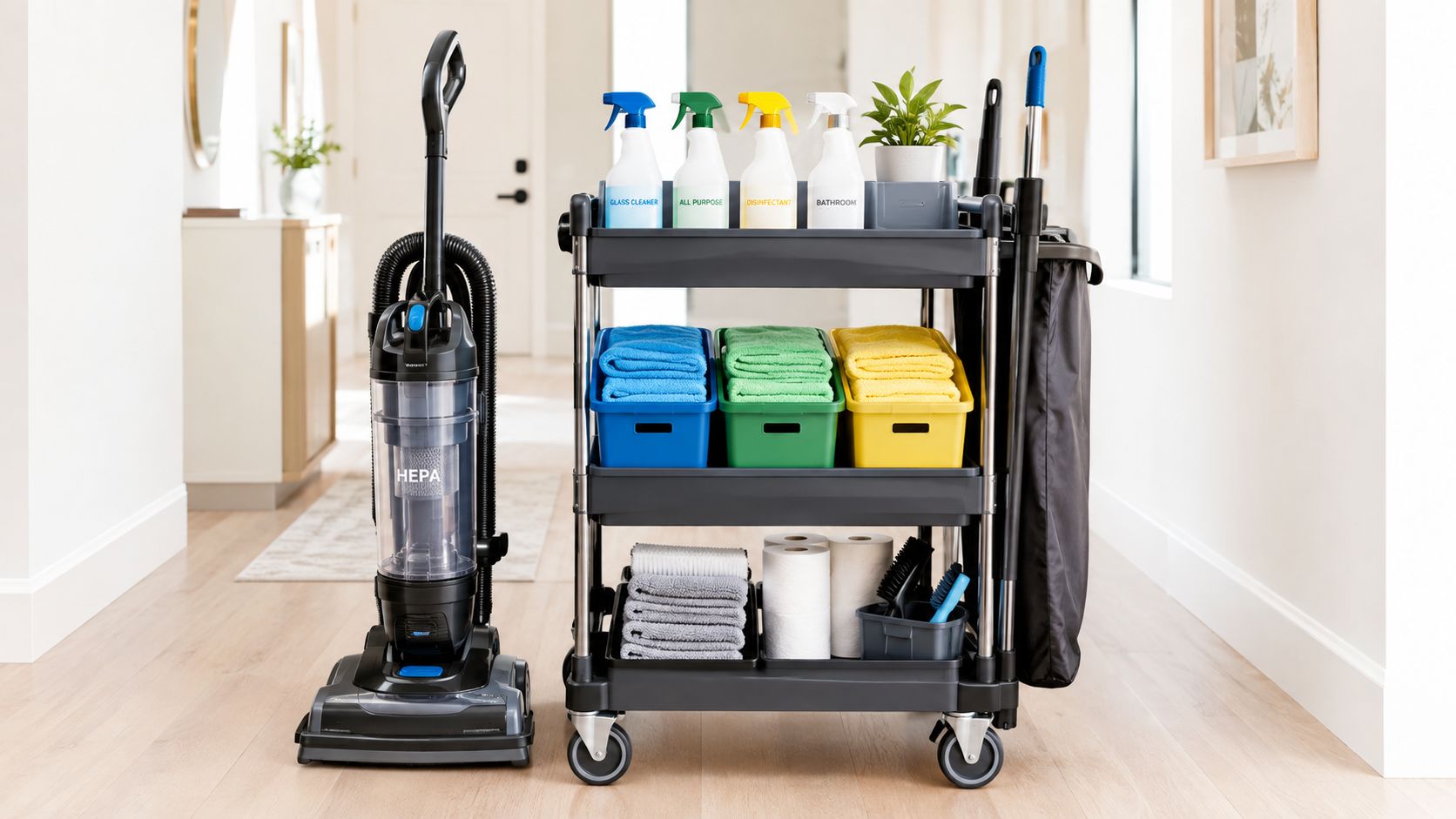
A good cleaning cart is boring in the best way. It has microfiber cloths sorted by zone, a vacuum that holds fine dust instead of blowing it back into the air, a mop system that doesn't drag dirty solution room to room, and a short list of products that can handle most household work without drama.
<a id="what-actually-stays-on-the-cart"></a>
What actually stays on the cart
Color-coding matters because it stops cross-use before it starts. Bathroom cloths shouldn't end up on kitchen counters, and a floor pad shouldn't be the same one used around a toilet. Sealed vacuums or HEPA-style filtration are worth it because fine dust is the stuff that keeps settling after the obvious mess is gone.
Pros also avoid the spray-everything mindset. A $12 bottle of properly mixed solution beats a shelf full of specialty products if the crew understands what each one is for. Enzyme cleaners make sense for organic messes. Solvents have a place on certain residues. Most of the time, though, the job is won by the right cloth, the right dwell time, and the right amount of pressure.
A label that says non-toxic can still leave residue, irritate sensitive occupants, or fail on the wrong surface. It's a useful phrase, but it doesn't mean harmless in every context. Families, pet owners, and people with asthma should ask what's in the bottle, where it's used, and whether ventilation is part of the process.
<a id="cleaning-versus-disinfecting-and-when-each-one-matters"></a>
Cleaning Versus Disinfecting and When Each One Matters
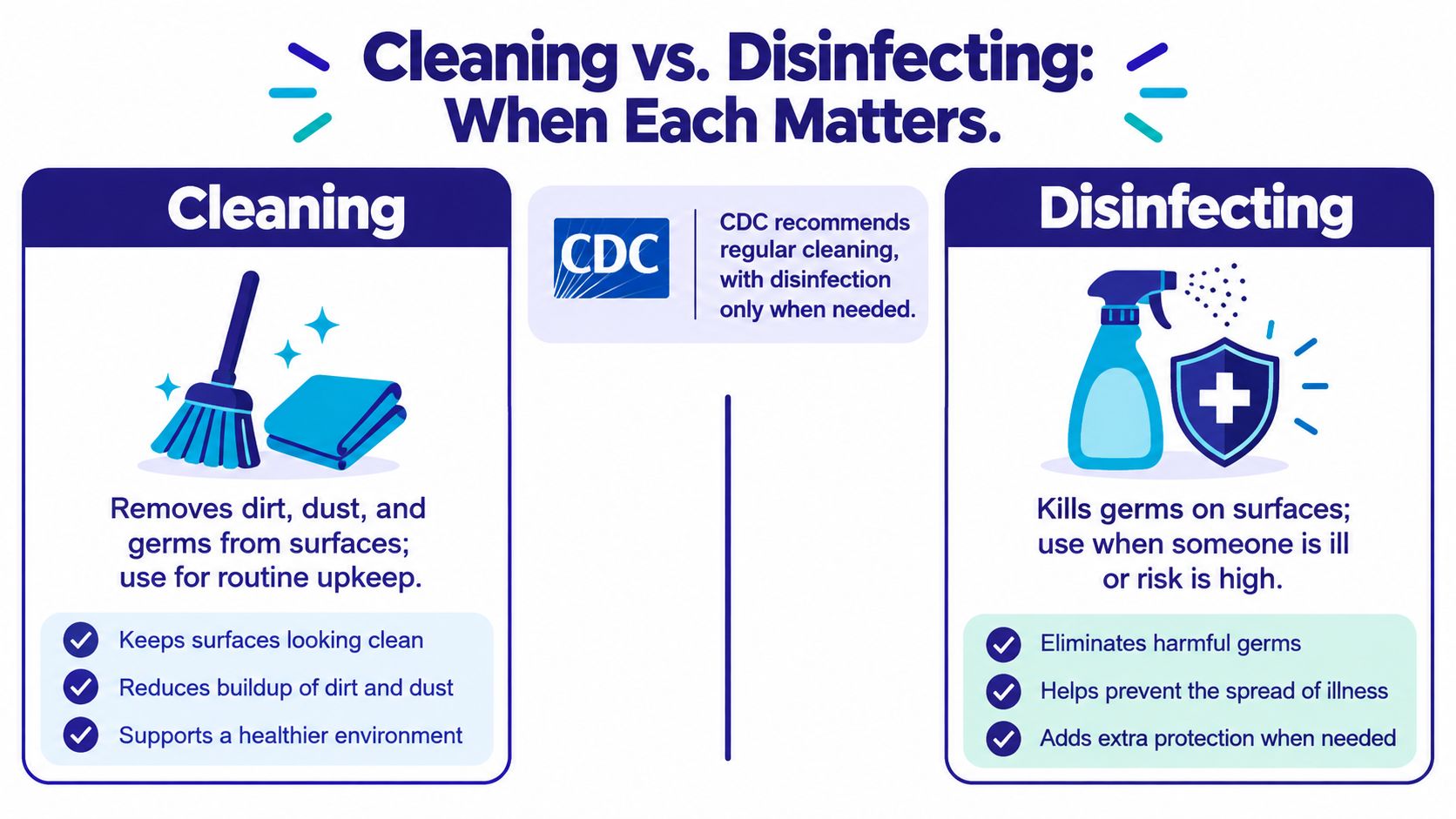
Most homes do not need every surface disinfected. The CDC says routine disinfection at home is generally unnecessary, and that regular cleaning is usually enough for visibly dirty surfaces. When illness or higher risk is part of the picture, then disinfection has a job to do, but only after the surface has been cleaned first. CDC home cleaning and disinfecting guidance
<a id="why-process-matters-more-than-stronger-product"></a>
Why process matters more than stronger product
Cleaning removes dirt, dust, and the material that blocks a chemical product from working well. Disinfecting is different, it's a targeted step for defined situations, not a substitute for actual cleaning. The CDC's basic rule is simple, remove soil first, then disinfect when the situation calls for it. CDC home hygiene guidance
Dwell time is where crews either get it right or waste the product. A disinfectant has to stay visibly wet for the full label contact time, and wiping it off too soon can keep it from doing the job it promised. EPA guidance says hard-surface disinfectant contact times are generally no longer than 10 minutes, though individual products can require shorter or different times, and if a surface dries early, it needs reapplication. EPA registered disinfectants guidance
Chemicals also don't belong in a mixing bowl. Bleach with acids or ammonia is a hard no because dangerous fumes can result. A real professional tells you when a room is getting cleaned, when it's getting hygienically maintained, and when it's getting targeted disinfection. That distinction is part of the service, not a bonus.
<a id="matching-service-intensity-to-the-job-at-hand"></a>
Matching Service Intensity to the Job at Hand
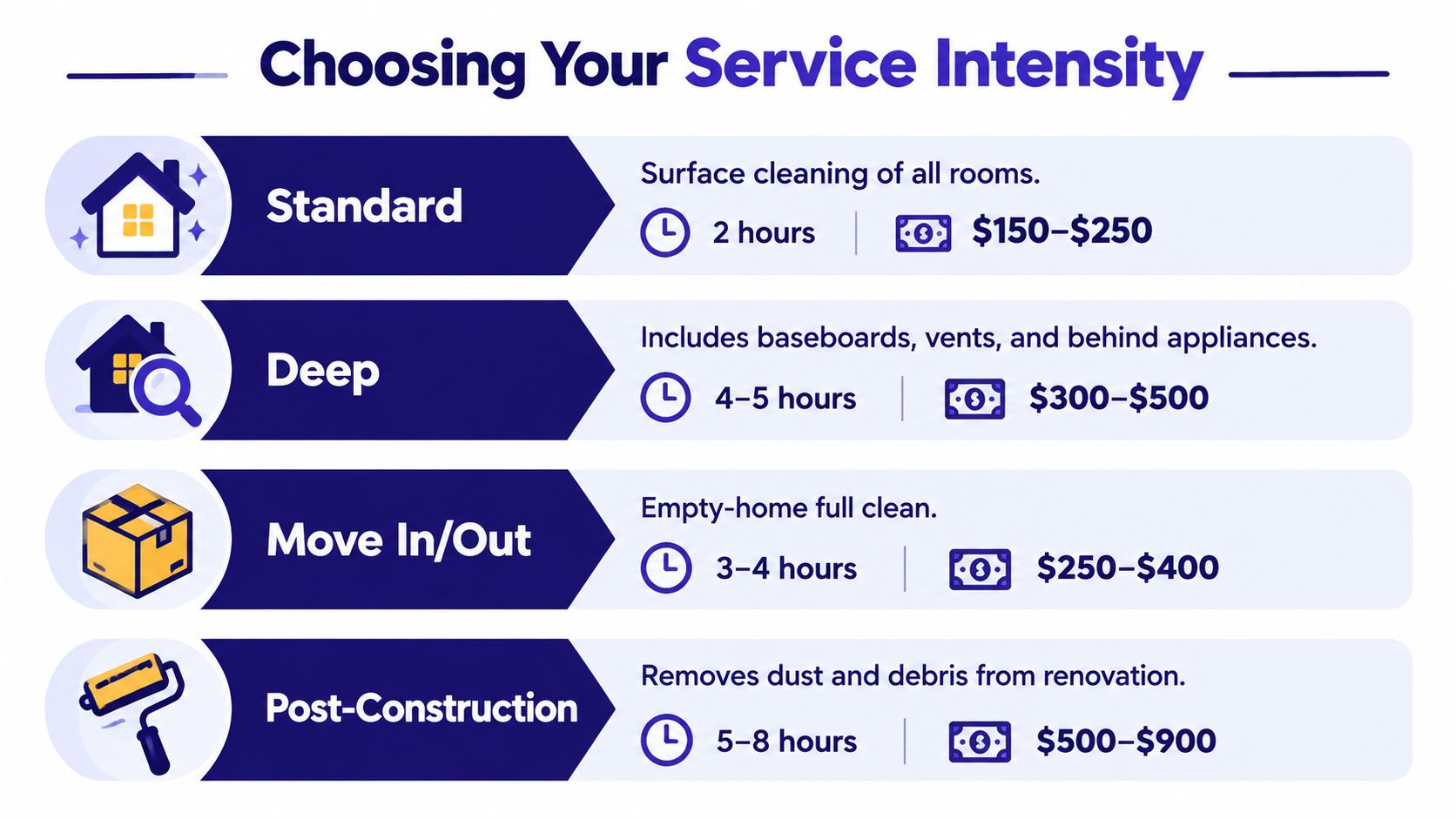
The right service level comes down to how far the home has drifted from routine upkeep. Standard cleaning keeps a maintained home on track. Deep cleaning reaches the grime that routine visits skip. Move-in and move-out work focuses on empty-home readiness. Post-construction is a different job because the priority is contamination control, not just visible dust.
<a id="a-sensible-way-to-choose"></a>
A sensible way to choose
- Standard cleaning. Best for homes that stay maintained and need floors, bathrooms, kitchens, and visible surfaces reset.
- Deep cleaning. Better when buildup has been left alone and details like baseboards, appliance edges, and hidden grime need attention.
- Move-in or move-out cleaning. Best when the space is empty and needs a full turnover sweep.
- Post-construction cleaning. Best when dust and debris from renovation are still circulating.
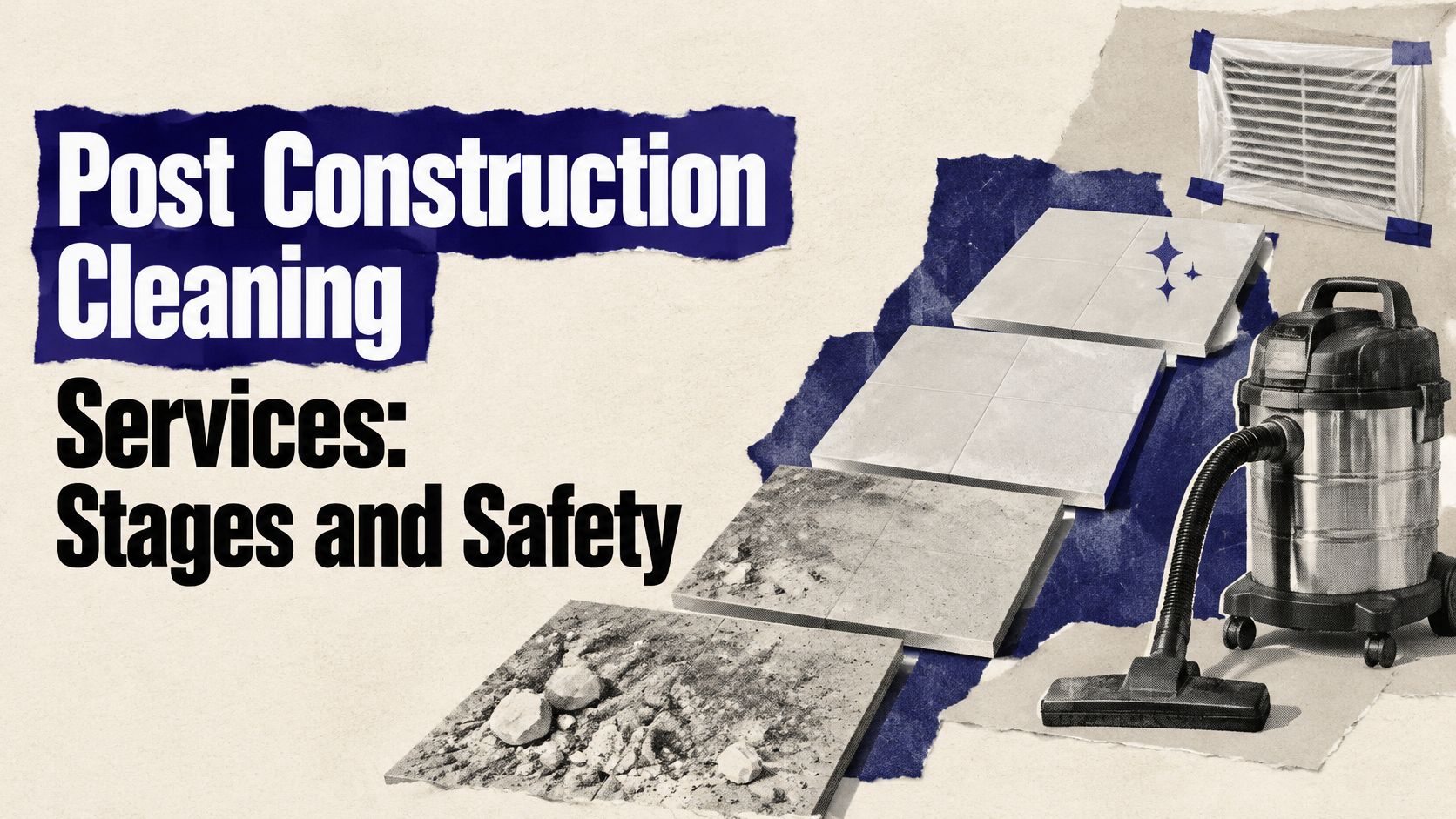
Post-construction work starts with containment, not polish. EPA guidance recommends isolating renovation areas with taped plastic barriers, using exhaust ventilation to create negative pressure, and keeping ventilation high during the work and for at least 72 hours afterward because materials can continue releasing pollutants. For a full breakdown of that service, see this guide on post-construction cleaning in Orlando. If a project disturbs asbestos, it needs an asbestos professional, not a standard cleaning crew. EPA remodeling air quality guidance
For a move-related turnover, this move-out cleaning for renters checklist is the kind of scope document that keeps expectations realistic. Pricing should feel grounded too. Published starting rates of $350 for standard, $490 for deep, $630 for move in/out, and $665 for post-construction, with recurring visits from $187, give you a clean sanity check when quotes start drifting into guesswork.
<a id="quality-control-and-the-final-walk-through"></a>
Quality Control and the Final Walk-Through
The finish is where a professional clean either feels finished or feels almost done. A crew should sign off room by room, note what was completed, log what products were used, record dilution and dwell-time compliance, and flag any damaged surface or customer-requested exclusion. That documentation is what makes a repeat visit smoother and a complaint easier to solve.
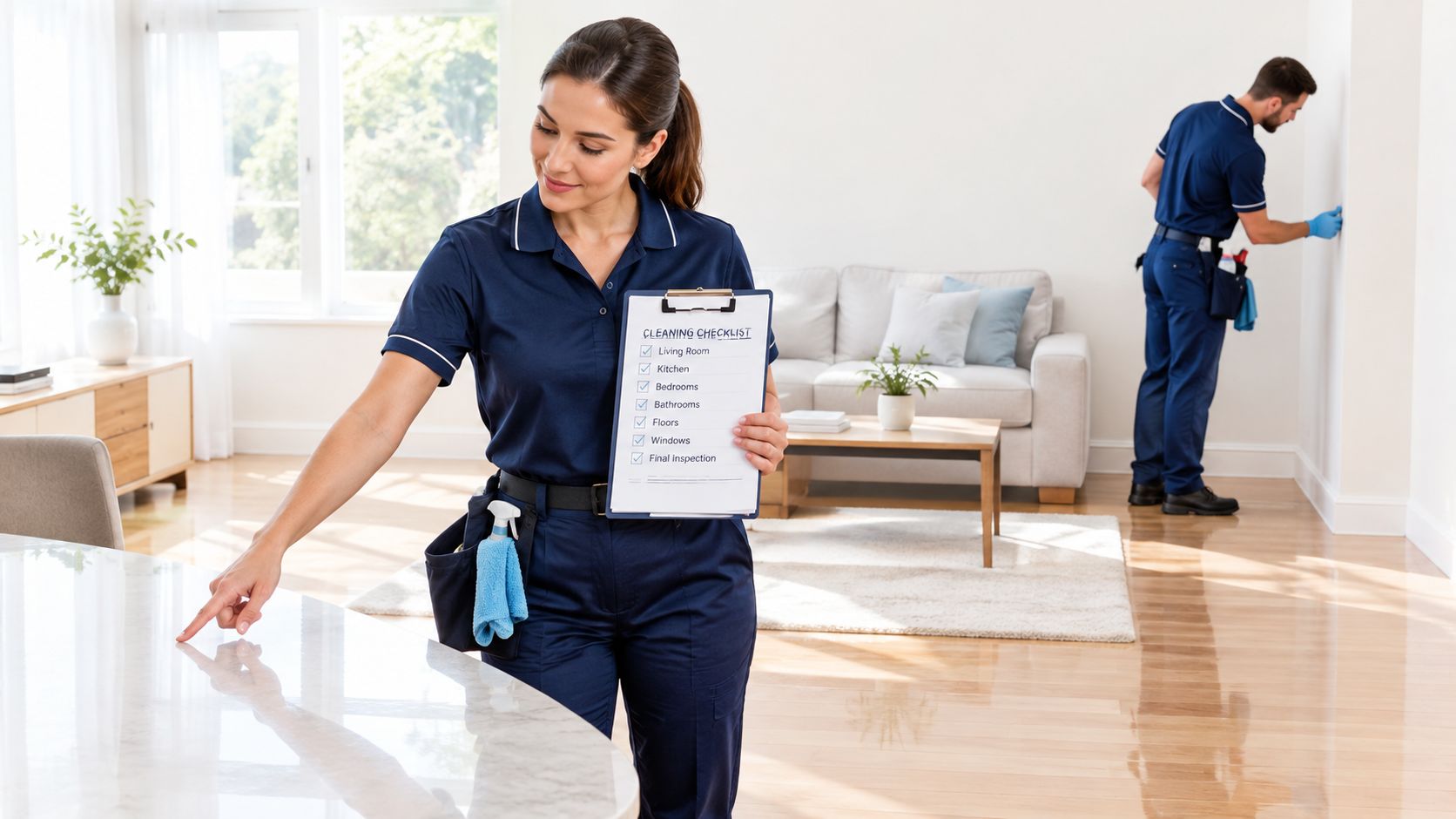
A homeowner should do a simple walk-through, not a perfection hunt. Check the places that reveal process, not just shine. Edges, corners, sink rims, switch plates, under faucets, shower glass, and floor transitions tell the story faster than a quick glance at the center of a room. If something's off, feedback should be specific, because “it missed a spot near the vanity” helps more than “it wasn't great.”
Recurring service changes the experience in a useful way. When the same cleaners come back on a dedicated schedule window, they already know the layout, the trouble spots, and the surfaces that need extra care. That familiarity cuts down on introductions and reduces the amount of explaining the homeowner has to do each visit.
Documentation is the habit that keeps a good clean repeatable.
That's the dividing line between a reliable company and a rotating roster of contractors. The reliable crew knows what was done, what was skipped, and what needs to be prioritized next time. The rotating crew hopes the room tells them everything they need to know.
Here's the quickest way to decide your next move. If the house is maintained, standard service is enough. If the corners are nagging at you, the deep clean is the reset. If you're handing over keys or starting fresh in an empty place, use move-related cleaning. If there's post-renovation dust in the air, don't treat it like a normal visit.
For booking, ask these questions before you hand over the job: Are the technicians bonded and insured, are they background-checked, do they use family-safe supplies, do they give transparent flat-rate quotes, and do they complete a documented walk-through before leaving? A locally established crew with consistent outcomes, strong reviews, and years in one market is usually the lower-risk choice when you'd rather avoid surprises than bargain-hunt the last 20 minutes of a clean.
---
If you want a house cleaned with the right sequence, the right products, and no guesswork, J&M Cleaning Team can handle standard, deep, move-related, recurring, and post-construction visits with flat-rate pricing and a documented walk-through. Their crew is built for homeowners who want predictable results, clear scope, and less back-and-forth. Get a quote, choose the tier that fits, and book the first visit when you're ready.