A deep clean is a thorough, less frequent reset that removes accumulated dust, grime and allergens from neglected and hard-to-reach areas, beyond routine maintenance.
If your countertops look clean but your ceiling fans and cabinet edges are dusty or sticky, has your house had a deep clean? The difference isn't how strongly the rooms smell of cleaning products. It's which surfaces receive attention, how thoroughly buildup is removed, and how you manage the work without spreading dust through occupied rooms.
What Deep Cleaning a House Means
Deep cleaning addresses the parts of a home that ordinary upkeep doesn't consistently reach. It includes familiar kitchen, bathroom and floor cleaning, but adds detailed removal of accumulated residue around edges, fixtures and overlooked surfaces.
Think of a kitchen. Routine cleaning means wiping up crumbs, washing the sink and cleaning visible cooking splashes. A deeper reset means removing grease from cabinet fronts, working around fixture bases and cleaning behind an appliance when it's safe and accessible. The room may look tidy before that work begins, yet still need considerable attention.
Why dust keeps returning
Household dust isn't just dirt tracked through the door. The U.S. Environmental Protection Agency identifies sources including outdoor soil, pollen, mold spores, pet dander, dust mites, human skin flakes, cooking, cleaning and burning candles, and explains that walking and cleaning can resuspend settled dust.
That helps explain why baseboards, fixture details, furniture undersides and cabinet fronts need deliberate attention. They can collect material even when the main traffic areas look presentable.
- Baseboards and trim: Wipe the upper ledges and grooves rather than only cleaning the floor beside them.
- Furniture and fixtures: Reach beneath accessible pieces and around decorative details where dust collects.
- Cabinet fronts and touchpoints: Remove greasy films and hand marks instead of wiping around them.
Practical distinction: Standard cleaning preserves maintained conditions. Deep cleaning restores areas that have fallen behind.
Neither service eliminates every allergen or prevents new dust from arriving. Frequency and scope explain the difference better than labels such as extra clean or spotless.
Room-by-Room Deep Cleaning Checklist
Use this checklist to compare a written quote with your own expectations. It's a scope guide, not a promise that every service includes appliance moving, specialist stain removal or appliance interiors.
Deep cleaning tasks by area compared with standard cleaning
| Area | Deep cleaning adds | Standard cleaning covers |
|---|---|---|
| Kitchen | Scrub countertops and sink basins, wipe appliance exteriors, degrease cabinet fronts and clean behind the stove where safely accessible | Wipe counters and clean visible surfaces |
| Bathrooms | Scrub showers, tubs, tile, grout and fixtures, and descale compatible sink surfaces | Clean toilet, sink and visible surfaces |
| Bedrooms and living areas | Detail-dust furniture tops, ceiling fans, window sills and vent covers | Dust visible surfaces and tidy |
| Whole home | Clean doors, door frames, light switches, baseboards and overlooked areas | Detailed edge and trim work usually isn't included |
| Floors | Vacuum and mop appropriate flooring, including edges and areas under reachable furniture | Vacuum and mop main traffic areas |
Work through each room without damaging finishes
In the kitchen, greasy cabinet fronts need a finish-compatible cleaner and a soft cloth. Give the cleaner time to loosen residue according to its directions, then remove it rather than repeatedly rubbing a dry surface. Cleaning behind a stove requires safe access, not pulling against a gas connection or straining an electrical cord.
In bathrooms, separate soap residue from mineral deposits. A bathroom cleaner may remove body oils and soap films, while scale needs a material-compatible descaling product. Don't use acidic descalers on marble or other acid-sensitive stone, and don't assume discolored grout will return to its original shade after cleaning.
For bedrooms and living areas, work from higher surfaces downward. Capture dust on fan blades with a damp microfiber cloth, wipe window sills, and clean the outside of accessible vent covers. Wiping a vent cover isn't the same job as cleaning the duct system.
Pay attention to edges
The easiest tasks to miss are cabinet handles and surrounding grooves, the tops of door frames, and floor edges beneath furniture. These areas need close inspection because a room can look finished from the doorway while still holding obvious residue up close.
Finish floors after the overhead and surface work. Vacuum carpet, vacuum or sweep suitable hard flooring, then mop with the amount of moisture the flooring manufacturer permits.
Heavy buildup can require extra passes and more working time. Permanent staining, damaged finishes, mold problems and specialist restoration shouldn't be treated as ordinary cleaning tasks.
Deep Cleaning Versus Standard Cleaning Side by Side
Standard cleaning maintains a usable baseline; deep cleaning takes on accumulated buildup. Choose according to the home's condition, not which service sounds more thorough.
The visual comparison highlights the broad difference, but a calendar alone shouldn't determine your choice.
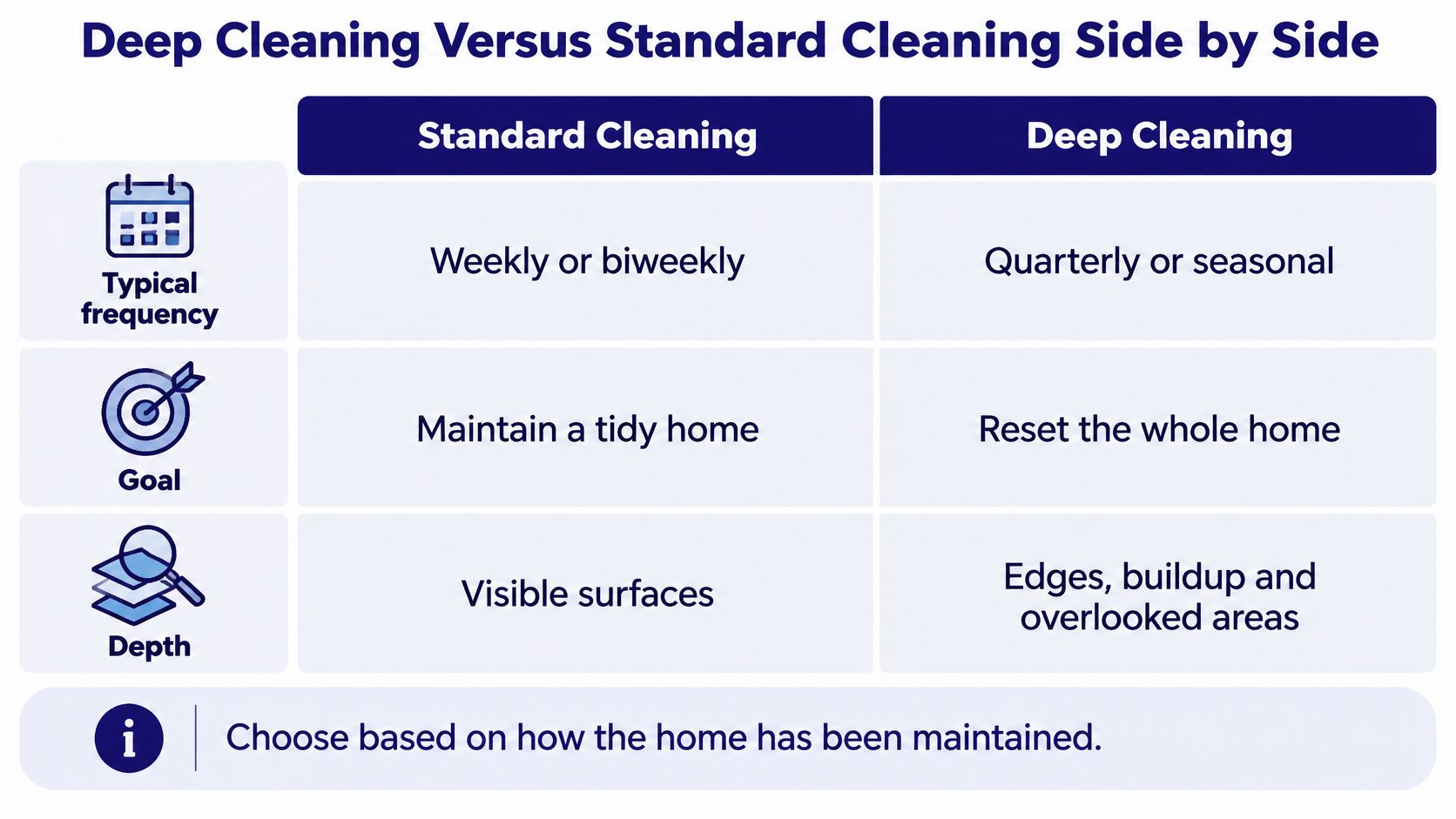
Standard cleaning and deep cleaning compared
| Factor | Standard cleaning | Deep cleaning |
|---|---|---|
| Typical frequency | Weekly or biweekly upkeep | A one-time reset, or after long gaps and major events |
| Main goal | Maintain an already clean home | Reset neglected areas |
| Baseboards and fixtures | Detailed work generally excluded | Detailed work included in the agreed scope |
| Dust and allergens | Routine dusting of visible surfaces | Detailed removal of accumulated dust |
| Typical visit length | Shorter maintenance visit | Longer visit, with duration set by size, access and buildup |
Match the work to the condition
A maintained home may need help with everyday cooking splashes, bathroom use, pet hair and tracked-in debris. That's the situation standard cleaning is designed to address once deep buildup has been removed.
A home with sticky cabinet edges, dusty high surfaces and crusted fixture bases needs more detailed work before a maintenance routine can be effective. Booking only a lighter visit leaves those existing deposits outside the work being performed.
The trade-off is straightforward: a deep clean requires more focused labor and more disruption on the day. Standard visits are easier to repeat, but they shouldn't be expected to restore surfaces that need prolonged scrubbing or careful residue removal.
Look beyond the service label
A useful comparison considers accessibility, surface condition and specific tasks. An empty room with clear floors presents a different job from a furnished room with crowded shelving, even if both have the same floor area.
This accompanying video offers another way to consider the cleaning comparison.
If fixtures have visible grime, high surfaces hold dust and detailed care has been postponed, start with the neglected work rather than expecting routine upkeep to absorb it.
Why Deep Cleaning Is Not the Same as Disinfecting
A deep clean doesn't make a house sterile. Removing dirt and inactivating pathogens are different processes, and a stronger disinfectant doesn't substitute for careful cleaning.
Cleaning uses water, a suitable detergent, friction and residue removal to lift soil and microorganisms from a surface. Disinfection uses an appropriate chemical product to inactivate remaining pathogens under the conditions specified on its label.
A wiped countertop may look finished, but appearance alone doesn't tell you whether a disinfection procedure was completed.
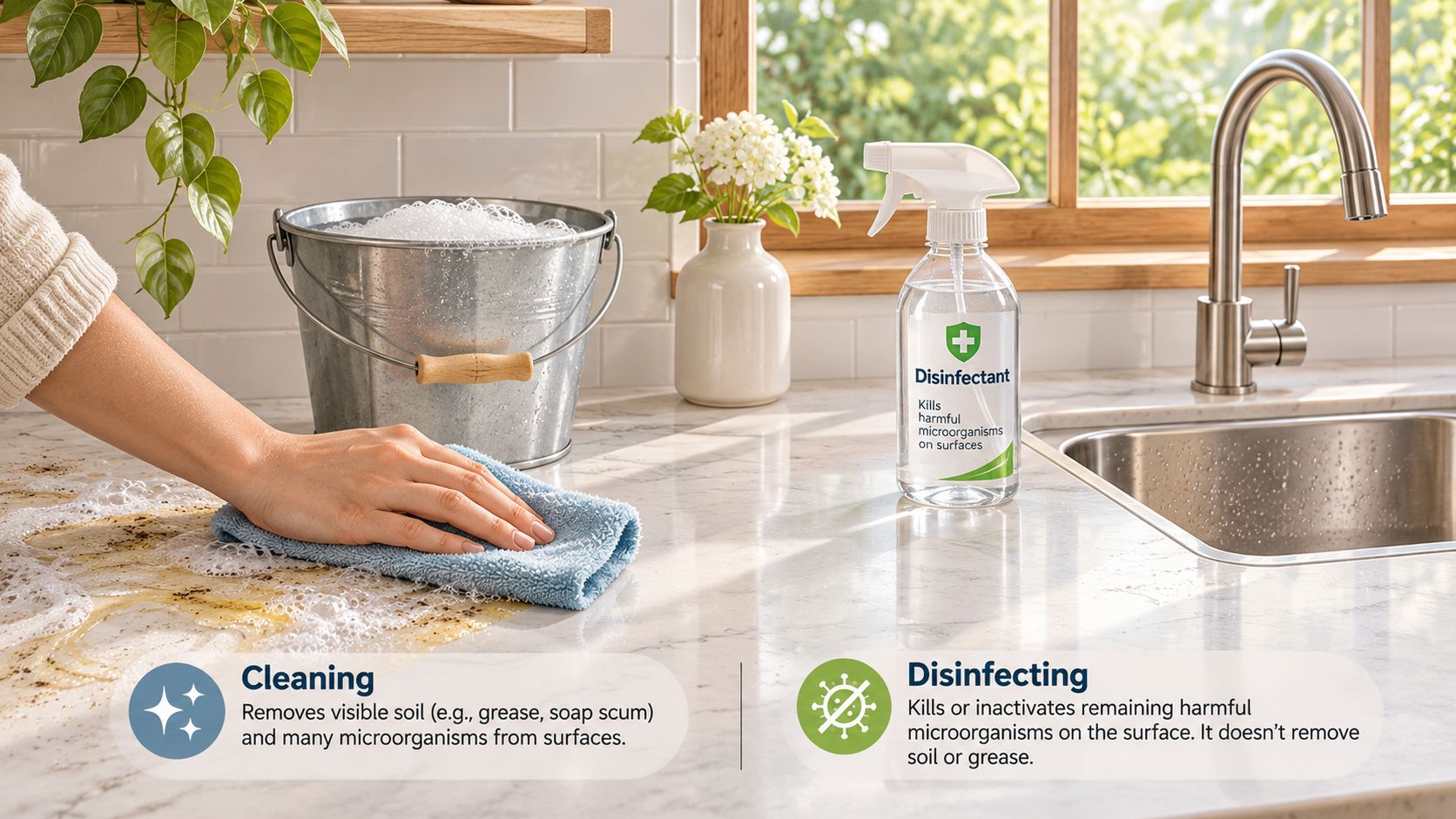
Remove residue before treating the surface
The CDC's home cleaning and disinfecting guidance recommends cleaning visibly dirty surfaces before disinfection when the disinfectant doesn't contain a cleaning agent, following label directions, and reserving broader disinfection for circumstances such as illness or increased infection risk.
Follow a removal-first sequence:
- Lift the buildup: Loosen grease, soap scum or other soil with a cleaner suitable for the material.
- Remove the residue: Wipe away loosened matter with a clean cloth, rinsing where the product requires it.
- Disinfect when warranted: Use a compatible product at its specified concentration and keep the surface wet for the label's contact time.
- Complete the safety steps: Follow any rinsing instructions, ventilate appropriately and never mix cleaning products.
For example, spraying disinfectant onto a greasy handle and immediately wiping it dry isn't a dependable disinfection procedure. Both the remaining soil and the shortened wet contact time can undermine the intended treatment.
Target a specific hygiene need
When disinfection is justified, focus on relevant high-touch surfaces: doorknobs, light switches, handles, faucets, toilet touchpoints, countertops, remotes and compatible electronics. Electronics require particular care because excess liquid can damage them.
Treat targeted disinfecting services as a distinct scope decision, not an automatic measure of cleaning quality.
A better standard: Judge a deep clean by the accumulated soil removed and the agreed surfaces completed, not by how much disinfectant was used.
How Deep Cleaning Affects Dust and Air on Clean Day
Deep cleaning can remove dust reservoirs, but the work itself can briefly put settled particles back into the air. A person with asthma or allergies shouldn't need to sit beside active vacuuming to benefit from a cleaner room afterward.
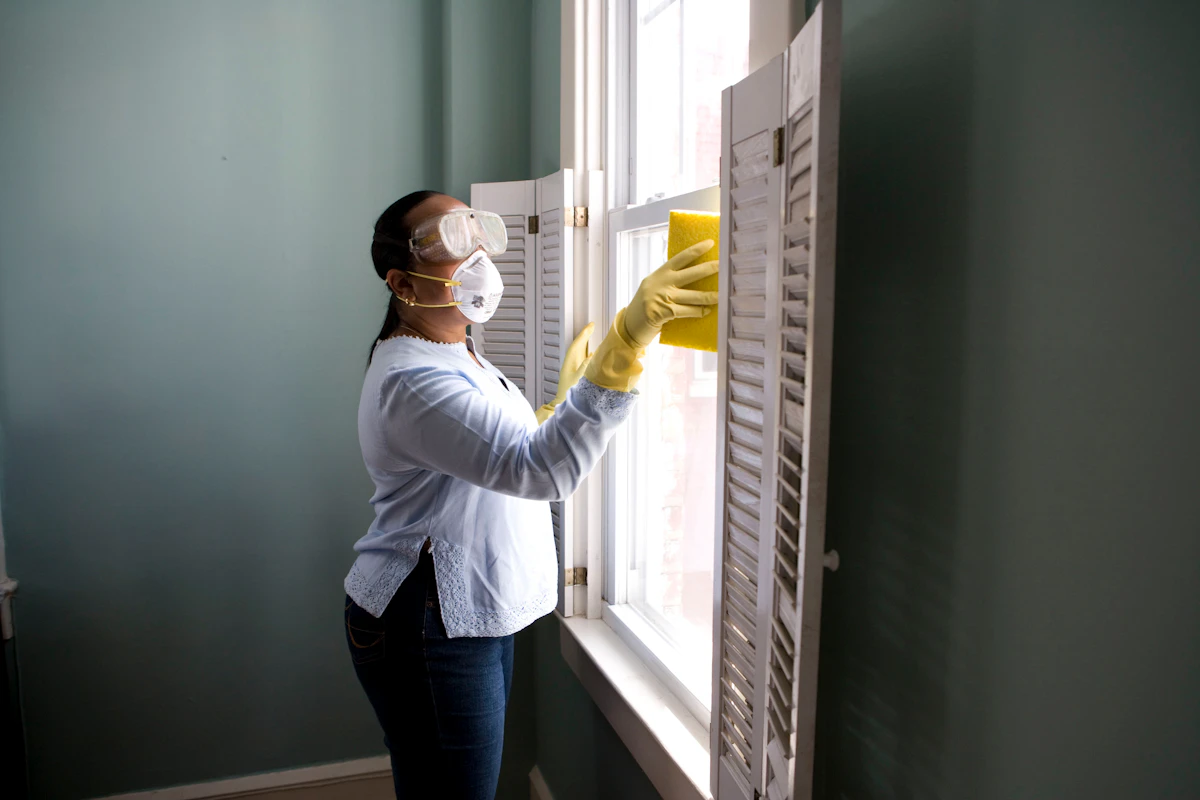
The EPA's indoor-air guidance supports damp cleaning methods, suitable filtration, ventilation and keeping people with asthma or allergies away from active vacuuming. Plan for children, older adults with respiratory sensitivities and pets to stay clear of the work area too.
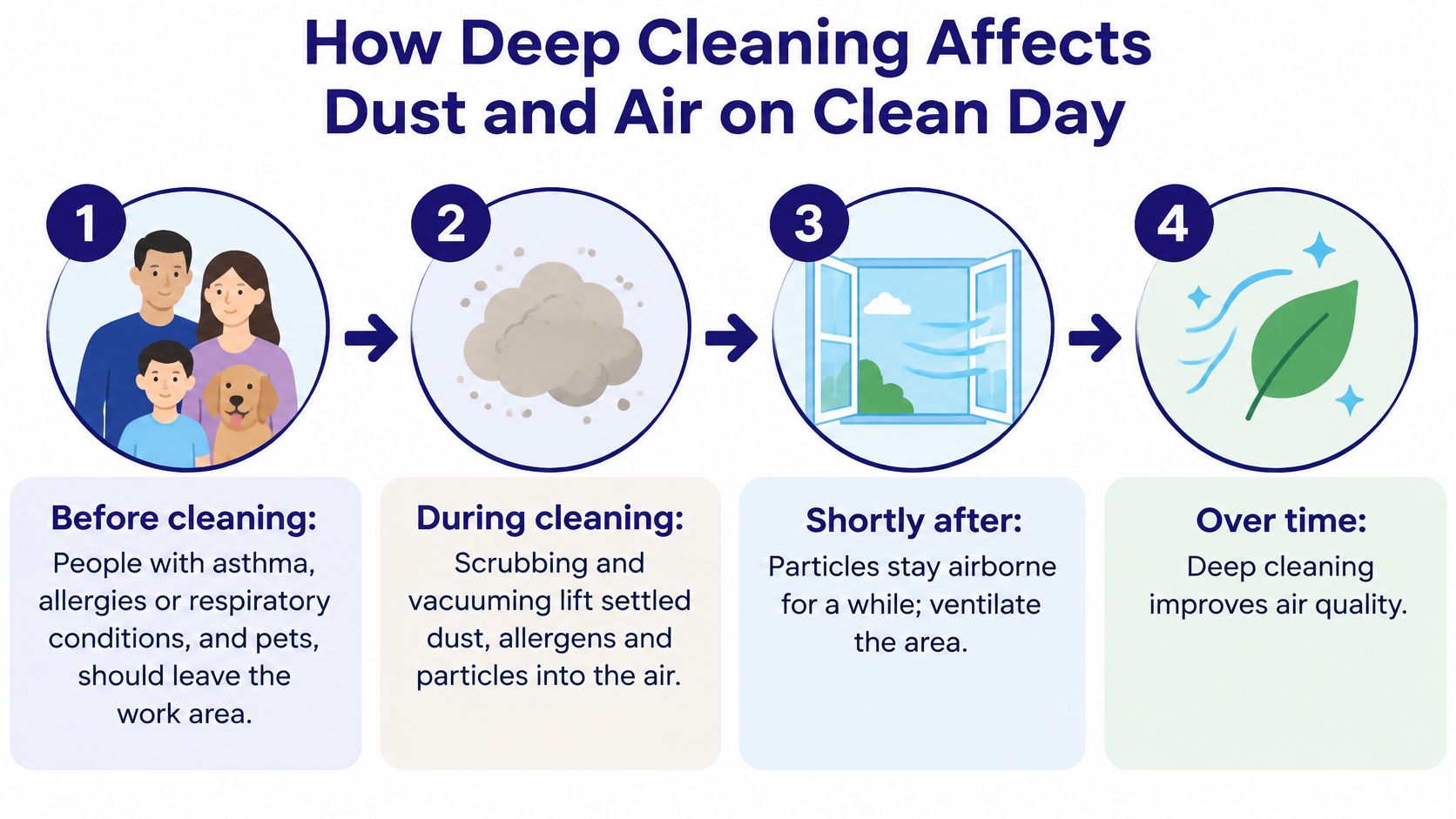
Make an occupant plan before work begins
1. Clear loose belongings. Before our team arrives, pick up toys, personal documents and clothing from floors and surfaces. This makes the areas that need cleaning accessible.
2. Separate occupants from active work. Arrange another room or an outing for sensitive residents, and keep pets somewhere secure.
3. Capture dust with damp methods. Use a lightly damp microfiber cloth rather than flicking dust from shelves with a dry duster.
4. Use filtered vacuuming. A HEPA-equipped vacuum helps capture fine particles. Our cleaning specialists bring HEPA vacuums and microfiber cloths.
5. Ventilate when conditions allow. Consider outdoor pollen, weather and product instructions before opening windows.
6. Allow settling and drying. Keep people away while dust remains visibly disturbed and until cleaned surfaces are ready for use. There isn't a universal return time.
7. Check HVAC filters. Clean or replace them according to the equipment manufacturer's instructions rather than improvising a replacement schedule.
Don't overlook cleaning-product emissions
Household cleaners can introduce volatile organic compounds into indoor air, according to the EPA's indoor-air-quality overview. Correct dilution and ventilation matter, and adding extra concentrate isn't a shortcut to better results.
For ongoing habits, use these practical approaches to reduce dust in your house. The aim is consistent particle removal without unnecessary exposure during the work.
When a Home Needs a Deep Clean
Say a family moves into a home where professional cleaning stopped well before the handover. They notice dust on ceiling fans, grime along cabinet bases and residue around bathroom fixtures, and they want recurring help.
In that situation, the useful starting point is detailed cleaning of the existing buildup. The recurring visits can then concentrate on maintaining the living areas rather than repeatedly working around unfinished restorative tasks.
Match the situation to the right work
When to schedule a deep clean
| Situation | When to schedule | Why |
|---|---|---|
| First visit to a home | Before recurring service starts | Establishes a maintained baseline |
| No professional clean in over 30 days | Arrange an assessment and suitable cleaning promptly | Addresses accumulated dust and grime before routine care |
| After renovation or construction | Once work is complete and dust-generating activity has stopped | Allows fine debris removal before occupancy or inspection |
| Before moving in or out | Before handover | Prepares the property for incoming occupants |
| After illness in the household | After recovery, with targeted disinfection when warranted | Allows cleaning followed by appropriate treatment of relevant touchpoints |
| Ongoing recurring clients | Review detailed areas periodically and schedule when buildup appears | Addresses fixtures and high-dust areas outside ordinary upkeep |
Our recommendation is to start with detailed care for first-time visits and homes that haven't been professionally cleaned in over 30 days. That's a service-planning recommendation, not a health threshold: a well-maintained home and a neglected home can need different work after the same interval.
Our recurring process begins with a starter clean, followed by general maintenance of living areas. This establishes what needs attention before a repeatable routine begins.
Distinguish household buildup from construction residue
After renovation, describe the work that took place rather than requesting a generic household reset. Fine construction debris may require a post-construction scope, especially when dust has reached cabinets, ledges and adjoining rooms.
Likewise, a move-out may involve empty cupboards, appliance interiors or other handover requirements that aren't automatically part of a general deep clean. Write those tasks down before scheduling.
For occupied homes with pets, heavy foot traffic or persistent dust, inspect detailed areas periodically rather than following a rigid seasonal rule. If you can't remember the last thorough clean, check fan blades, cabinet edges and fixture bases, then arrange a reset if those areas show buildup.
Request a Deep Clean Quote
A useful quote starts with home size, bedroom and bathroom counts, and custom requirements. Describe pets, heavily soiled surfaces, access limitations and any occupants who need to remain away from active work.
Our one-time Deep Cleaning starts at $490. We calculate the flat rate upfront from the home's details and custom requirements before booking, with no hidden surcharges.
Prepare information that defines the job
- List the unfinished areas. Name the rooms and surfaces with noticeable grime, dust or long-neglected details.
- Explain the occasion. Mention whether you're restarting upkeep, preparing a handover or dealing with renovation residue.
- Plan where people and pets will be. Identify respiratory sensitivities and rooms that must remain available during the visit.
- Clear access before arrival. Pick up loose toys, papers and clothing so floors and surfaces are ready for cleaning.
Include delicate materials such as natural stone, unfinished wood or specialty flooring in your notes. A useful description is specific: greasy cabinet fronts near the stove tells the cleaner more than kitchen needs extra attention.
Compare scope before booking
Requesting a quote first lets you match the proposed work against the room-by-room checklist. Confirm whether appliance interiors, appliance moving, detailed trim work or other special tasks belong in the agreed scope rather than assuming the service name includes them.
We're locally owned and serve Orlando and Central Florida. The practical aim is a quote and a work plan that describe the same job, including how the home will be prepared and occupied on cleaning day.
---
J&M Cleaning Team offers one-time deep cleaning and recurring maintenance for homes in Orlando and Central Florida. Visit J&M Cleaning Team to request an upfront quote, describe the areas that need a reset, and plan a cleaning day that works for your household.